HEAT ADAPTIVE ARCHITECTURE DESIGN COMPETITION
MEET THE WINNERS
Designing for a Cooler Future
We are thrilled to announce the three winning projects of the inaugural Heat Adaptive Architecture Design Competition (HAAD). After a rigorous two-stage evaluation process — from initial submissions to mentored prototype refinement — our distinguished jury has selected three outstanding designs that exemplify creativity, resilience, and real-world impact.
Launched in 2025 by the Red Cross Red Crescent Climate Centre, in partnership with IFRC and the Global Disaster Preparedness Center, HAAD challenged architecture and urban design students worldwide to develop innovative, affordable, and scalable structural solutions that address the growing threat of extreme heat in cities — with a focus on protecting the most vulnerable: the elderly, young children, and people living in informal settings. After the first round of evaluation, ten designs were advanced to the second stage, and each one was assigned a mentor to guide the refinement of the designs during the November 2025-February 2026 period.
The three winning projects tackle extreme heat across diverse contexts — from Dhaka's informal settlements to rural Kenyan schools — demonstrating that thoughtful, community-rooted design can make a measurable difference in the lives of those most at risk.



COOL SURFACES: Enhancing Local Techniques for Thermal Comfort
PROJECT OVERVIEW
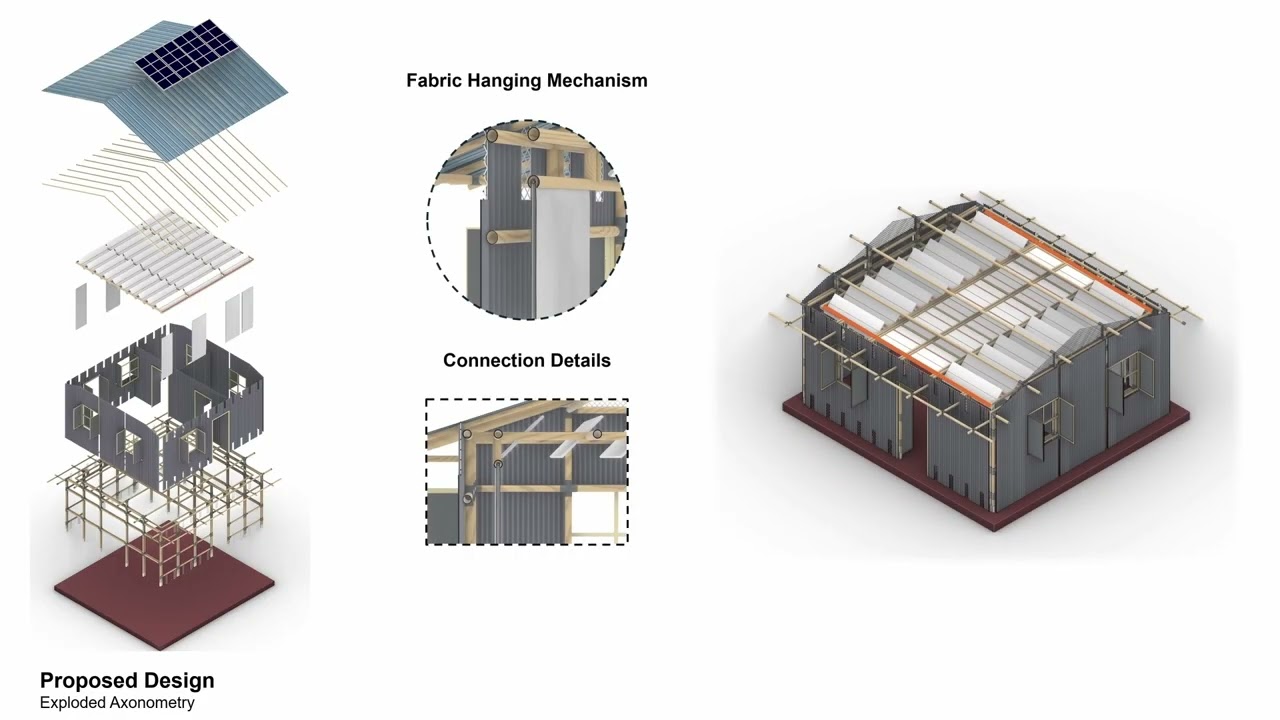
Bangladesh is a country severely affected by climate change and sea level rise, forcing many climate migrants into densely populated cities like Dhaka where average summer temperatures rise year after year and lower-income residents bear the brunt. The informal settlement of Sattola in Dhaka exhibits a strong urban heat island effect, with high indoor temperatures driven by corrugated iron (CI) sheet construction, limited air circulation, and unprotected sun-baked surfaces. Rather than replacing the existing tin-house typology, COOL SURFACES proposes three passive surface solutions — Cool Floor, Cool Wall, and Cool Roof — to transform a typical dwelling into a heat-adaptive home.
KEY DESIGN FEATURES
- — Three passive surface interventions: Cool Floor, Cool Wall, and Cool Roof for existing tin-house dwellings
- — Treats all surfaces as thermal interfaces, enabling incremental upgrades
- — Uses locally available, low-cost materials that residents can self-install without specialized skills
- — Informed by community surveys on thermal comfort, activity-space occupancy, and material usage
- — Scalable and dignified approach to heat-resistance for informal settlements
VIDEO PRESENTATION
DESIGN TEAM

Sakib N. Khan
Team Leader
Master of Science in Architecture Student (Part-time) and Part-time Lecturer, Bangladesh University of Engineering and Technology (BUET), Dhaka

Mainul Hasan Seam
Master of Science in Architecture Student (Part-time), Bangladesh University of Engineering and Technology (BUET), Dhaka, Bangladesh

Jahra Jarin Jemi
Master of Science in Architecture Student (Part-time), Bangladesh University of Engineering and Technology; Lecturer, Shanto-Mariam University of Creative Technology, Dhaka, Bangladesh.

Dr. Khandaker Shabbir Ahmed
Faculty Sponsor
Professor of the Department of Architecture, Bangladesh University of Engineering and Technology

Dr. George Foden
Mentor
Research Fellow in Quantitative Social Sciences, Nottingham Rights Lab
LinkedInHEAT RESILIENT SCHOOLS Adaptable, Modular Design Based on Local Material and Techniques
PROJECT OVERVIEW
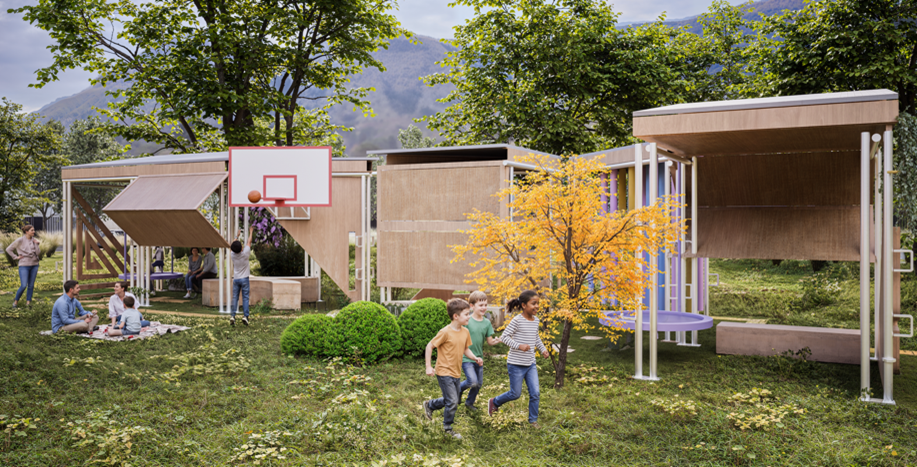
This design solution envisions a learning institution designed for a warmer future in Kenya, where schools are often under-resourced and heatwaves are expected to increase in frequency, intensity, and severity. It draws on local design knowledge, materials, and technologies to create adaptive, climate-responsive schools. At a time when African countries must take proactive steps to address heat risks and climate adaptation, this approach offers a practical, affordable and sustainable path forward.
KEY DESIGN FEATURES
- — Thick thermal-mass walls (200mm stabilized soil blocks) with roughcast spray render
- — Cross-ventilation design with brushwood louvered windows and sun shading devices
- — Maasai-inspired architectural language — culturally aligned, locally crafted
- — Modular classroom-based system scalable across Kenyan counties and replicable regionally
- — Community participation through local artisans, women-led brushwood fabrication, and mason training
- — Construction cost of $200–275/m² using locally sourced materials with no reliance on imported systems
VIDEO PRESENTATION

DESIGN TEAM

Saitabau Kumary
Team Leader
PhD in Architecture, Cambridge sustainable design group, Department of Architecture, University of Cambridge, UK

Prof. Ronita Bardhan
Faculty Sponsor
University of Cambridge, UK

Kristjana Adalgeirsdottir
Mentor
D.Sc. Architect, International Federation of Red Cross Red Crescent (IFRC) Disaster Delegate
LinkedInABASH — A Shelter of Hope Holistic Cooling Solutions for Informal Settlements
PROJECT OVERVIEW
Located in Dhaka's informal settlements, this project introduces a climate-adaptive shophouse unit designed to address rising temperatures and economic precarity in a single, integrated solution. The core assumption is that residents need both dignified shelter and space to earn a living, allowing families to sustain themselves without being displaced from their social networks.
KEY DESIGN FEATURES
- — Flexible 3×3 m modular grid supporting incremental growth for diverse household sizes
- — Mixed-use integration of residential units, micro-shops, and workshops
- — Passive cooling through shaded verandas, high thermal-mass walls, ventilated floors, and porous brickwork
- — Locally sourced, affordable materials: bamboo, brick, recycled tin, and evaporative finishes
- — Community-centered layout preserving existing circulation paths, water points, and communal spaces
- — Shared courtyards and green edges for social interaction, biodiversity, and microclimate relief
VIDEO PRESENTATION

DESIGN TEAM

Shadia Afrin
Team Leader
M. Arch Graduate, University of Tasmania

Tung Rayman
M.Arch Graduate, University of Tasmania

Joyce Wong Qian Hui
M.Arch Graduate, University of Tasmania

Helen Norrie
Faculty Sponsor
Course Coordinator, University of Tasmania
David Sanderson
Mentor
Architect, Professor of Disaster Resilience and Recovery, University of University of New South Wales, Australia,
LinkedInRUNNERS UP
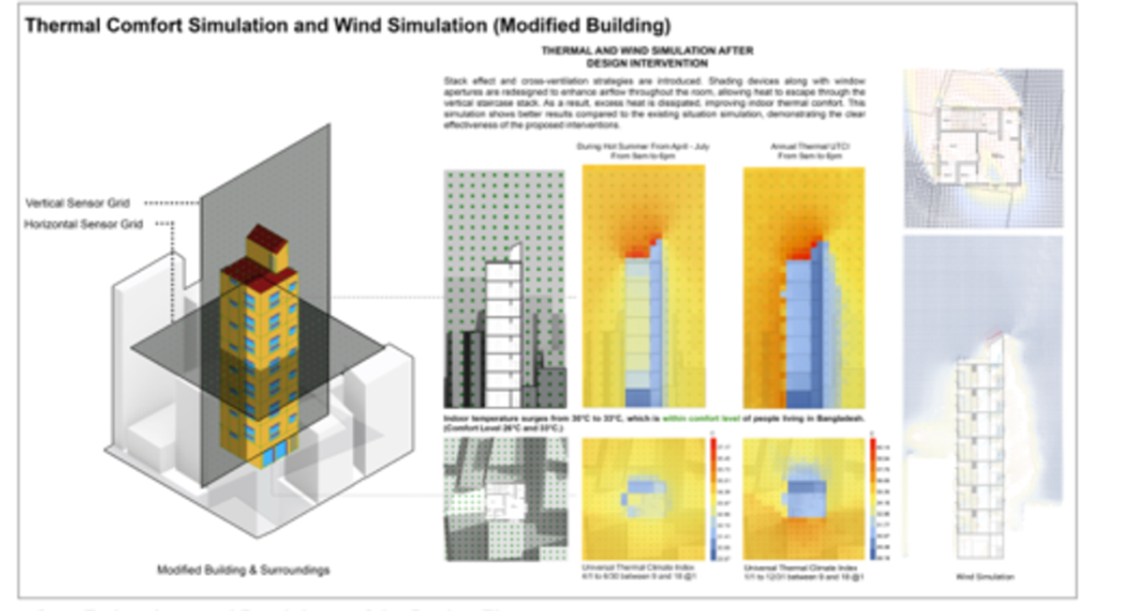
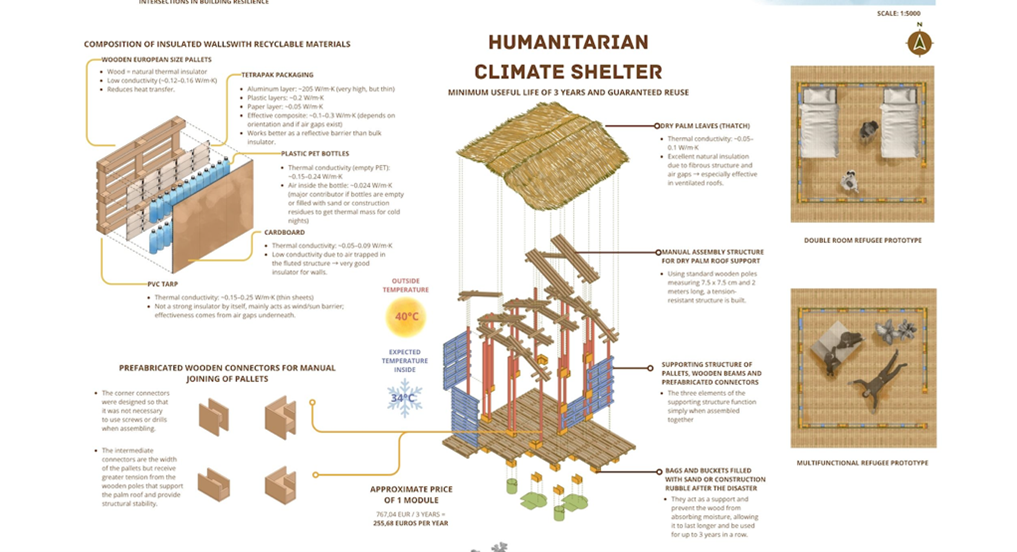
We would like to acknowledge the following runners up for the HAAD competition for their outstanding contributions to climate-adaptive design.
HEAT ADAPTIVE ARCHITECTURE DESIGN COMPETITION
Organized by the Red Cross Red Crescent Climate Centre in partnership with IFRC and the Global Disaster Preparedness Center to stimulate innovative building designs that tackle extreme heat risks in cities.



© 2026 Red Cross Red Crescent Climate Centre · Hosted on PrepareCenter.org
Back to Top