About the Resolution
This resolution helps guide the Red Cross and Red Crescent Movement in using digital tools and technology in a way that stays true to the Fundamental Principles and its commitment to the people it serves.
Why This Matters
- Digital technology is changing quickly. We need to address the risks this brings while also making the most of the opportunities it offers for our humanitarian work.
- The Movement and its partners already use digital technology to carry out humanitarian activities.
- When humanitarian workers use technology responsibly and in line with our Fundamental Principles, they are better equipped to do their work and handle today's complex information environment.
What We Want to Achieve
- Bring together the Movement's shared views on how to act responsibly in the digital age.
- Help the Movement make thoughtful decisions about adopting technology as it pursues its humanitarian mission.
- Encourage the Movement, its partners, and the wider humanitarian community to take a careful, values-based approach to ensuring that National Societies and the communities they serve can use information and communication technologies to their benefit.
Major Themes
01
Fundamental Principles
The Movement is guided by the Fundamental Principles and united by a central purpose: to help without discrimination those who suffer and thus contribute to peace in the world. We must also seek to 'do no harm’ – systematically assessing potential negative impacts that of its use of ICTs for affected people and taking all feasible measures to avoid and mitigate such impacts through its own action or engagement with relevant stakeholders.
02
Community-Centered Frameworks
Multiple practices and frameworks help to protect and engage communities in the humanitarian program cycle. For example, the Community Engagement and Accountability framework integrates meaningful community participation, open and honest communication, and mechanisms to listen to and act on feedback, within programmes and operations.
03
Partnerships
Engaging across the Movement and with technology providers and developers in a way that prioritizes accountability and a principled approach cab help with balancing considerations such as affordability, safety and security requirements, sustainability and interoperability.
GDPC Spotlight Grants Program
Empowering emerging researchers to turn evidence into action.
Call for Applications: Research Grants on Principled and Accountable Use of Technology in Humanitarian Action
The Global Disaster Preparedness Center (GDPC) is pleased to announce the launch of its 2026 Spotlight Research Grants Program in partnership with the French Red Cross Foundation, focused on the theme of principled and accountable use of technology in humanitarian action. This initiative aims to deepen our understanding of how ICTs including emerging technologies such as artificial intelligence (AI) can be applied humanely, ethically, and responsibly in humanitarian contexts by supporting original research in low- and middle-income countries. The program is designed to bring diverse perspectives on the use of technology in the humanitarian field and to expand the evidence base on how technology can be responsibly used to address existing risks and find innovative solutions to longstanding humanitarian issues.
Previous Resolutions
This Resolution builds on previous resolutions on the topics of digital technology, accountability, and principled humanitarian action.

34IC/24/R2 is very useful, in particular for its recognition of the "essential" role of ICTs for efficient and effective humanitarian operations, its language on private technology companies, its emphasis on the importance of availability and integrity of ICTs for civilian populations in conflict, as well as its call for States and parties to armed conflict to allow and facilitate impartial humanitarian activities during armed conflict including those that rely on ICTs, to respect and protect humanitarian personnel and objects including with regard to ICT activities, and to establish and strengthen "contact and communication networks" to build capacities (including on ICT security, data protection) for States and components of the Movement. The resolution also recognizes several other common understandings of IHL, and encourages the ICRC to continue its work on the digital emblem for its potential use in relation to armed conflict.
CD/22/R12 reiterates commitments on processing of personal data and data protection, reaffirms "allow and facilitate" and "respect and protect" of impartial humanitarian activities offline and online, commits Movement components to taking steps on data security, data governance, and stresses the point that humanitarian data must be used for exclusively humanitarian purposes (and must not be requested for other purposes).
33IC/19/R4 anchors a common approach to the processing of personal data, privacy, data protection in restoring family links activities, and calls upon States cooperation and commitment to facilitate access to relevant data and ensure that this is not requested or used for purposes incompatible with the humanitarian nature of the work of the Movement. It is an essential complement to CD/19/R6 on the Movement's RFL Strategy 2020-2025 and recognizes the need to process personal data under the framework set out in the Restoring Family Links Code of Conduct on Data Protection.
CD/19/R1 has the agreed Movement definition of accountability and related Movement commitments on CEA in annex. This resolution and its annex are informed by the Code of Conduct for the Movement and NGOs in Disaster Relief, as well as sectoral initiatives such as the HAP standard and (its successor) the Core Humanitarian Standard on Quality and Accountability.
Webinar Series
This webinar series is designed to unpack the complexity of responsible ICT use in humanitarian settings. It will explore key frameworks, emerging practices, and critical questions shaping the Resolution, while creating space for dialogue, reflection, and sector-wide input.
What to Expect: Deep dives into the Fundamental Principles: Humanity, Impartiality, Neutrality, and Independence with practical insights on applying “do no harm” in digital environments. Key frameworks including CEA, VCA, HCD, digital safeguarding, cybersecurity, data protection, and ethical procurement will be explored.
Objective: To build a shared, actionable vision for the ethical use of technology in humanitarian action, while strengthening collaboration, capacity, and accountability across the Movement. Build up a movement wide toolbox of resources and support to implement the resolution.
Upcoming Webinars
Past Webinars
Frequently Asked Questions
Key Issues
Across the domain of ICTs and their use in a humanitarian context, there are a number of key challenges and opportunities. This section outlines some of points of relevance and note to the Resolution.
Digital Divide
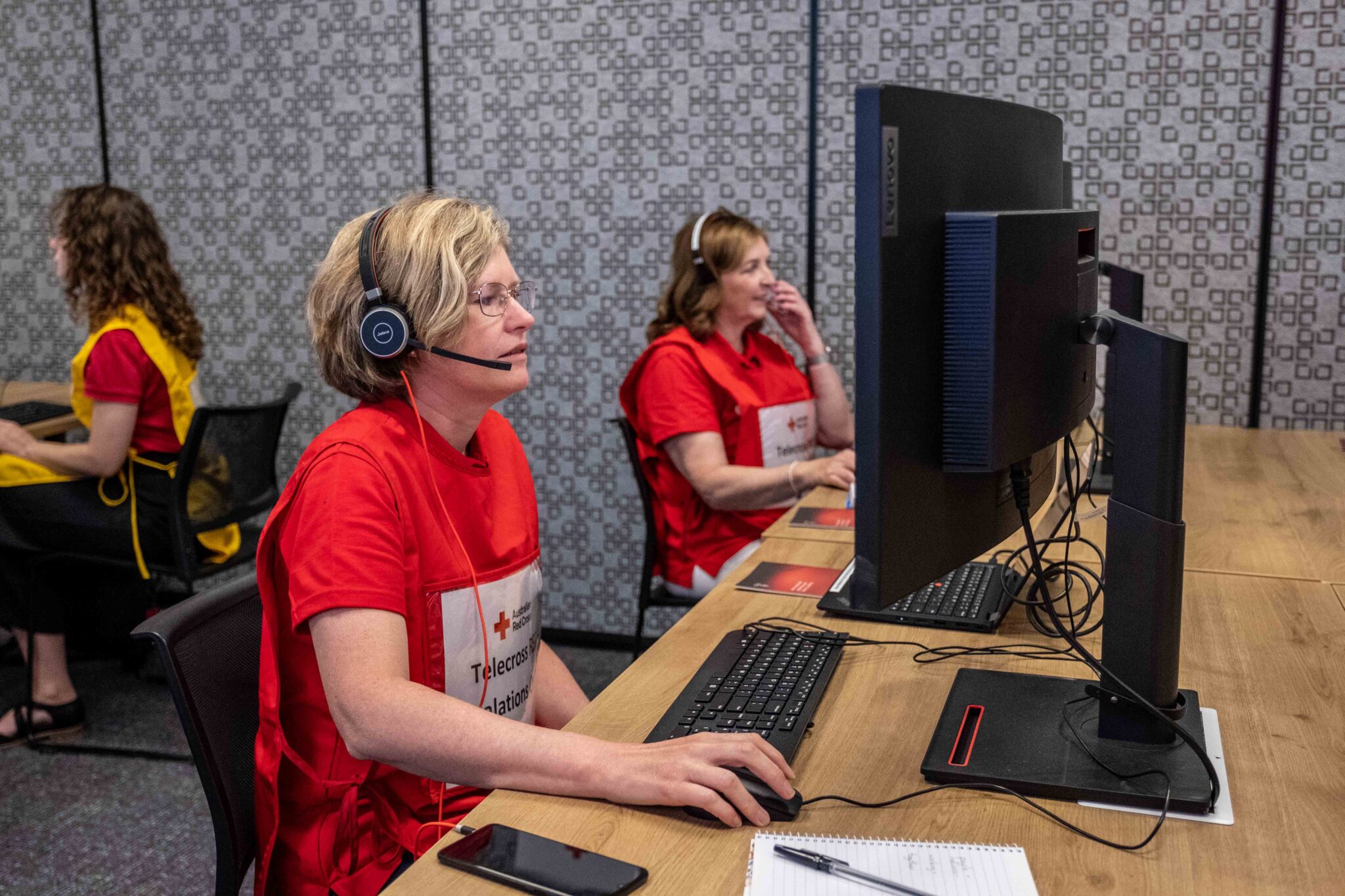
Beyond the movement, the digital divide is demonstrated globally in a number of ways.
Access to Internet
2.9 billion people globally are without internet access
Global North v South
93% of people in high income countries use the internet compared with 27% in low income countries
Access v Quality
High-income countries have 84% 5G coverage compared to 4% coverage in low income countries.
Affordability Gap
People in low income countries can pay up to 19 times more for mobile data. Urban v Rural divide: 83% urban v 48% rural.
Artificial Intelligence & Inequality
What are we witnessing in the AI era compared to previous technological shifts in history?
How can we better represent the digital divide within the RCRC Movement from the perspectives of accessibility, affordability, and sustainability of ICT systems? This assessment must go beyond headquarters‑level capacities and reflect the reality of a highly distributed network of more than 200,000 local branches, many of which continue to deliver humanitarian services despite lacking even basic technological infrastructure.
A significant proportion of these last‑mile branches operate with minimal or no reliable connectivity, limited hardware, and constrained technical support. Yet, they remain essential service providers within their communities. Any meaningful analysis of the digital divide must therefore account for this operational reality, rather than relying solely on indicators derived from national or headquarters‑level systems.
This raises a critical strategic question for the Movement: what constitutes a realistic and achievable minimum standard for digital connectivity and functionality? While it may be appropriate to assess the headquarters of the three Movement components using concepts such as digital maturity, this framework becomes far less applicable at the level of local branches. For these actors, the focus must shift from maturity to minimum viable connectivity, fit‑for‑purpose digital tools, and sustainable access models that enable core humanitarian functions without increasing operational or financial vulnerability.
Across the Movement, there is wide variance in the level of digital transformation, connectivity and resourcing and there is similar diversity in ICT enabling environments, practices, and community digital literacy in the communities we work alongside. The digital divide is exacerbated by the fast pace changes that technology brings to humanitarian response.
As a Movement, reducing the digital divide and system fragmentation represents a meaningful investment of time, financial resources, and institutional effort aimed at increasing efficiency through mutual collaboration across the network. When designed effectively, such investment can strengthen interoperability, reduce duplication, and enhance collective impact. At the same time, feasibility and long‑term sustainability are equally critical considerations. Any digital ambitions must be grounded in what can realistically be implemented, operated, and maintained across a highly diverse and resource‑constrained network. This requires balancing standardization with flexibility, and innovation with practicality, to ensure that solutions strengthen, rather than strain, local capacities.
Data Protection
Personal data protection has emerged as one of the most widespread frameworks to assess and evaluate the risks to people’s privacy, rights, and dignity in an increasingly data-driven world. As of 2026, more than 150 countries have passed or are in the process of passing some manner of data protection and privacy law, and international treaties and bodies have worked to establish common, minimum principles to facilitate accountability across jurisdictions. This is all the more relevant in humanitarian contexts, where the collection of personal data, including data of a sensitive nature, is a frequent and often unavoidable necessity.
Personal data protection is therefore an essential tool to ensure respect of life and dignity, agency, of people, to ensure accountability of the entity processing such data and strengthen the trust affected people place in humanitarian organizations. That trust stems from the understanding that personal data would be used solely for humanitarian ends and that all services would be delivered in line with the Fundamental Principles. Upholding this trust requires that humanitarian activities be anchored in robust privacy and data protection frameworks.
The humanitarian sector has responded to this imperative by adopting organizational regulatory frameworks or adhering to national legislation and adaping their working modalities accordingly. It has also developed dedicated guidance (most notably the Handbook on Data Protection in Humanitarian Action, whose third edition was endorsed by the ICRC, IFRC, UNHCR, WFP and Global Privacy Assembly) and has worked to establish common interpretations of data protection requirements.
Data protection has also persistently been used as the key framework to hold humanitarian organizations accountable regarding their use of technology, for example, following data breaches. Data protection can be viewed as an example to follow for other less developed frameworks, and a blueprint for increasing both increased accountability and improved practice, and ultimately, better outcomes for affected people.
Accountable handling of personal data lies at the heart of many of the Movement’s activities. The Movement welcomes the opportunities that technological progress brings for strengthening humanitarian action, while remaining acutely aware that these same advances increase the risk of unwarranted intrusion into individuals’ private lives. Protection personal data, especially in the unstable and often dangerous environments in which the Movement operates, is not a procedural formality. It is a core dimension of safeguarding people’s lives, dignity, physical and mental wellbeing, and fundamental rights, including the right to privacy.
Artificial Intelligence & Emerging Technologies
Climate, Sustainability and Environment

Regulatory Risks
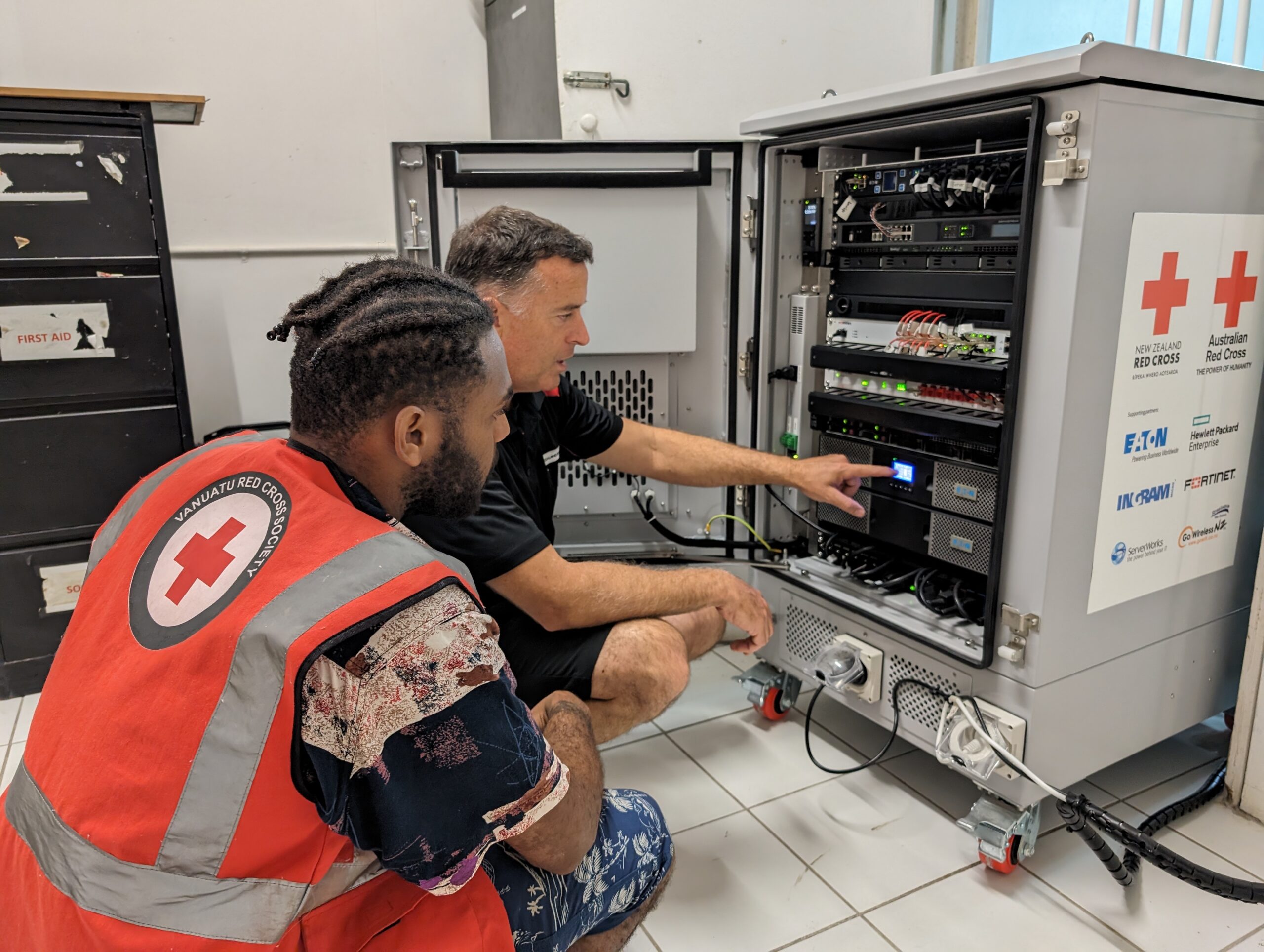
Beyond the field of data protection, the state of regulation of technologies and technology providers is fragmented. Several States and organisations have, to varying degrees and on different aspects of technology, adopted regulatory measures – ranging from legislation to executive measures – that impact different facets of the use of ICTs in humanitarian work.
Some legislations regulate particular technologies, such as AI, while other types of regulatory measures impact on the availability of particular technologies in certain countries, regions or contexts. Moreover, certain legislations affect how data is handled and with whom it is shared. For instance, some legislations might authorise access of national authorities to data handled by providers of certain technologies or services.
As Movement components working globally are subject to different domestic or regional legislations, staff should be equipped to understand legal implications of their technology choices, and by extension, the impacts on the data of people the Movement seeks to protect and empower. Open source technologies can, if employed thoughtfully, provide greater control over data and systems.
Monitoring & Evaluation
Humanitarian organizations, including the Movement, should be accountable to the communities they serve, and to the outcomes they set out to achieve. As the Background paper sets out, ‘[m]onitoring and evaluation processes help set goals, track implementation and feedback, and … understand outcomes and impact.’ Monitoring and evaluation practices that are already part of the humanitarian program cycle can be used to improve the use of ICTs across the Movement. Although there are resource and capacity challenges, there is opportunity in leveraging monitoring and evaluation practices to make other frameworks, such as cybersecurity, procurement, and human-centered design, actionable by generating evidence, organizing collective learning and framing accountability.
The accountability obligation in humanitarian action is not new — it is rooted in the Fundamental Principles themselves, and in particular in humanity, impartiality, and the commitment to do no harm. Over the past three decades, the humanitarian sector has formalized accountability as an obligation, through various frameworks and standards. The Code of Conduct for the International Red Cross and Red Crescent Movement and NGOs in Disaster Relief established the Movement's foundational commitment to community accountability, including involving communities in programme management and being transparent with them. The Sphere Project, a broader humanitarian sector initiative, introduced minimum standards and began building a culture of evidence and self-assessment. The subsequent Humanitarian Accountability Partnership (HAP), established 2003, and its Humanitarian Accountability Reports from 2005 onward, created the sector's first systematic stock-takes of accountability performance. The Core Humanitarian Standard (2014, updated 2022–2024) consolidated accountability frameworks into a single standard, placing affected communities at the centre. Yet the most recent update acknowledges that there is still more to do: "we talk a lot, we listen less."
As the background paper sets out, technology is now essential to humanitarian delivery and operations. Alongside opportunities to streamline and empower aid and protection are new risks of bias, exclusion, and exploitation. When a cash transfer is processed through a digital platform; when a community hotline transmits feedback; or when an AI tool helps target distributions, these are programme decisions with direct consequences for communities. Even back-office functions, such as enterprise communication systems, can bring with them perception risks when the actors providing them are explicitly not neutral in their public stances. In some cases, as with AI, adoption can be informal, through shadow IT systems or built into existing offerings, creating new, sometimes invisible risks.
These and other risks set out in the background paper (pp 2-3) can be examined through monitoring and evaluation, generating a better understanding of their outcomes and impacts and generating sharable lessons learned that can inform future implementations. Consulting communities on their views and feeding back on progress is itself an act of accountability that builds trust and operational access.
The humanitarian sector has spent thirty years building a culture of accountability to affected communities. ICTs are now central to how that work is done. Applying the same monitoring and evaluation approaches to technology is not an additional burden, but the foundation for ensuring that the Movement's use of technology improves over time; and that it serves, and does not harm, the communities it exists to support.
Relevant Resources
Movement Strategies & Policies
Guidance Documents
Academic Research
Other Resources
Operational Examples
Voices from the Movement
"Technology is moving fast and we’re not catching it."

Manager
MENA Region
Digital can be quite powerful in terms of how it can enhance things and make it efficient. But we just need to make sure that we're still keeping that human aspect at the center of it. It enables, it doesn't take over and drive things.

Digital Volunteering Focus Group
MENA Region
It is important to also acknowledge the experience that volunteers have, even though it's not like a formal experience in the field. But we are out there. We go to the communities. We understand how it works.

Volunteer
Americas Region
Predictive analytics is very important for activities like fundraising - how we can personalize, engage with our donors and personalize the experience of the donors through data and AI?

Volunteer
Asia Pacific Region
The market is demanding another level of experience. The volunteers, our members, partners, the general public. They're expecting quality digital experiences.

Manager
Europe Region
Over the last few years, technology has been more of an enabler. But also being more of a constrainer and barrier thing, like it's a double-edged sword.

Staff Member
Europe Region
Working Group members: