
Trees4HeatResilience: Evaluating Tree Canopy Coverage to Reduce Air Conditioning Demand in Honduran Urban Neighborhoods

Authors and Collaborators:
-
Juan Gamero-Salinas, University of Navarra
-
Mabel Morales-Otero, University of Navarra
Summary:
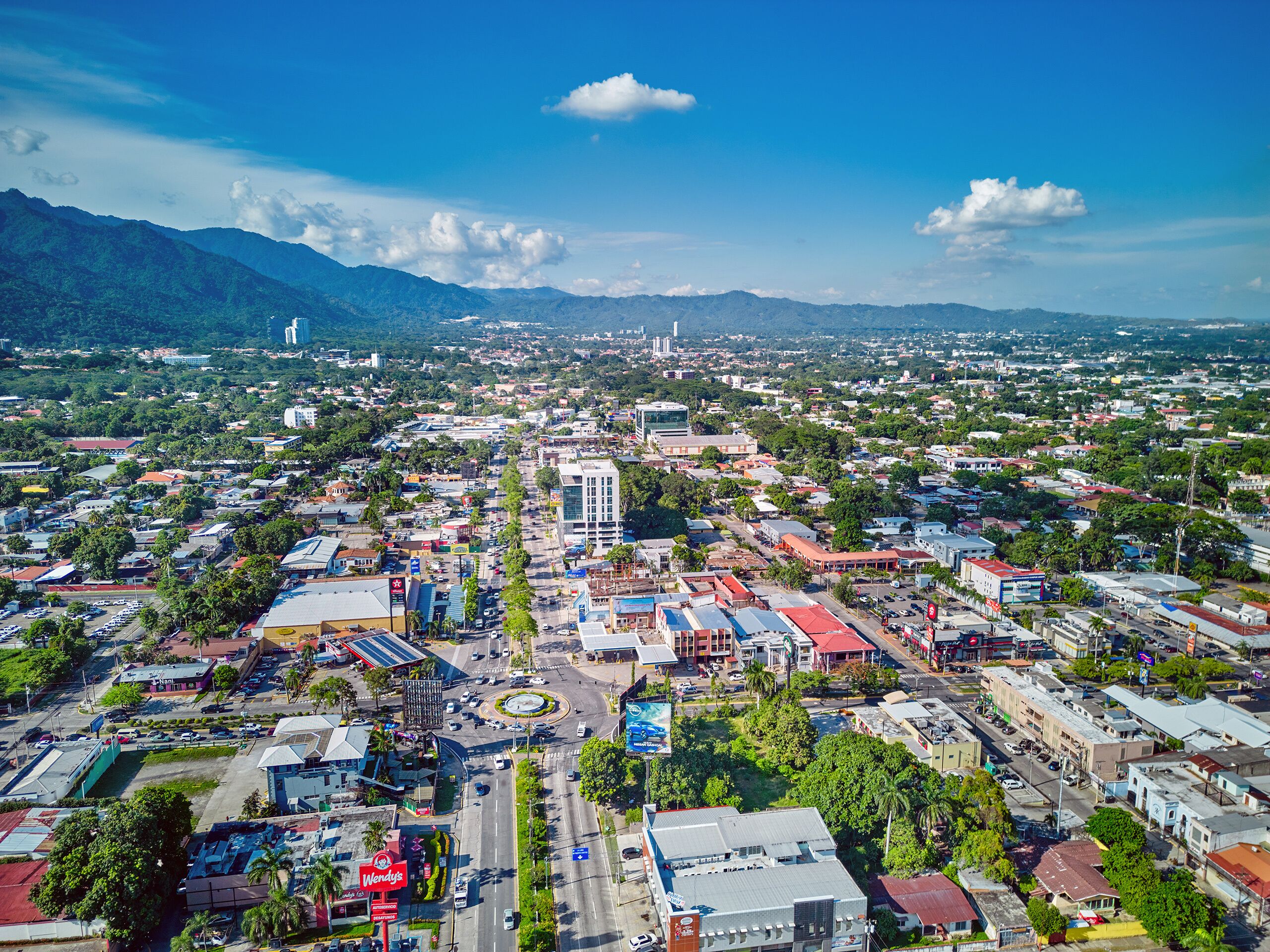
This research examines the neighborhood-level relationship between urban tree canopy coverage and air conditioning (A/C) usage in San Pedro Sula, Honduras, a rapidly growing city with high heat exposure. A computer vision model was retrained on local aerial imagery to segment tree canopies, which were combined with building footprints from OpenStreetMap (OSM) to calculate a neighborhood-level tree-to-building ratio. These data were integrated with census information on A/C usage and socioeconomic indicators (e.g., households with no unsatisfied basic needs, roof type). Results show that while overall tree coverage in the city is about 45%, canopy distribution is highly uneven. A/C usage shows a similar disparity, with 26.1% of households reporting at least one unit. Spatial regression analyses (e.g., Spatial Durbin Model, Leroux binomial model) reveal a strong inverse relationship between the tree-to-building ratio and A/C usage: doubling or tripling the ratio is associated with a 21–45% reduction in A/C usage. Also, the tree-to-building ratio proved a more reliable indicator of cooling benefits than overall tree coverage, which tends to align with wealthier areas that still display high A/C usage. These findings highlight the need for targeted greening in heat-exposed neighborhoods, supporting nature-based solutions for climate resilience in low-income tropical cities.
Note:
GDPC encourages our partner researchers to submit their finished work to academic journals. To facilitate this process, some reports may not be made available in their entirety until after journal acceptance and publication. However, we make available the Executive Summary of the research and will update this resource page with the full report when it becomes available.

This research was part of a multi-country research initiative led by the Global Disaster Preparedness Center of the American Red Cross. Access all final publications here.