Hurricanes in sight: the Red Cross always ready to save lives
 April 28, 2026
On October 1998, Hurricane Mitch transformed risk management in Central America forever. Its devastating passage left more than 11,000 people dead and millions affected, marking a turning point in the way National Societies in the region prepare for such extreme events.
Two decades later, from Mexico to South America, many National Societies have transformed the terrible experience of Hurricane Mitch into concrete action, and are preparing in advance with response plans, training, drills, and institutional strengthening to reduce the impact of these disasters. Their mission: to be better prepared each year to respond more quickly and effectively to the arrival of potential hurricanes.
For 2025, preparedness is more crucial than ever: according to the U.S. National Oceanic and Atmospheric Administration (NOAA), this year’s hurricane season will be above the annual average. Their projection indicates that there could be between 6 and 10 hurricanes and 13 to 19 named storms (that is, storms with sustained winds greater than 62 kilometres per hour).
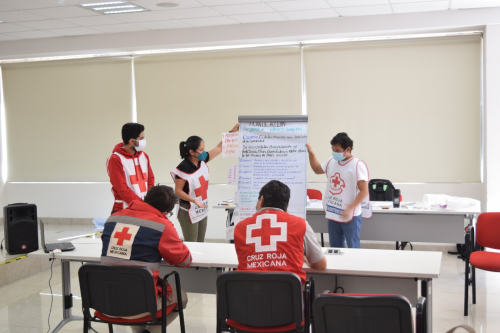
But preparedness does not begin when the storm appears on the radar. Without a doubt, continuous learning and training of National Society staff and volunteers is key to prepare for the hurricane season. In 2024, with support from the Reference Centre for Institutional Disaster Preparedness (CREPD) in the Americas, more than 6,000 people were trained, both online and in person, through courses and practical training at the regional level, with the aim of strengthening their knowledge in search and rescue, health, humanitarian assistance, and logistics coordination.
According to Edgardo Barahona, CREPD Coordinator, these training sessions, based on practical exercises, not only strengthen the technical capacities of National Societies, but also promote comprehensive preparedness in line with IFRC global standards: “They are a key tool for understanding the usefulness of response, contingency, and anticipation plans. Through experiential methodologies and simulated scenarios, teams can directly experience the challenges of an emergency, allowing for better operational coordination,” says Barahona. According to the same spokesperson, preparing teams at the local level allows National Societies to lead high-quality, contextualized, and timely responses, especially in the face of events such as hurricanes or other frequent disasters in the region.
The National Societies of Honduras, Guatemala and El Salvador are among the most vulnerable to these extreme events due to their geographical location. They serve as an example of this preparedness work for the hurricane season. Let’s take a more detailed look at some initiatives carried out by Honduras, Guatemala, and El Salvador.
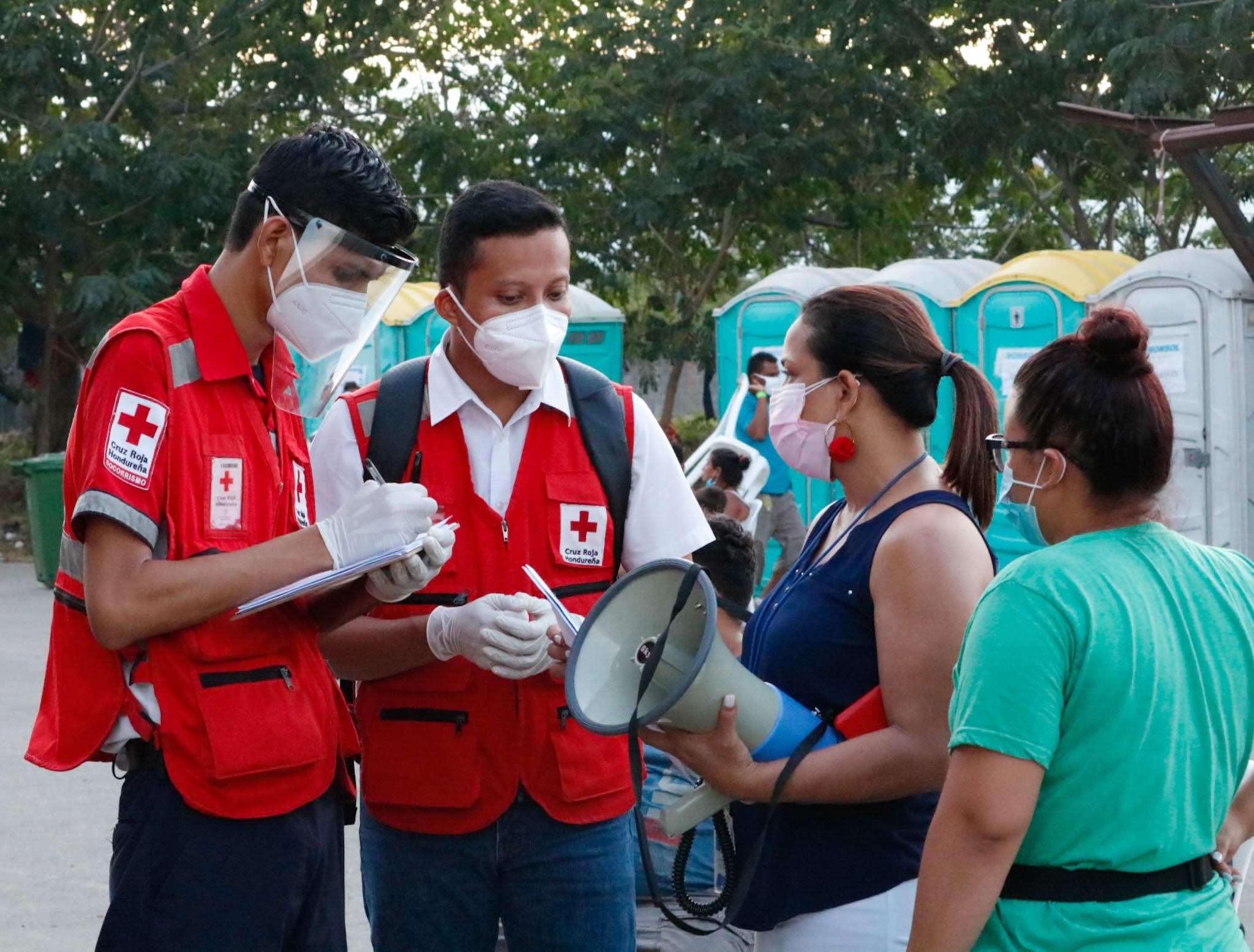
Honduran Red Cross: Early Warning Systems and strategic alliances
According to Manuel Isaula, Risk and Disaster Manager for the Honduran Red Cross, the National Society has invested in technical training for volunteers and staff in topics such as water rescue, pre-hospital care, cash transfer systems, water, sanitation and hygiene, and unmanned aerial systems (UAS). “This strategy, in addition to the Honduran Red Cross’ institutional strengthening processes such as the Preparedness for Effective Response (PER) Approach, allows us to be prepared for multiple hazards,” says Isaula.
The Honduran Red Cross also highlights its investment in Early Warning Systems (EWS) (specific measures guided by early warnings or forecasts to protect people before a disaster strikes), implemented in watersheds such as Chamelecón and Aguán.
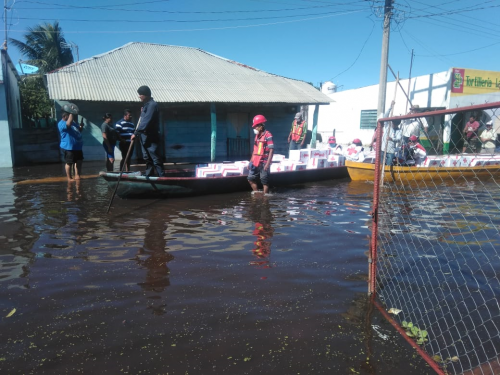
“The experience with Tropical Storm Sara, the last of the 2024 hurricane season, which affected more than 300,000 people in Honduras, showed the value of communities taking ownership of these early warning systems to ensure that the vulnerable populations receive the necessary information in time. That preparedness saved lives,” Isaula says. Another good practice in the face of tropical Storm Sara was establishing strategic alliances with national and international actors: “Effective coordination between government, non-government, and community organizations to ensure the appropriation of knowledge, risk analysis, monitoring, and response capacity was and will always be key in our preparedness and response plans,” Isaula concludes.
Guatemalan Red Cross: Development of Anticipatory Actions and Contingency Plans
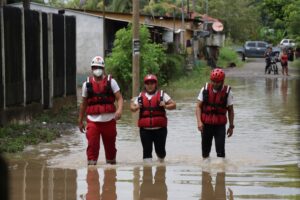 Teresa Marroquín, Director of Risk and Disaster Management at the Guatemalan Red Cross, states that the National Society has strengthened its hurricane response capacity through several key actions, such as the development of anticipatory actions: “Early Action Plans (EAPs) funded by the IFRC have been developed to respond to flooding caused by extreme storms. One successful example was the activation of Early Actions Plans during Tropical Storm Julia in October 2022, which helped us to provide a better response to those who needed it most,“ says Teresa.
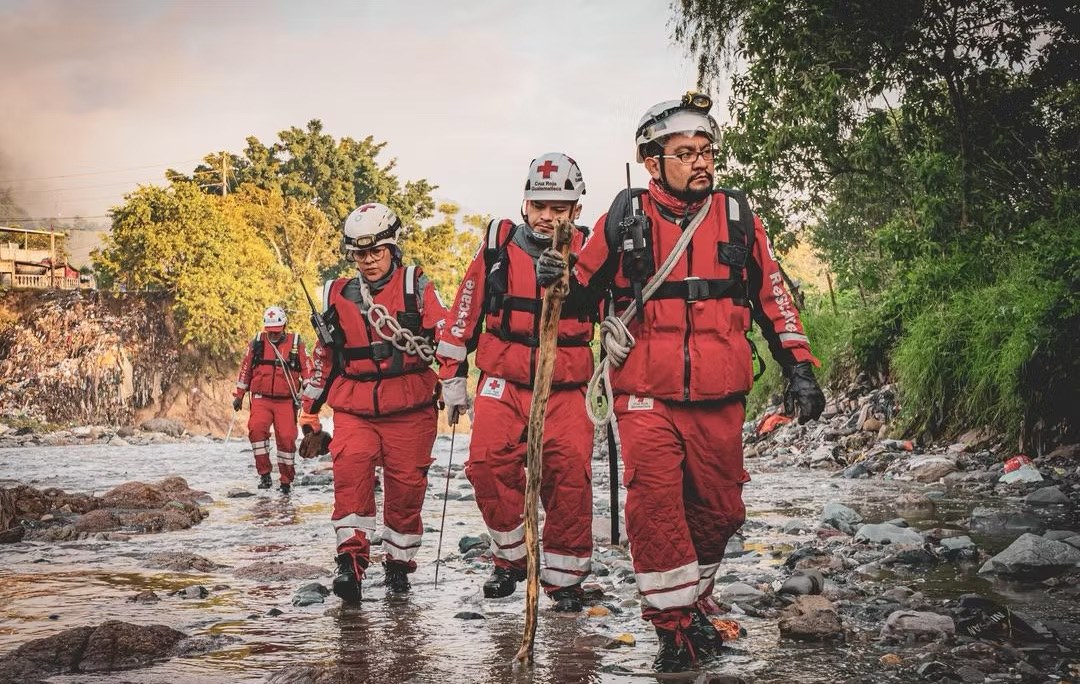
Close coordination with official weather forecasting sources is key to improving the effectiveness and efficiency of humanitarian operations during the hurricane season. Teresa also stresses the importance of developing contingency plans, providing training, and equipping volunteers for pre-hospital care and search and rescue in floods, especially in high-risk areas.
Salvadoran Red Cross: Pre-positioning of humanitarian aid and access to weather forecasts

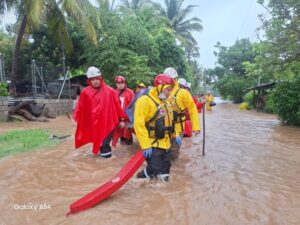 Additionally, the Salvadoran Red Cross also has contingency and response plans, which allow for more agile responses to extreme rainfall and landslides caused by tropical storms and hurricanes. According to Omar Ayala, Head of Crisis and Disasters at the Salvadoran Red Cross, the National Society has pre-positioned materials for humanitarian aid in its branches, guided by the national Hazards Observatory’s forecasts. “This strategy has significantly reduced response times: what could previously take up to two days, is now done in just two hours,” assures Omar. Furthermore, in the context of monitoring and early warning, the Salvadoran Red Cross has recently signed a letter of understanding with the Hazards Observatory: “This agreement allows us to access weather forecasts early to be better prepared for the eventual arrival of a hurricane,” says Omar.
Something that the National Society wants to promote even more — in preparation for this year’s hurricane season — is preventively reaching populations in risk areas, so they can know what to do before, during, and after a hurricane strikes.
These experiences in Central America confirm a vital lesson: preparedness is not optional, it is key to save lives. It requires sustained investment, strong partnerships, and the strengthening of National Society
capacities to deal with crises and disasters. But the hurricane season threatens not only countries like Guatemala, Honduras, and El Salvador, but also more than 30 territories in the Americas, which face increasing risks due to extreme weather events aggravated by climate change.
More information
- Access the webinars on: Hurricane Season and other Emergencies Preparedness – 2025
- Contact us: ns.preparedness@ifrc.org
- Visit PER webpage
Credits
Written by: Olivia Acosta / Design: Miguel Aguirre
This content was originally published in the IFRC National Society Preparedness Newsletter (June 2025)