
Heat Early Warning System in Bangladesh: Current status and recommendations

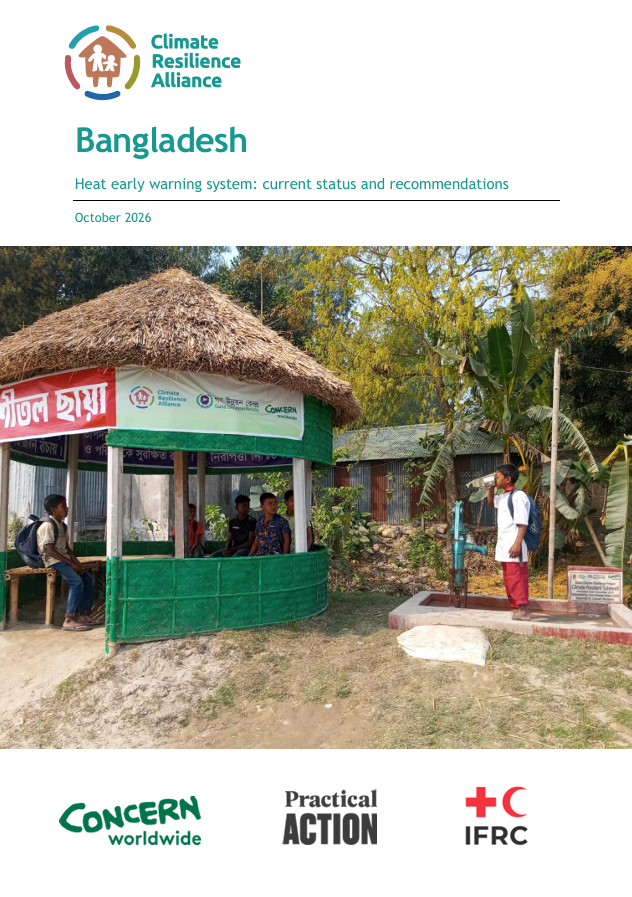
This case study examines the current state of Bangladesh’s heat early warning system, including how heat risk is understood and monitored, and how warnings are issued, communicated and acted upon across institutions. It finds that research and risk knowledge on heat are expanding, while the public heat early warning system remains largely hazard-based and nationally uniform. Although heat warnings are widely disseminated, translating them into locally actionable information remains a challenge. Preparedness is advancing through anticipatory action, city-level planning and an emerging national framework, but governance and institutional coordination remain central challenges in moving from warnings to action.
It complements the global report Understanding the Global Landscape of Heat Early Warning Systems and is part of a series of case studies across eight countries in the Zurich Climate Resilience Alliance. Together, the case studies apply a common analytical framework to assess heat early warning systems and identify good practices, gaps and enabling conditions for people-centred, impact-based early warnings for extreme heat.