English

Illustration of a park scene with a red fountain, a tree, and landscaping.

Extreme Heat Risk in Australia: Insights from the PERC

Heat through a systems lens. Credit: Australian Red Cross. Extreme heat is Australia’s deadliest natural hazard — yet it remains largely invisible, normalised, and under-addressed. This Post-Event Review Capability (PERC) on extreme heat presents a comprehensive, systems-based analysis of how heat risk is shaped, experienced, and managed in Australia. Rather than treating extreme heat as […]

Extreme Heat Risk in Australia: Insights from the PERC Read More »

How to ensure inclusive early warning early action? Good practices and local innovations from Eastern Nepal that leave no one behind.

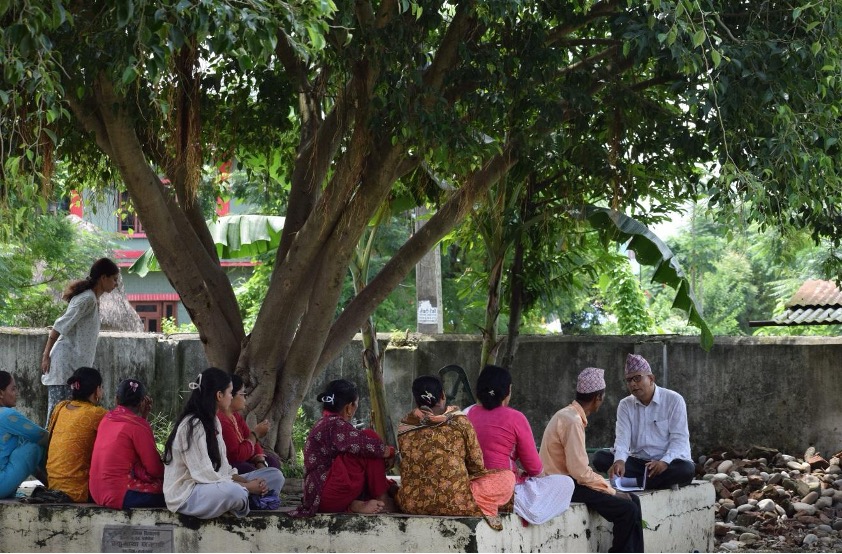
In this policy paper, published by the Finnish Red Cross in November 2025, the Nepal Red Cross Society shows how effectiveness in disaster preparedness depends on the meaningful participation of groups in the most vulnerable situations. It has a specific focus on persons with disabilities and women in Eastern Nepal. The policy paper aims to

How to ensure inclusive early warning early action? Good practices and local innovations from Eastern Nepal that leave no one behind. Read More »

Call for Proposals: Evaluation and Learning Consultant

The American Red Cross International Services Department is seeking an experienced Evaluation and Learning Consultant to support evaluation, learning, and future program design for its Enhanced Response Readiness Program, funded by Margaret Cargill Philanthropies. This global program strengthens disaster response readiness across the Red Cross Red Crescent (RCRC) network, with a focus on disaster operations

Call for Proposals: Evaluation and Learning Consultant Read More »

“Migrants Expect the Red Cross to be there”: Exploring Red Cross and Red Crescent continuity of care along migration routes

This report outlines findings from research commissioned by the The Global Disaster Preparedness Center (GDPC) exploring opportunities to support continuity of care along migration routes. The term “continuity of care” refers to consistent and connected assistance at different stages, and at different locations, along migration journeys. This was understood as applying to National Society programmes

“Migrants Expect the Red Cross to be there”: Exploring Red Cross and Red Crescent continuity of care along migration routes Read More »

Zurich Climate Resilience Alliance in the Philippines

As part of the Zurich Climate Resilience Alliance, the Philippine Red Cross, together with the International Federation of Red Cross and Red Crescent Societies, and Plan International are working with communities across the Philippines to improve community resilience, increase investment, and improve policies for climate resilience at all governance levels in the Philippines. The Philippines is

Zurich Climate Resilience Alliance in the Philippines Read More »

A silhouetted community volunteer uses a megaphone to deliver an early warning message outdoors, with sunlight behind them against a clear sky.

Strengthening Early Warning Systems for All: Evidence and Lessons from Last-Mile Communities

This report synthesizes findings from 15 GDPC-supported studies across 14 countries to examine why early warnings often fail to translate into timely, protective action — particularly for last-mile communities that are geographically isolated, socially marginalized, or economically vulnerable. Drawing on empirical research and complementary literature, the report highlights that early warning effectiveness is shaped not

Strengthening Early Warning Systems for All: Evidence and Lessons from Last-Mile Communities Read More »

A Systematic Review of Heat Health Warning Systems: Enhancing the Framework Towards Effective Health Outcomes

Purpose of Review Heat Health Warning Systems (HHWS) reduce heat-related morbidity and mortality. We reviewed scientific studies on HHWS that use meteorological variables, local climate-epidemiological evidence, personalization, and built environment factors to determine heat stress thresholds. We identified key factors to enhance their precision and effectiveness. Recent Findings We categorized the findings into three groups.

A Systematic Review of Heat Health Warning Systems: Enhancing the Framework Towards Effective Health Outcomes Read More »

Scroll to Top