Guidance material

What are the tricks for Constructing Earthquake-resistant Buildings?

“This booklet targets the key players in the construction process of non-engineered building construction aiming to empower them with the new knowledge to fulfill the basic requirements of earthquake resistant buildings. This booklet can be distributed to the comunities, to the social workers and disaster related organizations as an awareness tool for creating the demand […]

What are the tricks for Constructing Earthquake-resistant Buildings? Read More »

Rendre les villes plus résilientes: Manuel à l’usage des dirigeants des gouvernements locaux

Le présent Manuel à l’usage des dirigeants des gouvernements locaux offre aux maires, aux gouverneurs, aux conseillers municipaux ainsi qu’à d’autres responsables concernés un cadre générique pour la réduction des risques, et met en avant les bonnes pratiques et les outils qui sont déjà judicieusement appliqués dans les différentes villes à cet effet. Il apporte

Rendre les villes plus résilientes: Manuel à l’usage des dirigeants des gouvernements locaux Read More »

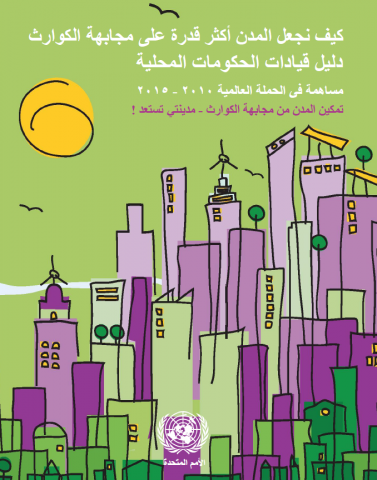
كيف نجعل المدن أكثر قدرة على مجابهة الكوارث: دليل قيادات الحكومات المحلية

حيث أن أكثر من نصف عد سكان العالم الآن يعشون في المناطق الحضرية، فإن جعل المدن أكثر أمنا يمثل تحديا طويل الأمد ولكن يمكن تحقيقه. والمدن هي محركات النمو الوطني، وتتسم بالحيوية في نظم حكمها وقدراتها. وعلى مرور التاريخ، أعاقت الأحداث الكارثية الحياة الحضرية. فالمناخ المتطرف والمتغير، والزلازل ، والطوارئ الناجمة عن المخاطر التي من

كيف نجعل المدن أكثر قدرة على مجابهة الكوارث: دليل قيادات الحكومات المحلية Read More »

IFRC Beneficiary Communications: Community Engagement, Mobile Technology, and Accountability in Disaster Response

This IFRC briefing note provides an overview of beneficiary communications as a strategic approach to connecting humanitarian programming with affected populations. It defines beneficiary communications as a cross-cutting function that spans the full disaster management cycle — from preparedness and early warning through response and recovery — and positions it as both a community engagement

IFRC Beneficiary Communications: Community Engagement, Mobile Technology, and Accountability in Disaster Response Read More »

Social Vulnerability, Sustainable Livelihoods and Disasters: Integrating Vulnerability Analysis into Development and Humanitarian Programming

This report, prepared for DFID’s Conflict and Humanitarian Assistance Department and Sustainable Livelihoods Support Office, examines the conceptual and practical links between social vulnerability, sustainable livelihoods, and disaster risk reduction. Its central argument is that effective disaster preparedness cannot be separated from mainstream development work, and that vulnerability analysis offers a practical bridge between humanitarian

Social Vulnerability, Sustainable Livelihoods and Disasters: Integrating Vulnerability Analysis into Development and Humanitarian Programming Read More »

CBDRR Training Materials – Facilitator’s Guide

A collection of training materials on community based disaster risk reduction (CBDRR) collected by the Red Cross Red Crescent national societies in South-East Asia. This facilitator’s guide presents a standardized training curriculum on community-based disaster risk reduction (CBDRR) developed by the International Federation of Red Cross and Red Crescent Societies (IFRC) South Asia Regional Delegation,

CBDRR Training Materials – Facilitator’s Guide Read More »

Scroll to Top