
Urban Community Resilience Toolkit
Urban Community
Resilience Toolkit

Introduction
By 2050, two thirds of the world's population will be living in cities and towns, with over 90% of this growth occurring in the less developed parts of East Asia, South Asia, and Africa. In the Latin America and Caribbean (LAC) region, over 80% of the population currently lives in cities and towns. Many of the world's cities lack adequate infrastructure and resilient systems to withstand the impacts of multiple hazards and disaster risks. As a result, the risks and vulnerabilities of underserved urban communities are becoming more complex and intersecting with environmental, societal, and economic challenges.
Urban hazards often create cascading effects, such as floods leading to power outages. Cities, with their densely packed populations, face increased competition for resources, and their complex infrastructure-like water, sanitation, and transport systems-leaves residents highly dependent and vulnerable when these systems fail. Cooperation and coordination among multiple stakeholders is crucial to managing these risks.
about risks associated with urban context
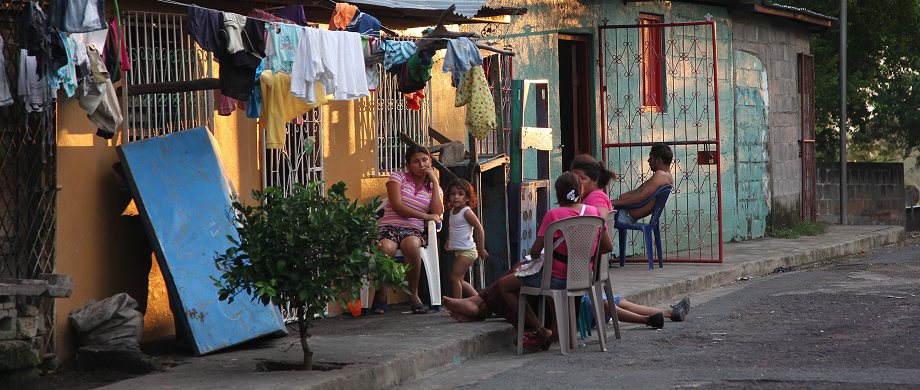
At the same time, people living in cities are themselves agents of change and have significant resources, skills, and capacities to bring to resilience efforts in their own communities and across their cities and districts. The IFRC and our member National Societies are helping urban communities worldwide be more prepared for, and resilient to, increasing and changing hazards particularly in coastal cities of the developing countries. Working effectively in urban contexts requires an intentional focus on how National Societies and their partners can get better at understanding and navigating the complexities of urban environments, leveraging their strengths.
about IFRC Urban Resolution
Every city, every National Society and community is different in so many ways that, any attempt at strengthening the resilience of the vulnerable communities necessitates a process that reflects the diversities in urban settings. IFRC has developed and tested a process in cooperation with the Red Cross and Red Crescent National Societies of Bangladesh, Indonesia, Honduras, Tanzania and Vanuatu in more than 12 cities over the period 2015-2025. The learning from this experience which is depicted in the graphic below aims to inspire the National Societies, cities and communities to design their own journey.
This tool is Part 1 of of the Urban Community Resilience Toolkit which includes following parts:
- Understanding what the Urban resilience programming process entails.
- Engaging with existing city actors and stakeholders with varied mandate, skills and knowledge.
- Carrying out city-wide risk assessment (CWRA) to identify and prioritize risks at city scale and identify target communities.
- Engaging with target communities and applying community-based tools and approaches (EVCA).
- Co-designing solutions to address the priority risks identified through the above processes.
Full Process Steps
Engage with internal and external stakeholders
1
- Identify your internal and external stakeholders
- Form an internal task force
- Engage with city/regional and national authorities. For example, municipality and meteorological agencies
- Explore if there are existing multi-stakeholders groups that are aligned with your goals
- Decide whether joining an existing group or set up a new coalition
Set up your coalition and plan for the city-wide risk assessment
2
- Set up regular meetings with the assessment task force
- Decide the scale of the risk assessment
- Identify data/information needs and sources
- Identify training needs, e.g. heat, climate change, coastal hazard, digital mapping.
- Coordinate with other teams e.g. heat risk perception, EWEA etc.
- Explore existing resources (monetary and in-kind) band funding opportunities.
- Explore matching grant mechanisms, and potential resources
- Make a plan to carry out CWRA
Carry out the city -wide risk
assessment (CWRA)
3
- Identify systemic issues to be addressed at the city scale.
- Identify the priority problems to be solved under your project/initiative
- Identify the target communities and/or neighborhoods.
- Ensure the pledges from members of the coalition to contribute to your project/initiative (according to their mandate and resources).
- Explore external technical assistance to support you from the local academia, MET agencies, and other resources.
- Discuss the findings with the coalition members and finalize the CWRA
- Develop a CONCEPT for a project/initiative and identify roles, responsibilities and budget
- Agree on finding sources and mechanisms
Conduct EVCA at the target communities
4
- Validate CWRA findings with EVCA process and prioritize the changes you want to address and target groups.
Complete co-design workshops
5
- As a coalition, through the workshops develop the solutions for the priority problems identified.
- Select the top 3-5 solutions for the implementation of your concept project/initiative.
Implement, monitor, report, capture, and share learnings
6
- Consider adapting matching grants modality to create city-wide impact
- Develop a learning agenda to facilitate capturing and sharing knowledge
Engage with internal and external stakeholders and set up/join a city coalition
You can start by exploring if there are existing multi-stakeholder groups that are aligned with your goals. By working together, community organizations can combine their efforts together with local governments, the business community, academic and media organizations, and other partners to increase their collective impact and plant the seeds for sustainability and resilience within communities. You can either set up a new coalition or join an existing one, bringing in new perspective e.g. climate change adaptation, social cohesion. As an example, while implementing the Coastal City Resilience and Extreme Heat Action Project, Bangladesh Red Crescent Society has worked with the existing town level coordination committees (TLCC), while the Tanzania Red Crescent Society set up new city coalitions co-led by local governments.
Carry out City-wide risk assessment
When you have a set of interested stakeholders to join the coalition, you can start planning for the city-wide risk assessment process. The main deliverables of the CWRA process are:
- CWRA multi-stakeholder workshop(s) to identify priority risks and to create buy-in and align the resilience pathways with your coalition members.
- The CWRA report which incorporates secondary and primary data collection to identify target communities and inform the solution design phase.
The CWRA process should incorporate collecting and analysing secondary data -with support from the academic institutions and experts in your city- and in some cases results of the EVCA that you might have already completed. If you have already done community level risk and vulnerability assessments, you can incorporate these into the CWRA process.
However, you should remember that CWRA process should be carried out with the city coalition members. You should seek to achieve a consensus among the coalition members on which hazards/threats and communities (geographical or non-geographical) to target.
The full assessment process will probably take two to four months. At the end, you will not have done everything or know everything, but you will know enough to pick entry points to build the resilience of vulnerable communities in your city.
Co-design solutions and implement
After completing the CWRA process, you can move to engaging with the target communities using the IFRC Road-Map 2 Resilience Toolkit and start co-designing solutions for community resilience.
You can read about the experience of National Societies of Honduras, Tanzania RC, in applying the design process to develop viable solutions to the priority risks that the city coalition identified here.
The Matching Grant modality is developed as a mechanism to find a balance between going to scale and practical action will require innovative approaches. In this model, all the coalition members are expected to contribute to the city
solutions that are agreed upon. Some of these can be integrated into city investment plans or ideas can be developed to make the existing investment plans risk informed, climate smart and sustainable. Collaborative efforts matching grants often lead to stronger partnerships and relationships between coalition members and enhance an organizations’ visibility and credibility with the public.
Developing a learning agenda is another important step to build a foundation of practice and knowledge which can be learned from and scaled from the project activities. Typically, the projects or initiatives have indicators and monitoring
and evaluation plans in detail. Learning in a broader sense, which requires a parallel process of reflection and learning from not just our experience but of our partners and the communities. For that it is recommended to develop a
Learning Agenda right at the start. As an example explore the learning agenda of CoCHAP project.
urban resilience programmes across IFRC