
City-wide Risk Assessment and Tools
City-wide Risk
Assessment and Tools

Introduction
The IFRC and our member National Societies are helping urban communities worldwide be more prepared for, and resilient to, increasing and changing hazards particularly in coastal cities of the developing countries.
Working effectively in urban contexts requires an intentional focus on how National Societies and their partners can get better at understanding and navigating the complexities of urban environments, leveraging their strengths.
about IFRC Urban Resolution
IFRC has developed and tested a process in cooperation with the Red Cross and Red Crescent National Societies of Bangladesh, Indonesia, Honduras, Tanzania and Vanuatu in more than 12 cities over the period 2015-2025. The learning from this experience which is depicted in the graphic below aims to inspire the National Societies, cities and communities to design their own journey.
This tool is Part 2 of of the Urban Community Resilience Toolkit which includes following parts:
- Understanding what the Urban resilience programming process entails.
- Engaging with existing city actors and stakeholders with varied mandate, skills and knowledge.
- Carrying out city-wide risk assessment (CWRA) to identify and prioritize risks at city scale and identify target communities.
- Engaging with target communities and applying community-based tools and approaches (EVCA).
- Co-designing solutions to address the priority risks identified through the above processes.
Carry out City-wide risk assessment
When you have a set of interested stakeholders to join the coalition, you can start planning for the city-wide risk assessment process. The main deliverables of the CWRA process are:
- CWRA multi-stakeholder workshop(s) to identify priority risks and to create buy-in and align the resilience pathways with your coalition members.
- The CWRA report which incorporates secondary and primary data collection to identify target communities and inform the solution design phase.
The CWRA process should incorporate collecting and analysing secondary data -with support from the academic institutions and experts in your city- and in some cases results of the EVCA that you might have already completed. If you have already done community level risk and vulnerability assessments, you can incorporate these into the CWRA process.
However, you should remember that CWRA process should be carried out with the city coalition members. You should seek to achieve a consensus among the coalition members on which hazards/threats and communities (geographical or non-geographical) to target.
The full assessment process will probably take two to four months. At the end, you will not have done everything or know everything, but you will know enough to pick entry points to build the resilience of vulnerable communities in your city.
CWRA multi-stakeholder city coalition workshop(s)
Depending on the complexity of the challenges faced by the city as well as the scale of your ambitions for the impact you want to create, you may need to have multiple workshops. The workshop set up and activities given here are designed to be fully participatory. Plan ahead to involve coalition members, academia or any other relevant experts in designing and delivering the sessions.
The coalition does not have to be fully committed to complete the workshop; rather it is aimed to help you in the process of forming the city coalition. As you implement the tools, the places where you have gaps in your information and knowledge will help identify who else needs to be in the coalition and what stakeholders and experts need to be a part of the resilience-building process. If you add additional coalition members part-way through your work, remember
that the resilience measurement process does not need to be restarted; you can simply review with them what you have done so far and then keep going.
A facilitator may be required to implement this toolkit to make the process move more smoothly. The facilitator does not need to be a professional facilitator hired externally; rather, she/he can be someone from your organization or one of the coalition organizations familiar with the concepts presented in this toolkit.
You could also use the process to nurture facilitation skills in your organization and coalition by assigning different members of the coalition to facilitate different parts of the toolkit.
Before the workshop, the task force should do the basic information collection to enable stimulating and relevant discussions during the workshop. As an example, if your city has already done risk mapping, bring those risk maps into
the Mapping Shocks and Stresses session and use them as a starting point.

Tips for Facilitation
1
Make sure the participants are relaxed and feel free to share their insights, interact and have fun. We want to bring out the best ideas from everyone, so trust has to be built right from the beginning.
2
Make adjustments in the agenda and the group exercises to fit into local context, level of knowledge of
participants.
3
Avoid presentations and “lecturing”. As much as possible make each session interactive. If needed ask the local organisation to make a presentation on technical subjects because they will know best about their context.
4
If possible, arrange a “workspace” with 2-3 tables for participants do their regular work, check emails etc. if they absolutely have to. Let them know about this opportunity and kindly ask them refrain from using their phones of laptops during the sessions. This will help avoiding distractions.
5
If you use remote presentation or participation, make sure the audio in the room is set up properly so that everyone can hear and speak.
6
Design the group session to build on
each other and lead to a result
(resilience actions).
7
Prepare flipcharts with the graphs
shown in the activity sheets written on them ahead of each group work.
8
Always take pictures of the product of the group works and activities. If
possible, video would be good to capture the dynamics of the workshop.
9
Prepare and share a workshop report with the participants.
Sessions for the CWRA workshop(s)
It is recommended to plan for a three-day CWRA workshop. If needed, you can organize it on weekends, in the evenings on multiple days if your coalition members are not able to attend in three consecutive days. The important part is to complete the tasks as much as possible in a participatory way to ensure ownership and commitment to take action by the coalition members.
You can find a sample agenda and detailed descriptions of recommended sessions and group exercises for the CWRA process workshops in the following section. Choose the sessions that fits into your context, adjust the duration and add breaks as needed. Some of the sessions can be repeated in different workshops and as needed, for instance if the composition of the coalition changes or there is a delay in the process.
Choose ice breakers/games/activities that are appropriate for the context.
other innovative engagement activities
CWRA to identify target communities
The city-wide risk assessment process should be reinforced through collecting and analyzing secondary data related to top shocks and priorities identified during the CWRA workshops together with the coalition members. If the National Society has the in-house technical expertise, this can be done internally. However, in many cases, the National Societies obtain external technical assistance in the form of hiring consultants or in-kind contributions from academia or other organizations.
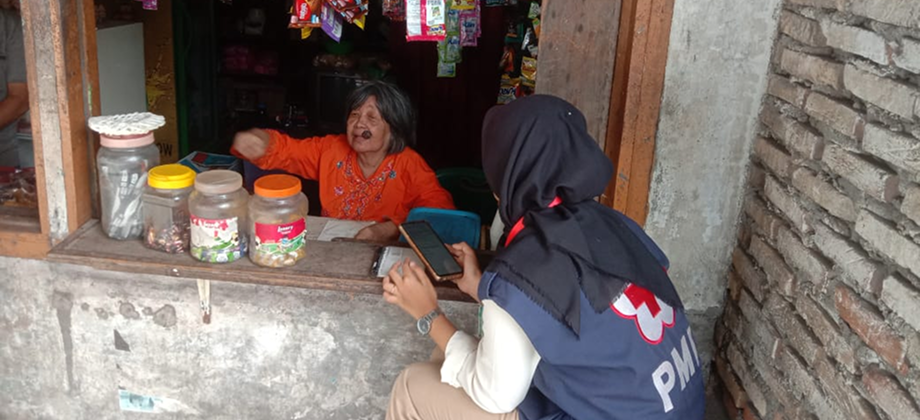
The purpose of the CWRA report is two-fold:
- Compile and analyze secondary data and information on the city regarding the city systems, hazards, demographics and climate policy landscape.
- Synthesize the findings of above and the outputs of the CWRA workshops to identify the target communities and/or neighborhoods.
A template scope of work for CWRA report
CWRA workshop agenda and group exercises
Choose the sessions that fits into your context, adjust the duration and add breaks as needed. Some of the sessions can be repeated in different workshops and as needed for instance if the composition of the coalition changes or there
is a delay in the process.
Choose ice breakers/games/activities that are appropriate for the context. Make sure that the results will encourage participants from different organizations to sit on the same table ensuring good mix.
| TIME | SESSION | FORMAT | DESCRIPTION & NOTES |
|---|---|---|---|
| Setting the scene | Ensure the room has tables to enable group work. Find creative ways to form the groups with a good mixture of participants from different organizations and backgrounds. | ||
| 10’ | Workshop purpose agenda | Facilitator | Write daily agenda on a flipchart each day and go over it in the morning and at the end to see if the agenda is completed. |
| 30’ | Building the foundation: Key Concepts |
Presentation Interactive |
The objective is to go over the basics of urban risk and climate change and key concepts e.g. adaptation, mitigation, heat urban, city facts etc. If needed invite external experts to cover this session.
RECOMMENDED: You can design the session as TRUE or FALSE by introducing set of statements and asking the participants if they think it is true or false. Ask one person from the groups who answered true or false to explain why they answered that way. It creates a group dynamic right from the start. |
| 20’ | How well we know our city? | Interactive | This will need pre-workshop preparation. See the description for group exercise #1 |
| 40’ | What is happening in our city? | Interactive | This activity is to identify the positive and negative trends the participants observe in the last 20 years in the city. See the description for group exercise #2 |
| 15’ | Systems thinking/resilience | Presentation | This session is to introduce the basics of system thinking and concept of resilience in urban settings. The facilitator can ask about the word for "resilience" in local language and have a discussion about what it means. |
| 20’ | Working together | Presentation |
To introduce the concept and benefits of coalition, the expectations. Prepare slides from the Coalition Building guide.
RECOMMENDED: You can design the session as TRUE or FALSE by introducing set of statements and asking the participants if they think it is true or false. Ask one person from the groups who answered true or false to explain why they answered that way. |
| 20’ | Resilience vision for my city | Interactive | The aim is to come up with a collective resilience vision and pathways for the city. See the description for group exercise #3 |
| 20’ | Barriers to resilience | Interactive | To facilitate a discussion around the physical and social barriers to realize the agreed resilience vision and pathways. See the description for group exercise #4 |
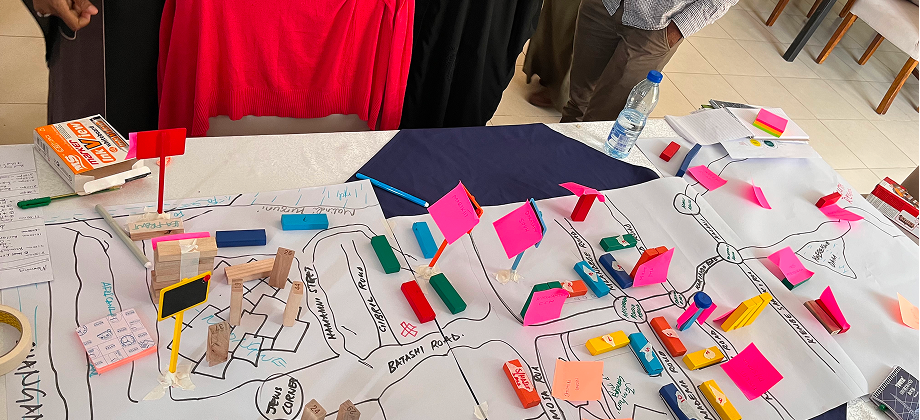
| 30’ | Mapping city systems | Interactive | To have each group produce a map of city systems using different materials. This activity requires bringing into the room various materials, e.g. ropes, blocks, toys etc. to be used to create three dimensional maps. See the description for group exercise #5. REMIND them "not to use digital maps". |
| 50’ | Mapping priority shocks and stresses | Interactive | Using pre-drawn charts, each will identify shocks and stresses that affects the city. See the description for group exercise #6 |
| 3 hrs | Learning to see city systems | Field Visit | Depending on your time constraints, identify one or more locations in the city where there is a lot of activity and systems to observe. See the description for group exercise #7. This activity requires prior preparation and, in some cases, necessitates consent of the community e.g. when visiting informal settlements or marginalized communities. Allow 10 minutes for briefing the participation before the field visit and 20 minutes for debriefing after returning to the venue. |
| 30’ | Impacts of the top 3 shocks and stresses on systems and people | Interactive | To identify the top 3 shocks and stresses, the facilitator will consolidate all the entries from the group exercise for “Mapping priority shocks and stresses” into one chart, ask participants to discuss and vote for the most important ones they think the project should address. Ask each group to comment on one of the other group's work (What they liked/agree/didn't agree/think differently). See the description for group exercise #8 |
| 20’ | Stakeholder mapping | Interactive | This session is to map who is doing what in the city, who are the key actors that might be working on the areas that are relevant to the discussions so far. See the description for group exercise #9 |
| 45’ | Managing the Coalition role-play game | Interactive | This is a game aims to share perspectives on managing coalitions and the benefits and limitations of coalitions. See the description for group exercise #10 |
| 30’ | Resilience actions to take across scales | Interactive | To map actions currently being taken to address the top three shocks and stresses identified in the city. See the description for group exercise #11 |
| 20’ | Signing up for main project activities | Interactive | Put the titles of main project activities such as heat Action Planning, City risk assessment etc. and ask everyone put their names, titles, and potential contribution on each activity. MAKE SURE to add these to the tracking sheet. |
| 20’ | Naming the coalition | Interactive | Ask each group to come up with a name for their coalition. After their reveal their choice, facilitate a lively discussions on what they like/ not like and consolidate into one name that everyone agrees for the coalition. |
| 10’ | Co-leads and Task force leads | Interactive | Ask participants to volunteer for co-leading the coalition and leading some of the activities. |
| ADDITIONAL | |||
| 1-2 hrs | Resilience building examples in the city | Presentation | Invite experts from different fields, academia and organizations (local or national, remote or in person) to present their work. You can also ask some of the participants on the spot to present. It can be just talk without slides. |
| Ice breakers and fun activities | Interactive | Include as many ice breakers and fun activities as the time allows to enable participants get to know each other and create a team. | |
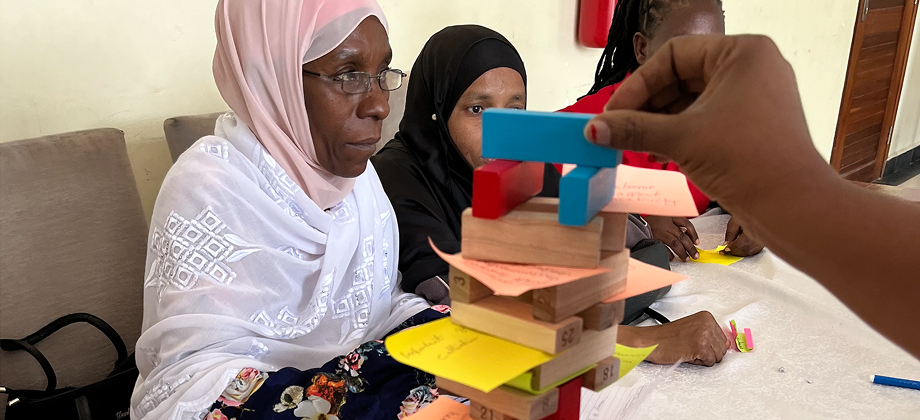
| Learning towers | Interactive | This is to enable participants to reflect on what they are learning. you can give participants colorful blocks or some kind of toys that they can stockpile to create learning towers for every new thing they learned. It can be done throughout the workshop. | |
| Participant led sessions | Can be repeated throughout the workshop as needed. |
Description of the Group Exercises for the CWRA Workshops
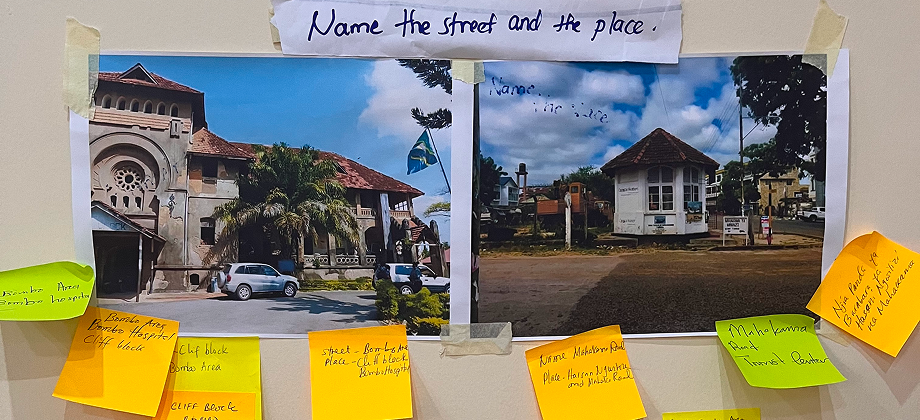
Sample Group Exercise 1: How well do we know our city?
PURPOSE
To help participants visualize their city and warm up to collective thinking.
INSTRUCTIONS
- Gather old pictures of the different neighborhoods, landmarks, natural resources, major events etc. that define the city or famous people or leaders. Put them all on the walls.
- Form groups of 3-4 participants.
- Ask each group to look at the materials, discuss among themselves and write down what and where these are.
- The group that has the most correct answers will score.
Need This in Another Language?
-
Download the PDF
- Open Google Document Translation
-
Upload the PDF and select your language