Briefs and Fact Sheets

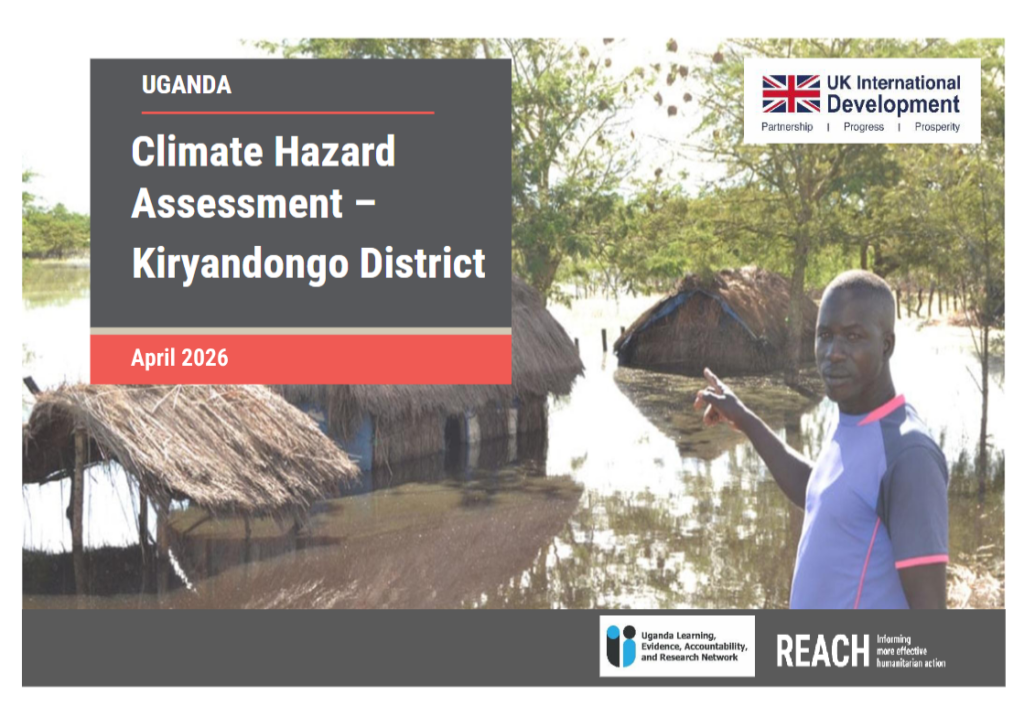
Climate Hazard Assessment – Kiryandongo District

Published in April 2026 by REACH, this report evaluates climate risks in Kiryandongo District, Uganda, where rising temperatures and erratic rainfall threaten over 165,000 refugees and local host communities. Prolonged dry spells and high evapotranspiration cause severe drought stress, crop failures, and water shortages, particularly in Mutunda, Bweyale, and the Ranch 1 and 37 refugee

Climate Hazard Assessment – Kiryandongo District Read More »
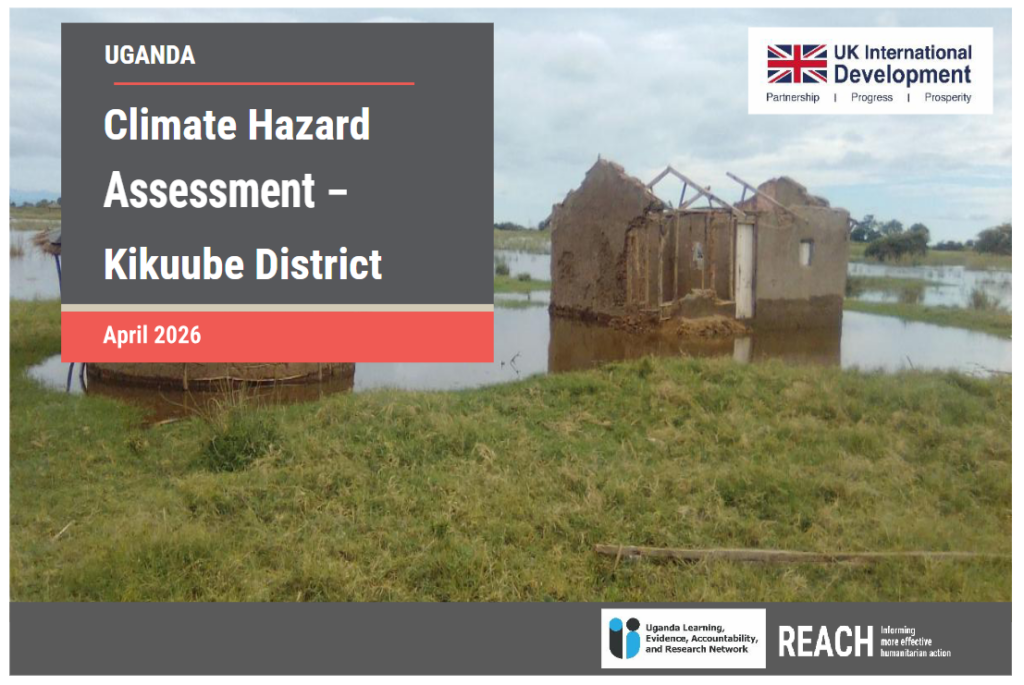
Climate Hazard Assessment – Kikuube District

This climate hazard assessment evaluates drought, flooding, and heat stress risks across Uganda’s Yumbe District, home to the large Bidibidi Refugee Settlement. Combining geospatial mapping, historical climate data, and future projections, the report highlights how temperature increases and unpredictable rainfall strain local resources, agriculture, and infrastructure. The study outlines key spatial vulnerabilities, showing severe dry-spell

Climate Hazard Assessment – Kikuube District Read More »

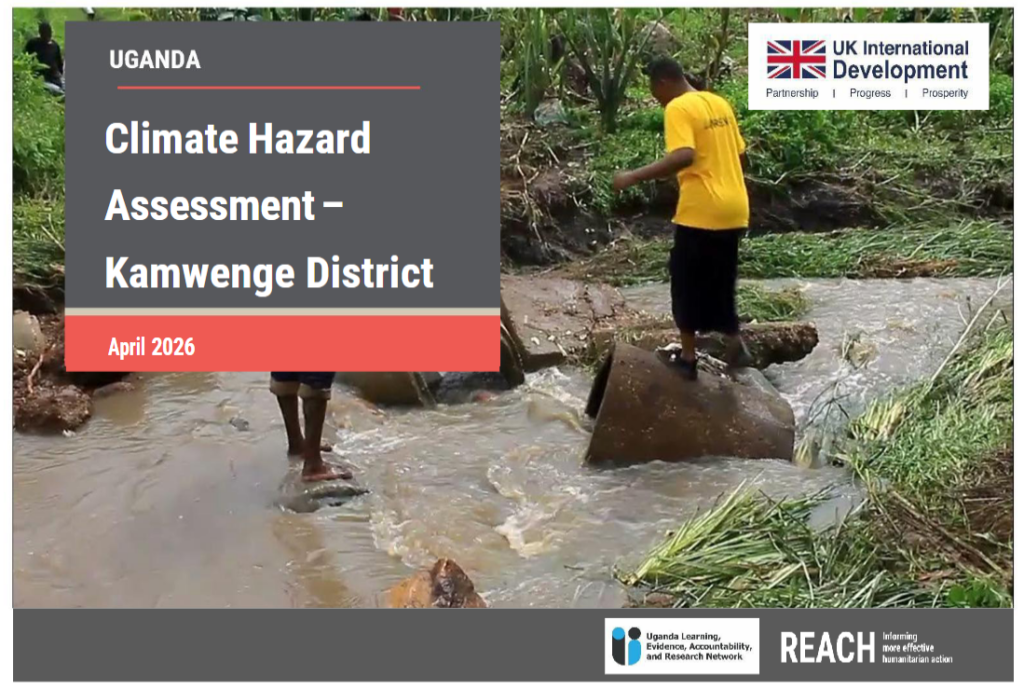
Climate Hazard Assessment – Kamwenge District

The Climate Hazard Assessment – Kamwenge District examines how changing climate patterns are affecting one of Uganda’s major refugee-hosting districts. It analyses historical and projected changes in rainfall and temperature, alongside seasonal drought and flood risks, with particular attention to impacts on agriculture, water availability, livelihoods and settlement infrastructure. The assessment finds that Kamwenge is

Climate Hazard Assessment – Kamwenge District Read More »

El Niño Outlook for Asia Pacific 2026–2027: Hazards, Vulnerability, and RCRC Response

This factsheet, produced by IFRC in July 2026, summarizes expected El Niño impacts across Asia Pacific through 2027 and the preparedness and response activity already underway across the region. El Niño is underway in the tropical Pacific and is expected to bring unusual rainfall and temperature patterns across the Pacific, South Asia, and Southeast Asia,

El Niño Outlook for Asia Pacific 2026–2027: Hazards, Vulnerability, and RCRC Response Read More »

Whitepaper – 18 myths about public warning systems — debunked.

This whitepaper, produced by public warning technology provider Intersec, tackles 18 common misconceptions that slow or distort the deployment of public warning systems (PWS) — particularly in the Global South, where implementation often stalls not for lack of funding or political will but because of persistent myths about cost, complexity, intrusiveness, and deployment time. Framed

Whitepaper – 18 myths about public warning systems — debunked. Read More »

Urban Heat Governance: Assessing Institutional Capacity to Manage Extreme Heat in Cities of the Global South

Extreme heat is the deadliest climate hazard — yet it remains the least governed. This policy brief, produced by the IFRC Climate Centre in partnership with University College London, presents findings from an analysis of heat-related urban governance across 83 coastal cities in the Global South. The central finding is stark: despite rapidly escalating heat

Urban Heat Governance: Assessing Institutional Capacity to Manage Extreme Heat in Cities of the Global South Read More »

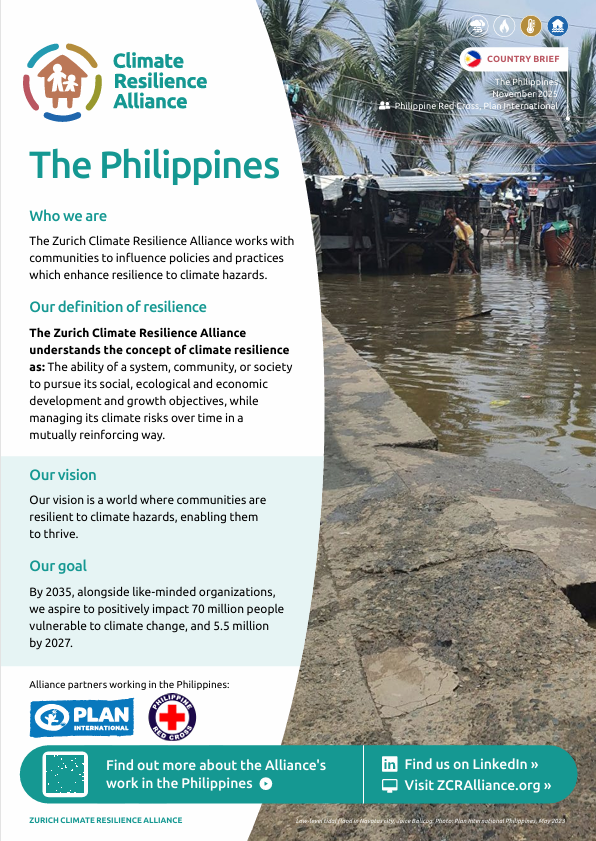
Zurich Climate Resilience Alliance in the Philippines

As part of the Zurich Climate Resilience Alliance, the Philippine Red Cross, together with the International Federation of Red Cross and Red Crescent Societies, and Plan International are working with communities across the Philippines to improve community resilience, increase investment, and improve policies for climate resilience at all governance levels in the Philippines. The Philippines is

Zurich Climate Resilience Alliance in the Philippines Read More »

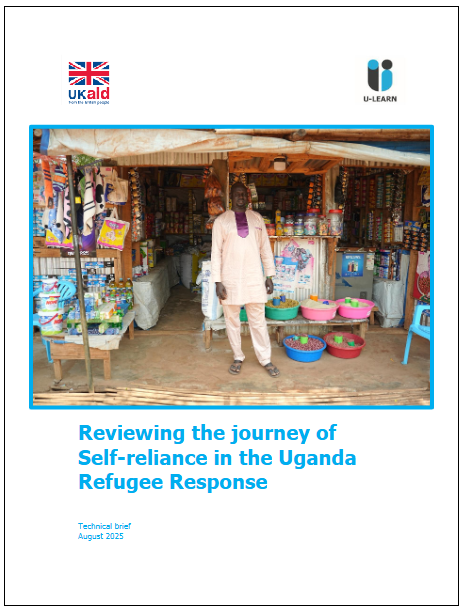
Reviewing the journey of Self-reliance in the Uganda Refugee Response

The Self-reliance brief captures the state of affairs of self-reliance policy and programming in Uganda’s refugee response. It analyses evolving trends, highlights questions and concerns, and reflects on ways forward. Ultimately, the goal is to inform and guide key actors (i.e. the government, refugee actors and their partners, donors) in their efforts to formulate, support,

Reviewing the journey of Self-reliance in the Uganda Refugee Response Read More »

Scroll to Top