The Ethiopian Red Cross’s Emergency Operations Centre Strengthens Crisis Response
 April 28, 2026
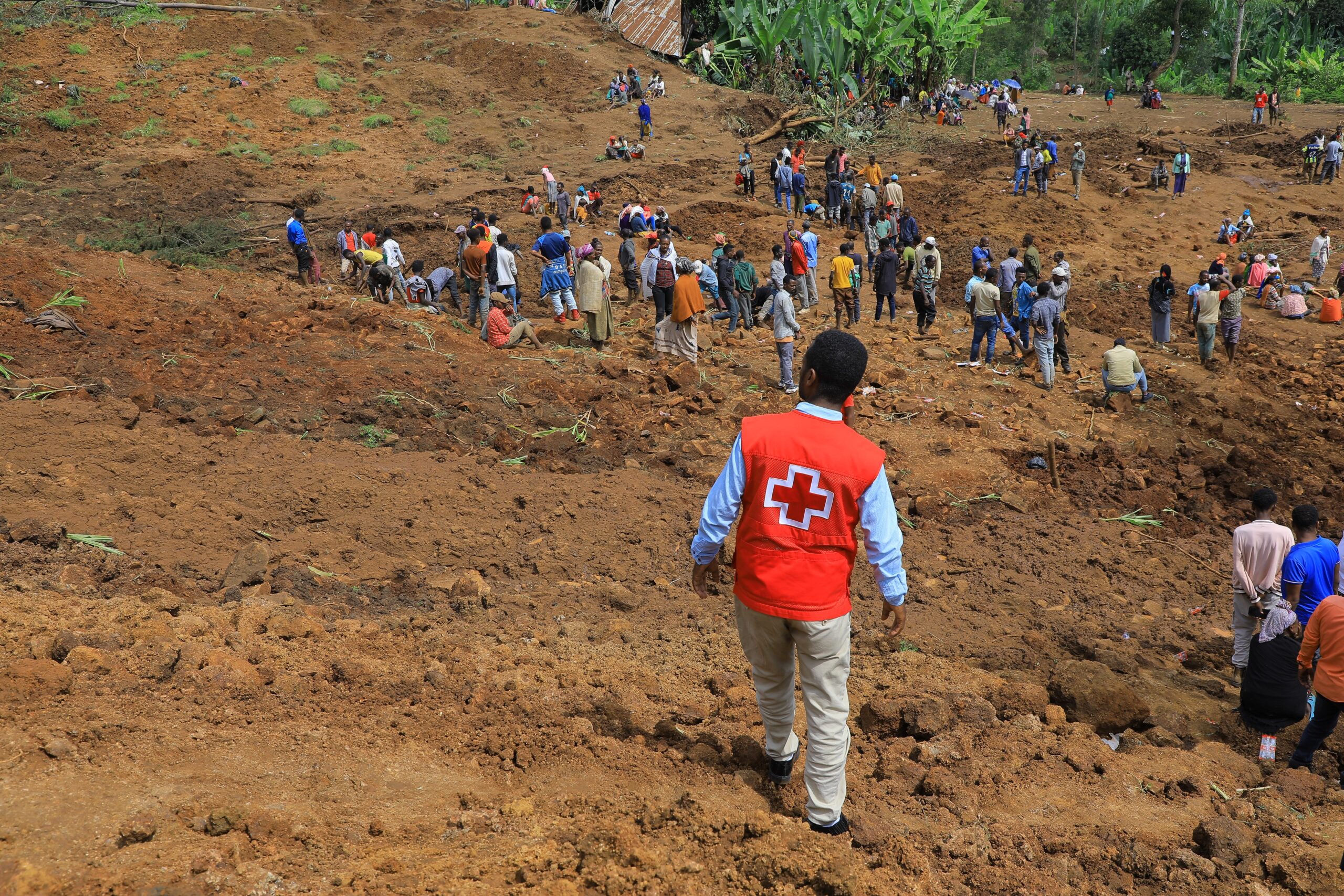
From conflict to climate-related disasters, this Emergency Operations Centre is transforming how the Ethiopian Red Cross monitors risks, coordinates response, and delivers timely humanitarian assistance.
In a country increasingly affected by floods, droughts, cyclones, and public health emergencies, preparedness is not optional; it is essential. For the Ethiopian Red Cross Society (ERCS), the Emergency Operations Centre (EOC) has become a cornerstone of that preparedness, transforming the way emergencies are monitored, coordinated, and responded to nationwide.
According to Abeje Gebremedhin, Director of the Information Communication Technology Department at the Ethiopian Red Cross, the ERCS made a strategic decision to harness information and communication technology to strengthen disaster risk management. “This approach is closely aligned with the digital transformation agenda and evidence-based analysis championed by the IFRC, reflecting the ERCS’s commitment to modernizing its operations for greater efficiency and impact.”
Since the creation of the EOC at ERCS headquarters in 2019, the Ethiopian Red Cross has expanded this model to eight regional branches. Today, the EOC serves as a centralized coordination hub, integrating information management, operational oversight, and strategic decision-making within one unified system. By connecting headquarters with branches, volunteers, government authorities, and humanitarian partners, the EOC ensures that information flows quickly and clearly in all directions.
“When managing emergencies, there must be a clear system to handle information coming in and going out,” explains Abeje. “The EOC provides an institutional framework that clarifies responsibilities and improves organized response at all levels.”
Standardized operating procedures for a timely and coordinated action

Standardized operating procedures (SOPs) and clearly defined escalation thresholds help ensure that responses are triggered at the appropriate level (district, regional, or national), depending on the scale of the crisis. This clarity reduces delays and strengthens accountability. At the heart of the EOC’s effectiveness is real-time situational awareness. Rapid assessments from field teams feed directly into the system, where data is analyzed and transformed into concise fact sheets and situation reports for decision-makers and partners.
“Information comes from the ground through rapid assessments. We analyze it, and decisions are based on real data—not assumptions,” says Abeje.
Recent emergencies demonstrate how this system supports timely and coordinated action. In October 2025, armed conflicts in the Gammo, Konso and Ale zones of southern Ethiopia resulted in 18 deaths, 13 injuries and the displacement of more than 9,400 people. Through the EOC, the Ethiopian Red Cross was able to quickly consolidate field information, coordinate ambulance services and emergency shelter support, and share situation updates with partners to guide the humanitarian the response.
The EOC has also been instrumental in monitoring the volatile situation in the Amhara region, where an ongoing conflict has displaced more than 100,000 people in areas such as Kobo and North Wollo. By consolidating assessments from branches, coordinating with humanitarian actors, and tracking operational capacities, the EOC helped ensure that the Red Cross response remains aligned with the most urgent needs of affected communities.
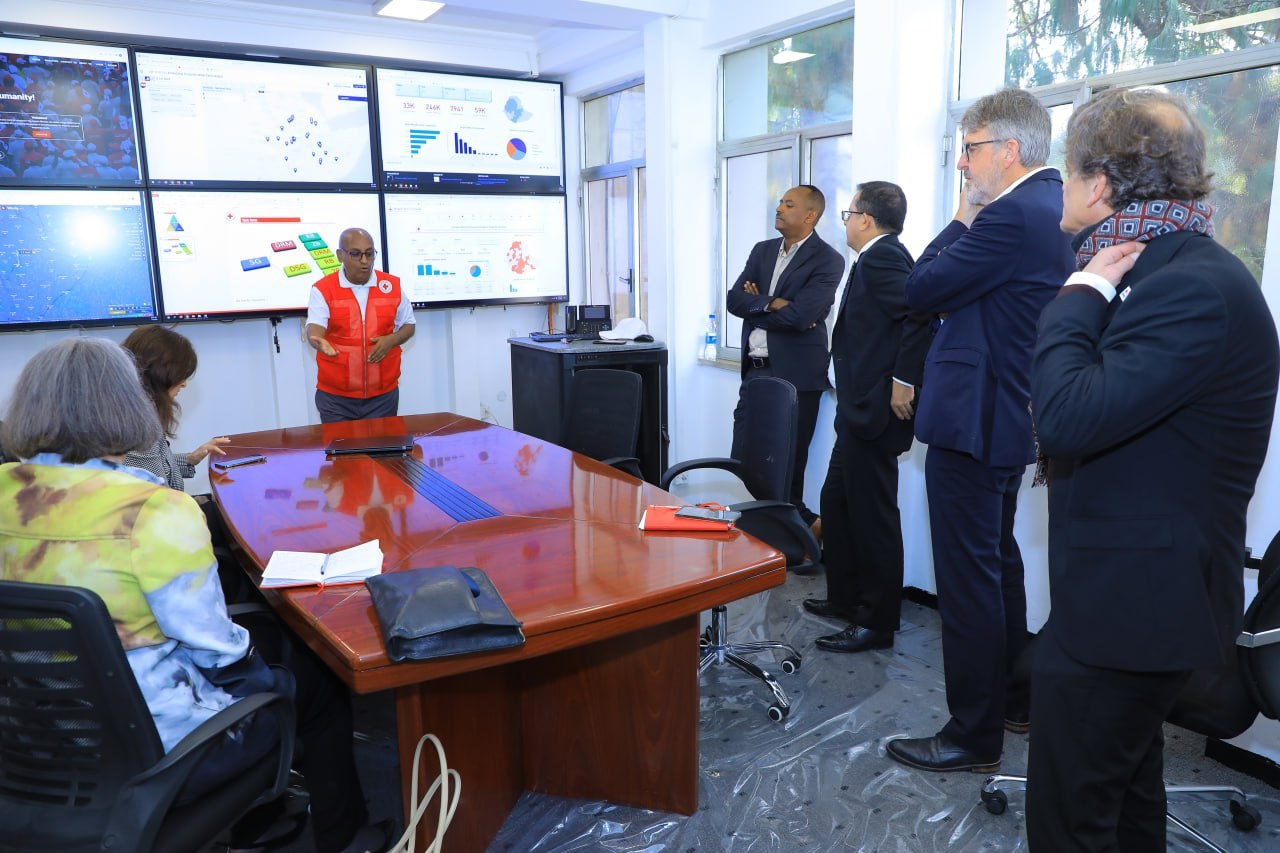
Operational transparency through integrated dashboards to monitor response activities in real time
Beyond coordination, the EOC also enhances operational transparency. Through integrated dashboards, the National Society can monitor response activities, track assistance delivered to households, oversee project budgets, and even follow the movement of emergency vehicles in real time.

“With one click, we can see how many households were supported, in which region, under which crisis, and how resources were used,” Abeje explains. “We also track our ambulances in real time. Knowing where they are, whether they are moving or stopped, improves emergency medical response.”
Such oversight is especially critical during complex or simultaneous emergencies, where effective coordination can mean the difference between delayed assistance and timely support. Beyond emergency response, the EOC also strengthens anticipatory action by linking early warning information with operational planning. This allows the Ethiopian Red Cross to prepare for potential hazards and act before crises escalate, helping protect lives, livelihoods, and dignity.
The experience has shown that investing in digital systems, structured coordination, and continuous capacity building, supported by partners such as the Danish Red Cross, is not simply a technological upgrade, it is a preparedness imperative. While challenges remain, including the need for sustained investment in infrastructure and technical expertise, the EOC model has proven adaptable and scalable. Ultimately, the Emergency Operations Centre embodies a simple but powerful truth: preparedness saves lives.
Credits
Written by: Olivia Acosta / Designed by: Miguel Aguirre / Photos: Ethiopian Red Cross, IFRC.
This content was originally published in the IFRC National Society Preparedness Newsletter (March 2026)