English

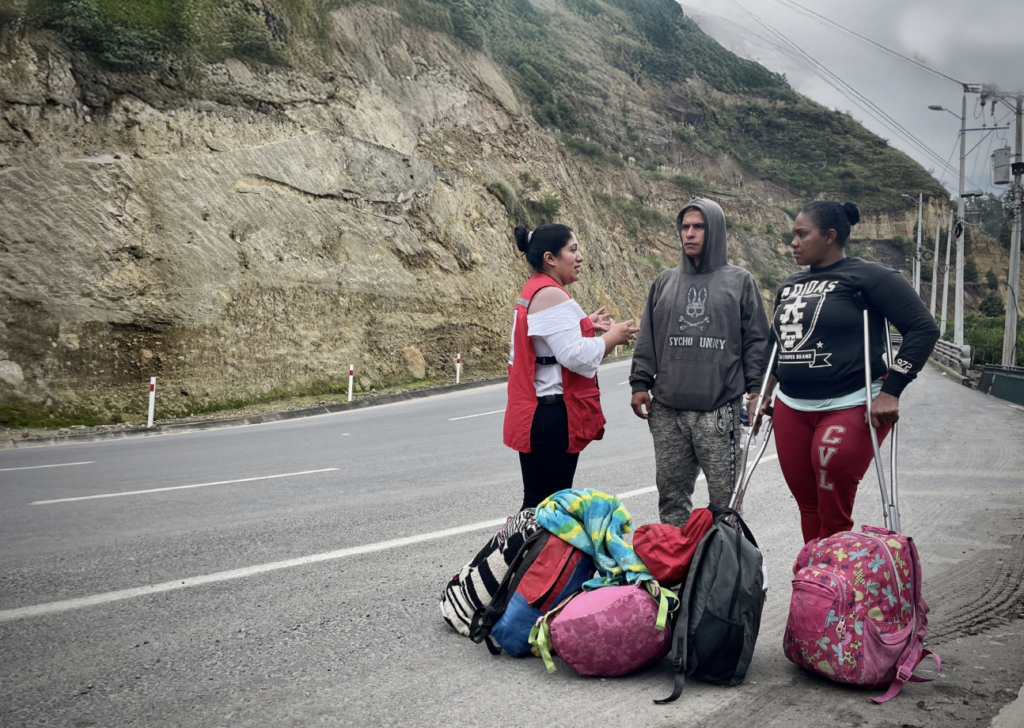
“Migrants Expect the Red Cross to be there”: Exploring Red Cross and Red Crescent continuity of care along migration routes

This report outlines findings from research commissioned by the The Global Disaster Preparedness Center (GDPC) exploring opportunities to support continuity of care along migration routes. The term “continuity of care” refers to consistent and connected assistance at different stages, and at different locations, along migration journeys. This was understood as applying to National Society programmes
“Migrants Expect the Red Cross to be there”: Exploring Red Cross and Red Crescent continuity of care along migration routes Read More »

Zurich Climate Resilience Alliance in the Philippines

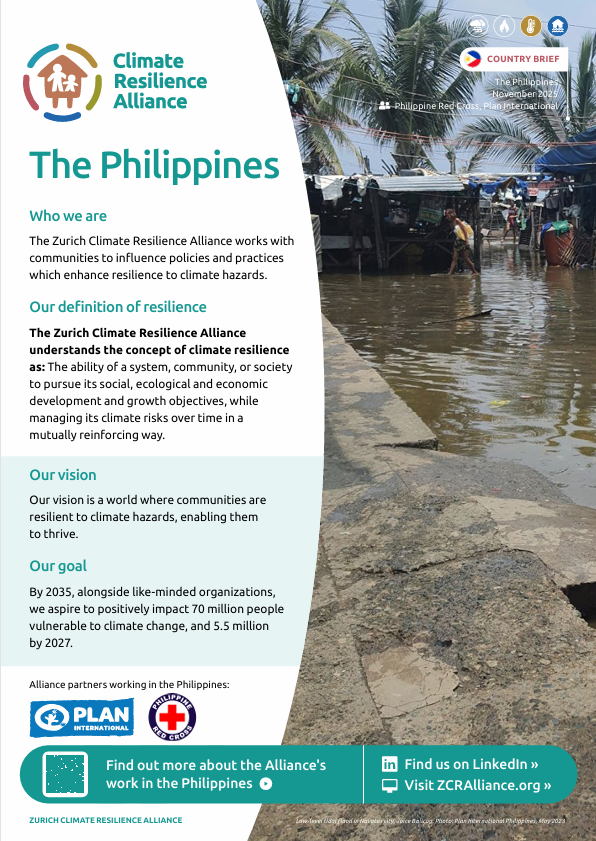
As part of the Zurich Climate Resilience Alliance, the Philippine Red Cross, together with the International Federation of Red Cross and Red Crescent Societies, and Plan International are working with communities across the Philippines to improve community resilience, increase investment, and improve policies for climate resilience at all governance levels in the Philippines. The Philippines is

Zurich Climate Resilience Alliance in the Philippines Read More »

A silhouetted community volunteer uses a megaphone to deliver an early warning message outdoors, with sunlight behind them against a clear sky.

Strengthening Early Warning Systems for All: Evidence and Lessons from Last-Mile Communities

This report synthesizes findings from 15 GDPC-supported studies across 14 countries to examine why early warnings often fail to translate into timely, protective action — particularly for last-mile communities that are geographically isolated, socially marginalized, or economically vulnerable. Drawing on empirical research and complementary literature, the report highlights that early warning effectiveness is shaped not

Strengthening Early Warning Systems for All: Evidence and Lessons from Last-Mile Communities Read More »

A Systematic Review of Heat Health Warning Systems: Enhancing the Framework Towards Effective Health Outcomes

Purpose of Review Heat Health Warning Systems (HHWS) reduce heat-related morbidity and mortality. We reviewed scientific studies on HHWS that use meteorological variables, local climate-epidemiological evidence, personalization, and built environment factors to determine heat stress thresholds. We identified key factors to enhance their precision and effectiveness. Recent Findings We categorized the findings into three groups.

A Systematic Review of Heat Health Warning Systems: Enhancing the Framework Towards Effective Health Outcomes Read More »

Support tool: Checklist for Moving Savings Group Digital criteria

This criteria checklist is a support tool developed by the Livelihoods and Resilience Sector Working Group, with support from U-Learn. It’s specifically designed to support actors with the Uganda refugee response – for a more general tool please see the Digital Savings Group Toolkit: Digital Preparedness Checklist – produced by the DSG Hub. Before making a decision

Support tool: Checklist for Moving Savings Group Digital criteria Read More »

2025 Common Alerting Protocol (CAP) Implementation Workshop

The 2025 CAP Implementation Workshop and Training Report summarizes key discussions, presentations, and technical learning from the Common Alerting Protocol (CAP) Implementation Workshop, held 21–23 October 2025 in Rome, Italy, hosted by the National Fire Corps of Italy and Alert-Hub.Org CIC, with co-sponsorship from IAEM and OASIS Open. The event brought together a global community

2025 Common Alerting Protocol (CAP) Implementation Workshop Read More »

Scroll to Top