Africa

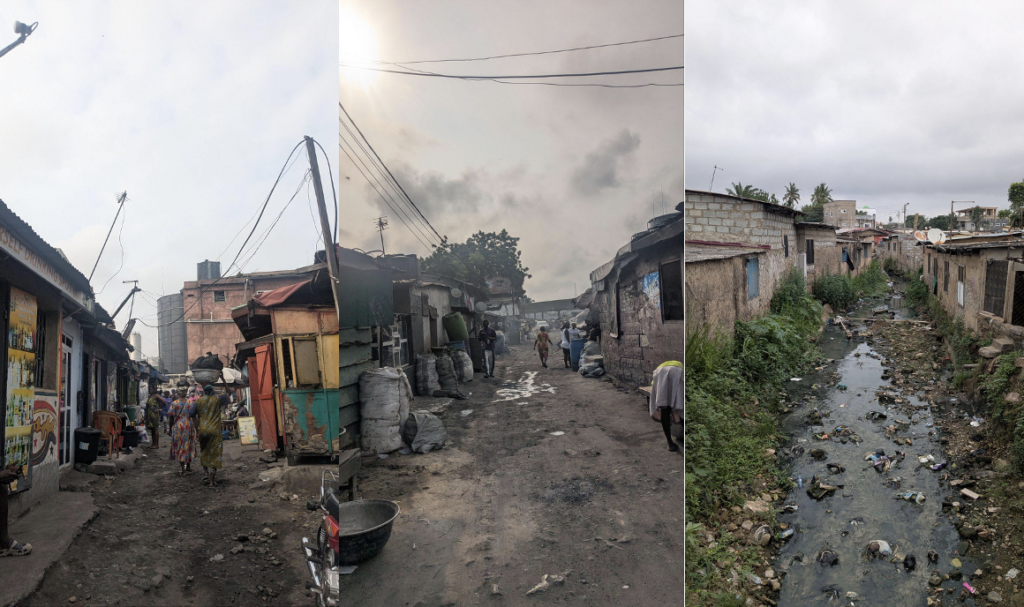
Developing a Participatory Urban Governance Model to Improve Flood Resilience in Informal Settlements in Accra

Authors and Collaborators: Josephine Agbeko, Michigan Technological University Daniel Shtob, Michigan Technological University Summary: In part due to dire flood risk projections in Accra, Ghana’s capital and largest city, government leaders and communities have increasingly focused on adaptive and resilience-building strategies. The need for effective flood planning and response is nowhere greater than in the […]

Developing a Participatory Urban Governance Model to Improve Flood Resilience in Informal Settlements in Accra Read More »

Equitable Urban Climate Action: Integrating Disability-Inclusive Plans Into School Disaster Preparedness

Authors and Collaborators: Jacob Malama, University of Gothenburg Victor Saidi Phiri, University of Gothenburg Summary: Climate-induced disasters increasingly threaten Zambia’s education system, disrupting learning and exposing inequities in school preparedness. Students with disabilities face heightened risks due to inaccessible infrastructure, limited teacher capacity, and exclusion from preparedness initiatives. This study examined how schools in Western Province, particularly in

Equitable Urban Climate Action: Integrating Disability-Inclusive Plans Into School Disaster Preparedness Read More »

Comparing the Effectiveness of Different Financial Mechanisms in Women’s Disaster Resilience in the Coastal City of Mahajanga, Madagascar

Authors and Collaborators: Kanto Ingotiana Razanajatovo, University of Mahajanga Summary: Mahajanga, located in northwest Madagascar, is a coastal city where cyclones, erratic rainfall, drought, and floods are intensifying. Consequently, the population is facing risks and becoming more vulnerable. A large number of studies have claimed the unequal effect of the changing climate, with women being

Comparing the Effectiveness of Different Financial Mechanisms in Women’s Disaster Resilience in the Coastal City of Mahajanga, Madagascar Read More »

Evaluating the Impact of Social Protection Policies on Urban Climate Resilience in Ghana: A Comparative Analysis of Formal and Informal Settlements

Authors and Collaborators: Michael Kpessa-Whyte, University of Ghana Michael Gameli Dziwornu, Institute for Scientific and Technological Information Fred Fosu Agyarko, Institute for Scientific and Technological Information Summary: This study examines the impact of Ghana’s Livelihood Empowerment Against Poverty (LEAP) program on urban resilience across six neighborhoods in Accra. Using structural equation modelling with 229 respondents,

Evaluating the Impact of Social Protection Policies on Urban Climate Resilience in Ghana: A Comparative Analysis of Formal and Informal Settlements Read More »

Strengthening Urban Climate Resilience: Socio-Economic and Institutional Drivers among Refugee Populations in Lilongwe, Malawi

Authors and Collaborators: Milemo Lusambya, Let’s Be Transformed University Alphonsine Chalungu, Let’s Be Transformed University Steven Mbale, Let’s Be Transformed University Summary: Urban refugees face compounded climate vulnerabilities that remain poorly understood. While 71% of the world’s 35 million refugees now live in cities, research examining how socio-economic and institutional factors shape their climate resilience is virtually

Strengthening Urban Climate Resilience: Socio-Economic and Institutional Drivers among Refugee Populations in Lilongwe, Malawi Read More »

Assessing Village and Savings Associations (VSLA’s) Contribution to Urban Resilience: Evidence from Northern Ghana

Authors and Collaborators: Zachary Pealore Richard Adusei Zuweira Yakubu Adonija Basig Loriba Summary: This study explores the role of Village Savings and Loan Associations (VSLAs) in enhancing urban resilience to climate change in Northern Ghana, focusing on the cities of Tamale and Bolgatanga. Drawing from a mixed-methods approach involving 600 survey respondents (300 VSLA members and 300 non-members),

Assessing Village and Savings Associations (VSLA’s) Contribution to Urban Resilience: Evidence from Northern Ghana Read More »

Evaluating the Multiplier Effect of Micro-Insurance on Climate Resilience among Motorcycle Taxi Drivers in Dar es Salaam

Authors and Collaborators: Enock Mwakalila, Mzumbe University Theobald Frank Theodory, Mzumbe University Selela Mwakalila, University of Dar es Salaam-Business School Summary: This study investigates the multiplier effect of micro-insurance on climate resilience and socio-economic stability among motorcycle taxi (boda-boda) drivers in Dar es Salaam, Tanzania. Boda-boda drivers are among the most climate-exposed in the informal sector. They frequently experience income disruptions

Evaluating the Multiplier Effect of Micro-Insurance on Climate Resilience among Motorcycle Taxi Drivers in Dar es Salaam Read More »

Socio-Economic Pathways to Urban Climate Resilience: Exploring Governance and Incentives for Equitable Climate Action in Global South Cities

Authors and Collaborators: Sipho Felix Mamba, UNESWA Nosizo Mthupha, Deputy Prime Minister’s Office, Mbabane, Eswatini Summary: This study investigates the socio-economic pathways to urban climate resilience in the cities of Mbabane and Manzini, Eswatini, focusing on the role of governance and socio-economic incentives in fostering equitable climate action among marginalized communities. Utilizing a mixed-methods approach, the research

Socio-Economic Pathways to Urban Climate Resilience: Exploring Governance and Incentives for Equitable Climate Action in Global South Cities Read More »

Connecting Early Warning and Anticipatory Action That Works for All – Panel Discussion Summary

This panel summary captures key insights from a session titled Connecting Early Warning and Anticipatory Action That Works for All convened by the Global Disaster Preparedness Center (GDPC) at the International Humanitarian Studies Association (IHSA) Conference in Istanbul, Turkey, on 15 October 2025, bringing together researchers and practitioners working at the intersection of Early Warning

Connecting Early Warning and Anticipatory Action That Works for All – Panel Discussion Summary Read More »

Disaster Management and Emergency Response Capability Assessment Indexes in Tanzania; Empirical Evidence from Dar es Salaam City

This study presents an assessment of emergency response capabilities, examining institutional preparedness, coordination mechanisms, resource availability, and operational readiness in disaster contexts. Using a structured capability assessment framework, the research analyzes response systems across key domains. including command and control, communication, logistics, human resources, training, and inter-agency coordination, to identify strengths, critical gaps, and systemic

Disaster Management and Emergency Response Capability Assessment Indexes in Tanzania; Empirical Evidence from Dar es Salaam City Read More »

Scroll to Top