Americas

Humanitarian Service Points in Action: A global review

Along some of the world’s toughest migration routes, Humanitarian Service Points provide a safe space for migrants and displaced people, giving them access to vital services that might otherwise be unreachable. This report provides numerous concrete examples of Humanitarian Service Points in operation along migration routes around the world and it explains why they are […]

Humanitarian Service Points in Action: A global review Read More »
Integrating Persons With Disabilities in CDRT and CERT Training

Persons with disabilities and other persons within vulnerable groups, can be disproportionately impacted by disasters and can therefore be more negatively impacted by disasters. The IFRC fully endorses the inclusion and the active participation of persons within vulnerable and marginalized groups in all community discussions and trainings. A great regional example of this is a

Integrating Persons With Disabilities in CDRT and CERT Training Read More »

Caribbean Community Early Warning Systems Assessment

Climate change, lack of proper urban planning, increased urbanization, and increases in population are some of the key drivers of vulnerability in the Caribbean region. These factors contribute to the region being prone to a multitude of hazards including, but not limited to, hydrometeorological (hurricanes and drought), seismic (earthquakes) and biological (vector borne diseases such

Caribbean Community Early Warning Systems Assessment Read More »

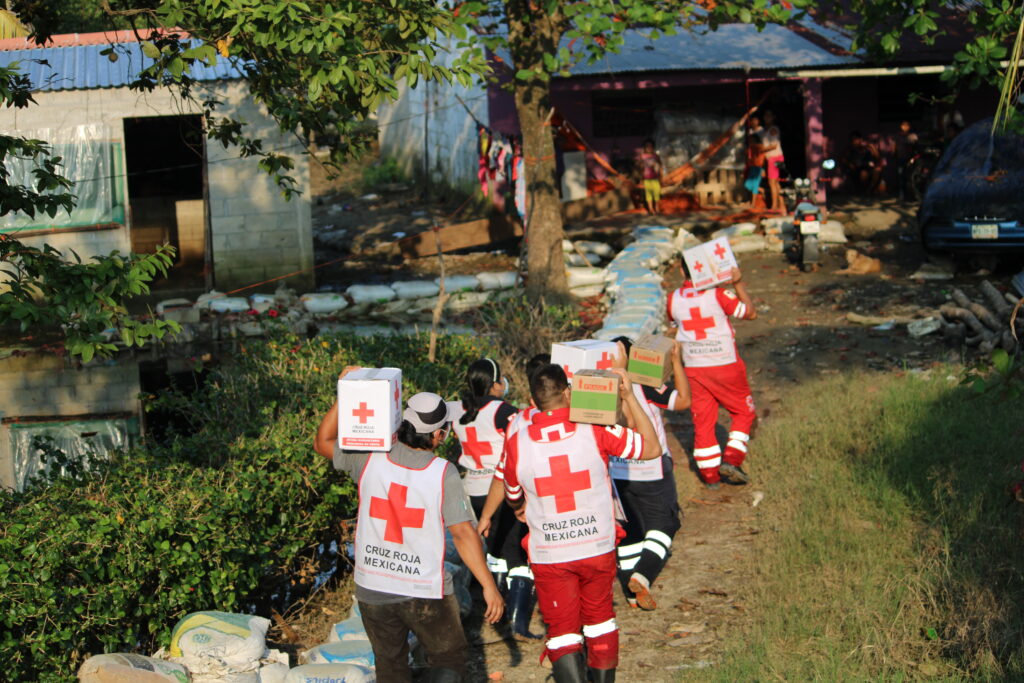
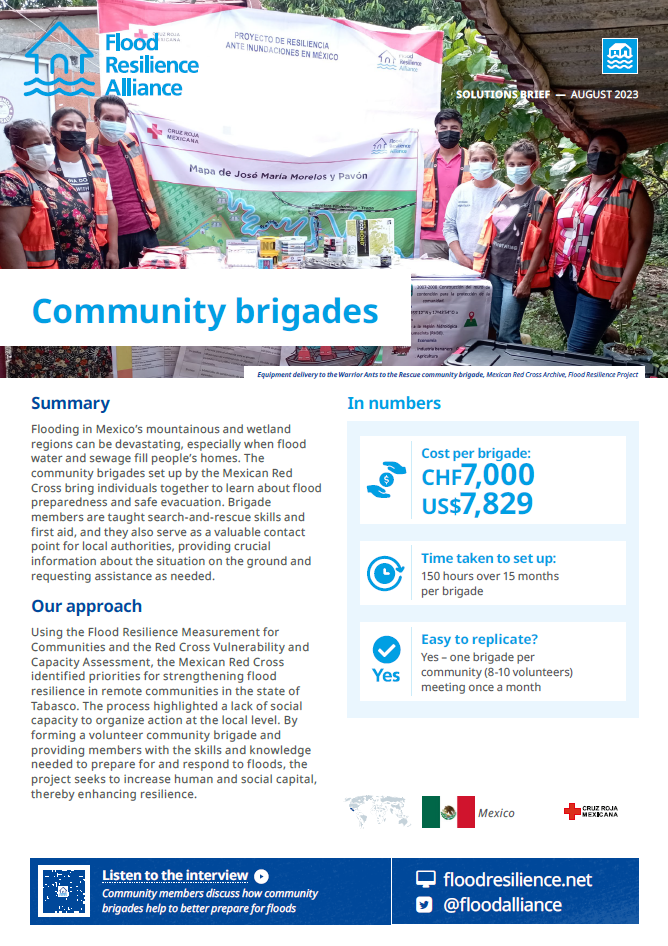
Never stop learning: ten years of the Flood Resilience Alliance in Mexico

At the heart of the Zurich Flood Resilience Alliance’s work is the knowledge that there are always opportunities to adapt and improve. In the second of our series marking ten years of the Alliance’s resilience action, the Mexican Red Cross team reflects on the benefits this approach has had in Mexico. The Mexican Red Cross

Never stop learning: ten years of the Flood Resilience Alliance in Mexico Read More »

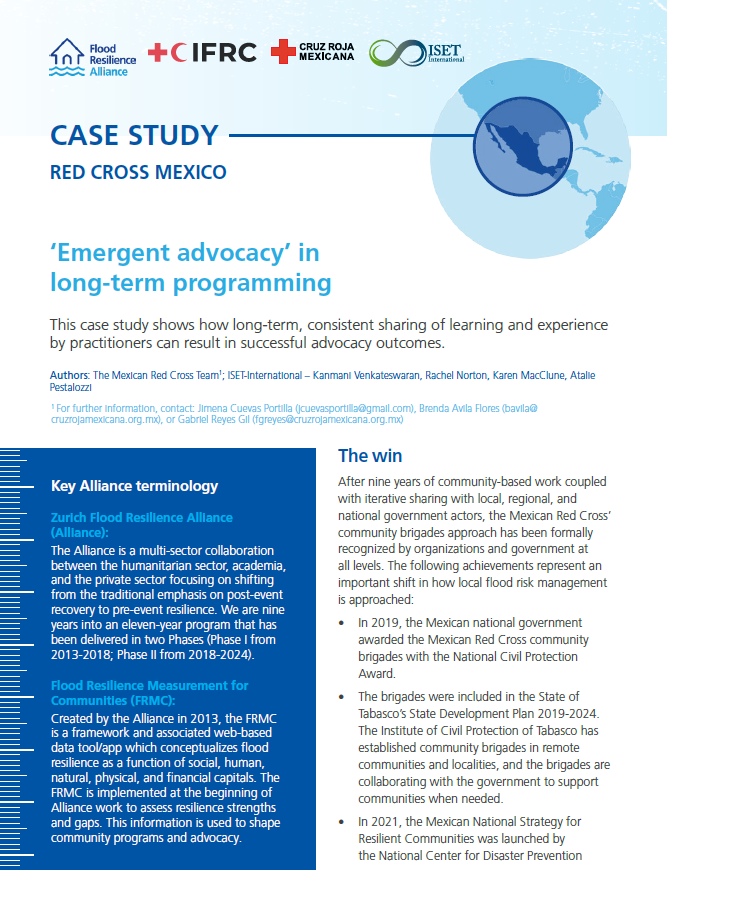
‘Emergent advocacy’ in long-term programming

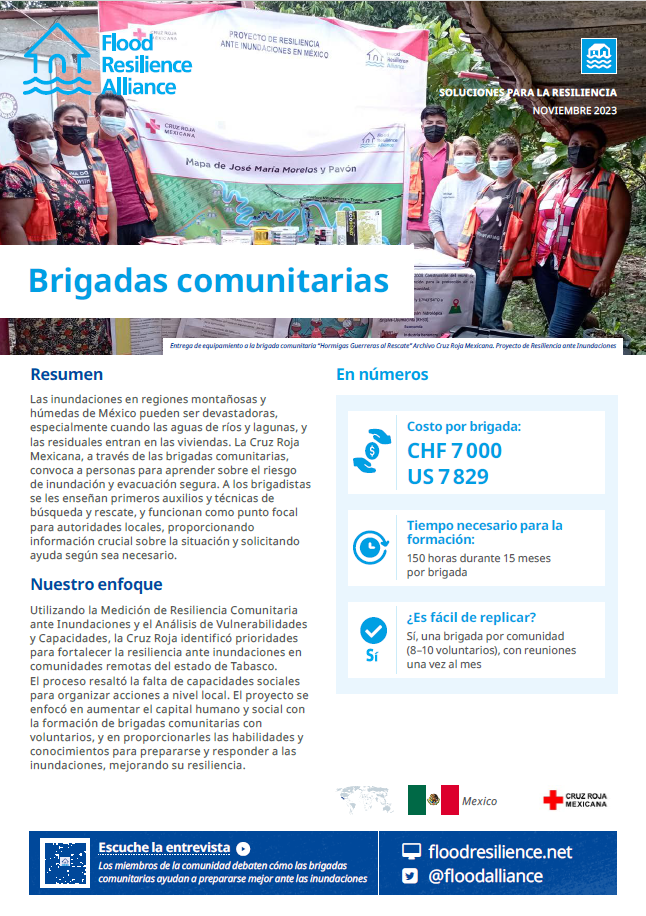
After years of community-based work coupled with iterative sharing with local, regional, and national government actors, the Mexican Red Cross’ community brigades approach has been formally recognized by organizations and government at all levels. This achievement represents an important shift in how local flood risk management is approached. This case study shows how long-term, consistent

‘Emergent advocacy’ in long-term programming Read More »

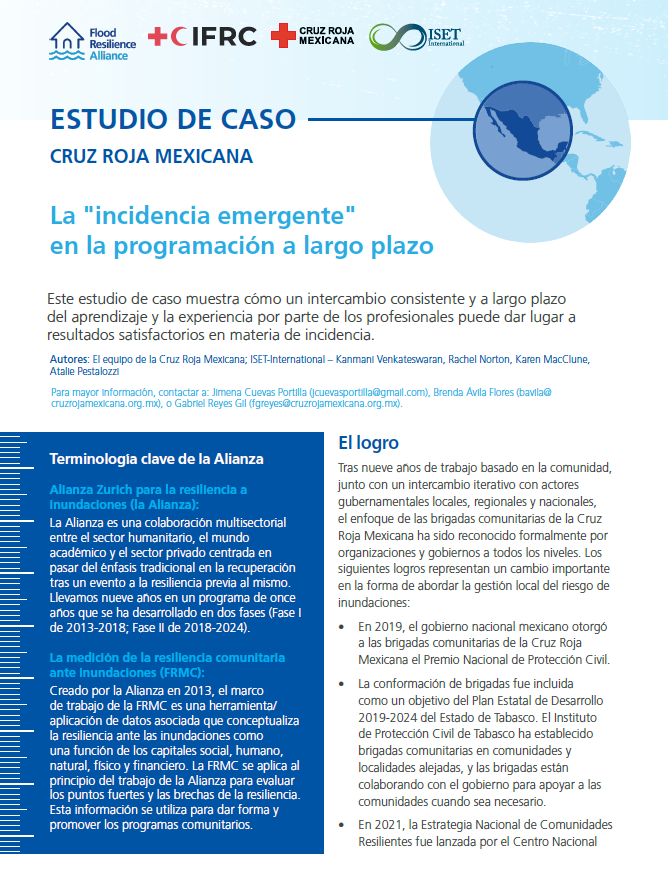
La “incidencia emergente” en la programación a largo plazo

Tras años de trabajo basado en la comunidad, junto con un intercambio iterativo con actores gubernamentales locales, regionales y nacionales, el enfoque de las brigadas comunitarias de la Cruz Roja Mexicana ha sido reconocido formalmente por organizaciones y gobiernos a todos los niveles. Los logros representan un cambio importante en la forma de abordar la

La “incidencia emergente” en la programación a largo plazo Read More »

Scroll to Top