
Renata Barradas Gutierrez
renatabarradas88@gmail.com
Washington D.C, United States
Renata earned a Bachelor’s Degree in International Relations from Tecnologico de Monterrey and two Certificates in Woman, Gender and Development and International Relations from The University of British Columbia. While working as Communications Coordinator in Cinco Panes y Dos Peces A.C., a Mexican nonprofit organization, she helped indigenous communities in isolated regions in Mexico to apply a Risk Prevention, Control and Management Plan. Simultaneously, Renata taught a certificate in Financing Strategies and Fundraising for nonprofits. Previously, she coordinated two international volunteer projects in Belgium at the Red Cross Center for Asylum Seekers and at the Asylum Seekers and at the Arthur Regniers Center for motor and brain handicapped people. Renata has volunteered in ten projects nationally and internationally concerning a wide range of topics such as: orphan children, Down's syndrome children, reforestation, Elkhorn Coral Planting, fundraising, and reconstruction. Through these experiences, she developed project coordination and implementation, fundraising, web development and research skills. Renata enjoys topics related to philanthropy and has a strong passion for poverty relief and refugees. As a result, from her passion in the nonprofit sector, she has cofounded Amarte A.C., and Hoor A.C., two Mexican nonprofit organizations.
Renata currently helps to support the information and knowledge management needs of the Global Disaster Preparedness Center (GDPC). This includes providing immediate support for data collection and analysis, maintaining and refining an effective knowledge management system for a state-of-the-art resource center, and piloting of complementary knowledge management initiatives.

Assessment or evaluation
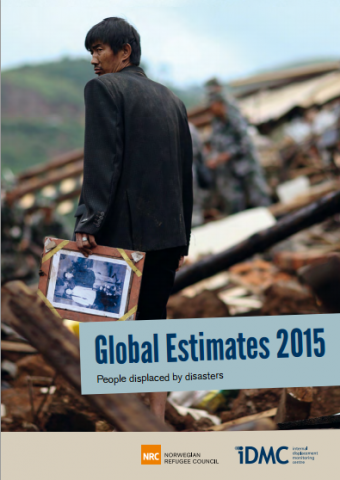
This Framework provides an approach for the development of ‘no/low regrets’ investments and financing strategies, as a starting point for embarking on climate resilient development in Africa. No/low regrets investments have the key characteristic...
Guidance material
The Guidance Note on Recovery: Environment, along with its companion booklets, is an initial step in documenting, collecting and sharing disaster recovery experiences and lessons. IRP hopes that this collection of the successes and failures of past e...
Research
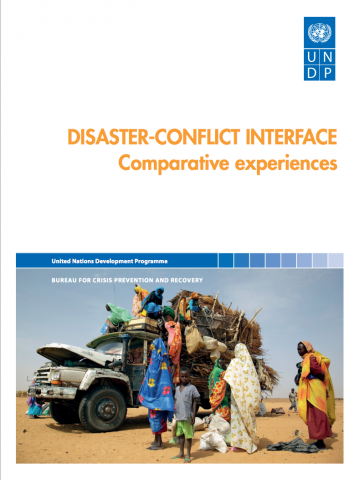
The study aims to achieve a comparative analysis of tendencies and experiences that stem from the relationship between disasters and conflict. It also analyses the relative success of existing relevant programming approaches adopted incountry. This c...
Other type of resource
This document presents IFRC’s initial ideas about how resilience varies between countries. The purpose this is to enable the identification of data gaps required to understand the current levels of household and community resilience. This preli...
Video
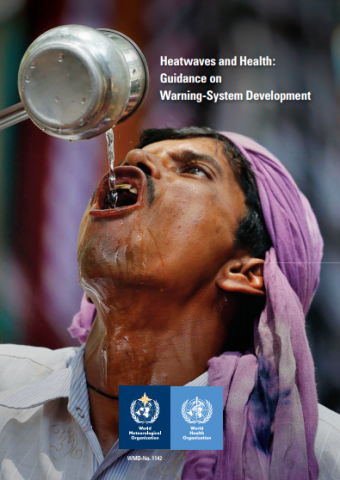
UNEP works through its local and national partners to implement the Eco-DRR Project in Haiti. Our Eco-DRR strategy in Haiti promotes sustainable coastal zone management through ecosystem based solutions that improve local livelihoods and reduce disas...
Guidance material, Video
This publication features processes and tools that can be used to integrate market assessment into the different phases of the project cycle, taking the Movement’s existing technical documents into account whenever possible. It is intended for staf...
Case Study, Report

This publication highlights some of the influential efforts—by technical specialists, institutions, and governments around the world—to create and communicate risk information faster and at lower cost, to improve the quality and transparency...
Other type of resource
Contest Terms Up to five winners will be selected. All winners will be awarded with a special recognition from the GDPC and will receive as a prize: 1st place: Ipad Air 16 GB & Ipod touch 16 GB 2nd place: Ipad mini 16 GB & Ipod touch 16 G...
Video
Learn CPR, visit: http://www.redcross.org/take-a-class The American Red Cross and Howcast have teamed up to teach you how to perform the potentially life-saving hands-only CPR technique.