
Knowing vs. Doing: Closing the Preparedness Gap through Behaviour Change in Nepal
 September 14, 2026
Knowing vs. Doing: Closing the Preparedness Gap through Behaviour Change in Nepal
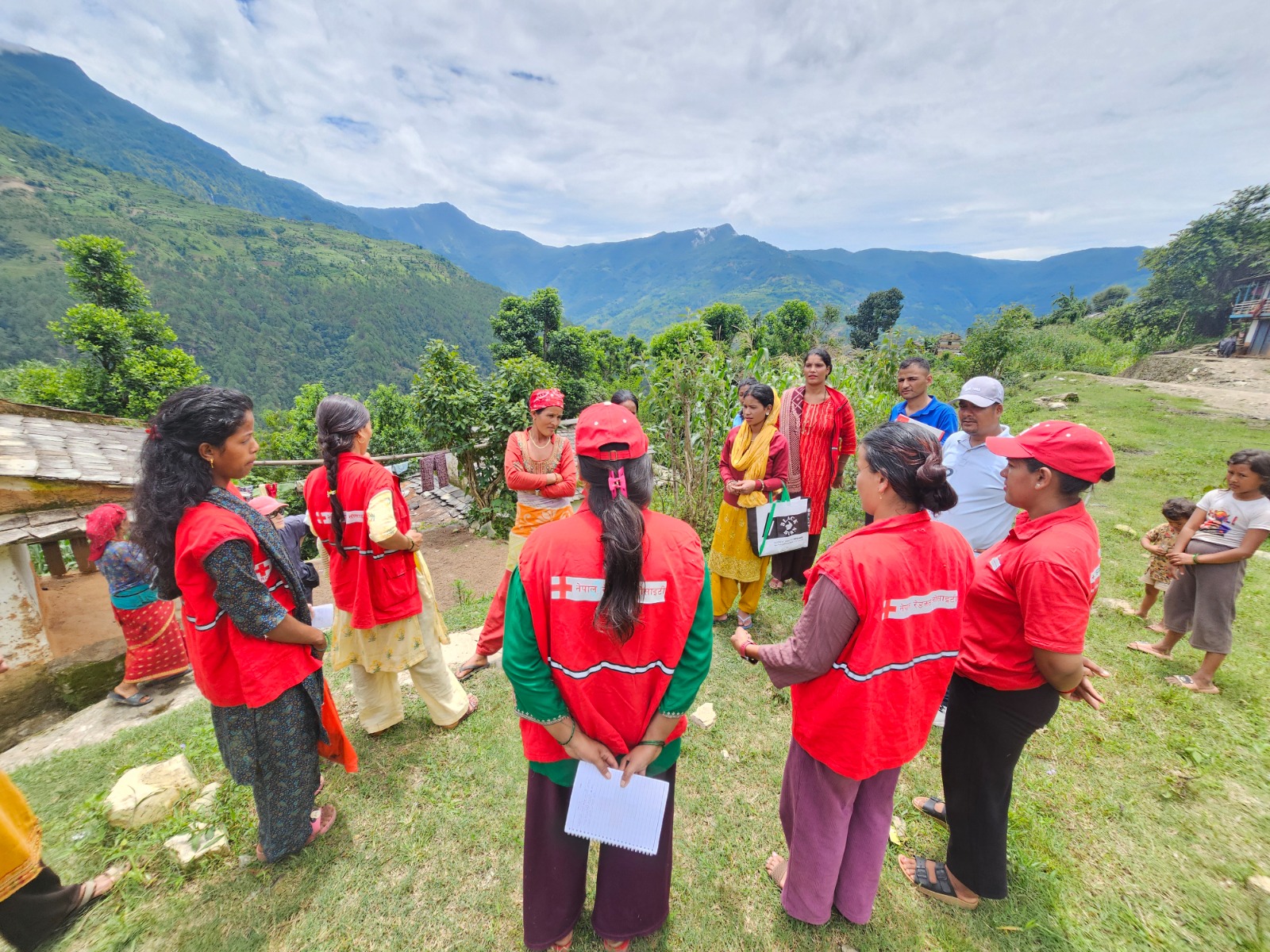
Building on the strong results of its behaviour change work in health and WASH, the Nepal Red Cross Society set out to test whether the same approach could improve disaster preparedness among families in rural Nepal. Here is what they found.
The challenge
Since 2022, the Nepal Red Cross Society has run the Enabling Action for Community Health (EACH) project in four districts across Lumbini and Karnali provinces, in partnership with the Swiss Red Cross (SRC) and the British Red Cross (BRC). Working alongside the local municipality, the project's primary goal is to improve the health status of the target area through direct interventions in health and water, sanitation and hygiene (WASH), while also mainstreaming disaster risk reduction and climate change adaptation (DRR-CCA).
In 2024, the project implemented Behaviour Change Interventions (BCI) through the eCBHFA approach based on the COM-B model to improve health and WASH behaviours, showing significant improvements in the proposed behaviours.Those results raised a new question: could the same approach strengthen disaster preparedness for families?
Nepal's rural communities face recurring earthquakes, floods, landslides and fires, so in late 2025 the project extended its behaviour change approach to disaster preparedness, testing whether interventions made at the institutional and policy level actually translate into concrete change at the household level.
Choosing the Behaviour Change Approach
The Nepal Red Cross Society applied the eCBHFA behaviour change methodology to identify specific preparedness behaviours. Six indicators of basic family preparedness were prioritized — a safe evacuation, keeping an emergency kit within reach, and having responders' contact details on hand. To see where families stood before the interventions, the team surveyed 100 households across Malarani-Arghakhanchi and Bhagawatimai-Dailekh against these indicators.
The findings exposed clear gaps. Awareness of hazards was universal (100%), and almost every family had taken at least one risk-reduction measure (99%). But the practical basics were largely missing: not a single household had identified a safe meeting point (0%), and only one in five kept essential medicines and documents accessible (20%).
The baseline survey revealed exactly where behaviour change was needed most. The team chose two behaviours to work on: families keeping essential medicines and documents ready in an emergency bag, and knowing their safe evacuation routes and meeting points (behaviours 4 and 5 in Table 1). The team then ran a follow-up survey, using the COM-B model, to design activities that would educate and support families to put these into practice (Table 2).
eCBHFA stands for enhanced Community-Based Health and First Aid – the Red Cross Red Crescent's volunteer-led community-health methodology; COM-B stands for Capacity, Opportunity and Motivation-Behavior by Michie, Stralen and West 2011.
Table 1. Baseline levels of six basic household preparedness behaviours
Share of the 100 surveyed households meeting each behaviour.
| 1 | Aware of local frequent hazards (earthquake, flood, landslide, fire) and disaster-prone areas | 100% |
| 2 | Regularly receives and records weather forecasts and disaster-related alerts/information | 91% |
| 3 | Has taken at least one preparedness action to reduce potential disaster risks | 99% |
| 4 | Keeps essential/life-saving medicines and important documents in an immediately accessible place | 20% |
| 5 | Family members know a safe gathering/meeting place and a safe evacuation route to reach it | 0% |
| 6 | Keeps at least two emergency contact numbers (local representatives, police, ambulance, health services, rescuers, first-aiders), written down or on a phone | 74% |
Implementation process
With the baseline in hand, the team ran cause-finding exercises with 30 households across four districts (Sannitribeni-Kalikot, Bhagawatimai-Dailekh, Malarani-Arghakhanchi and Kaligandaki-Gulmi) to understand what lay behind each behaviour. It then co-designed intervention plans with the EACH project teams and trained the volunteers who would carry them out. Those volunteers were a deliberate choice: trusted local faces already engaged in the previous health and hygiene work.
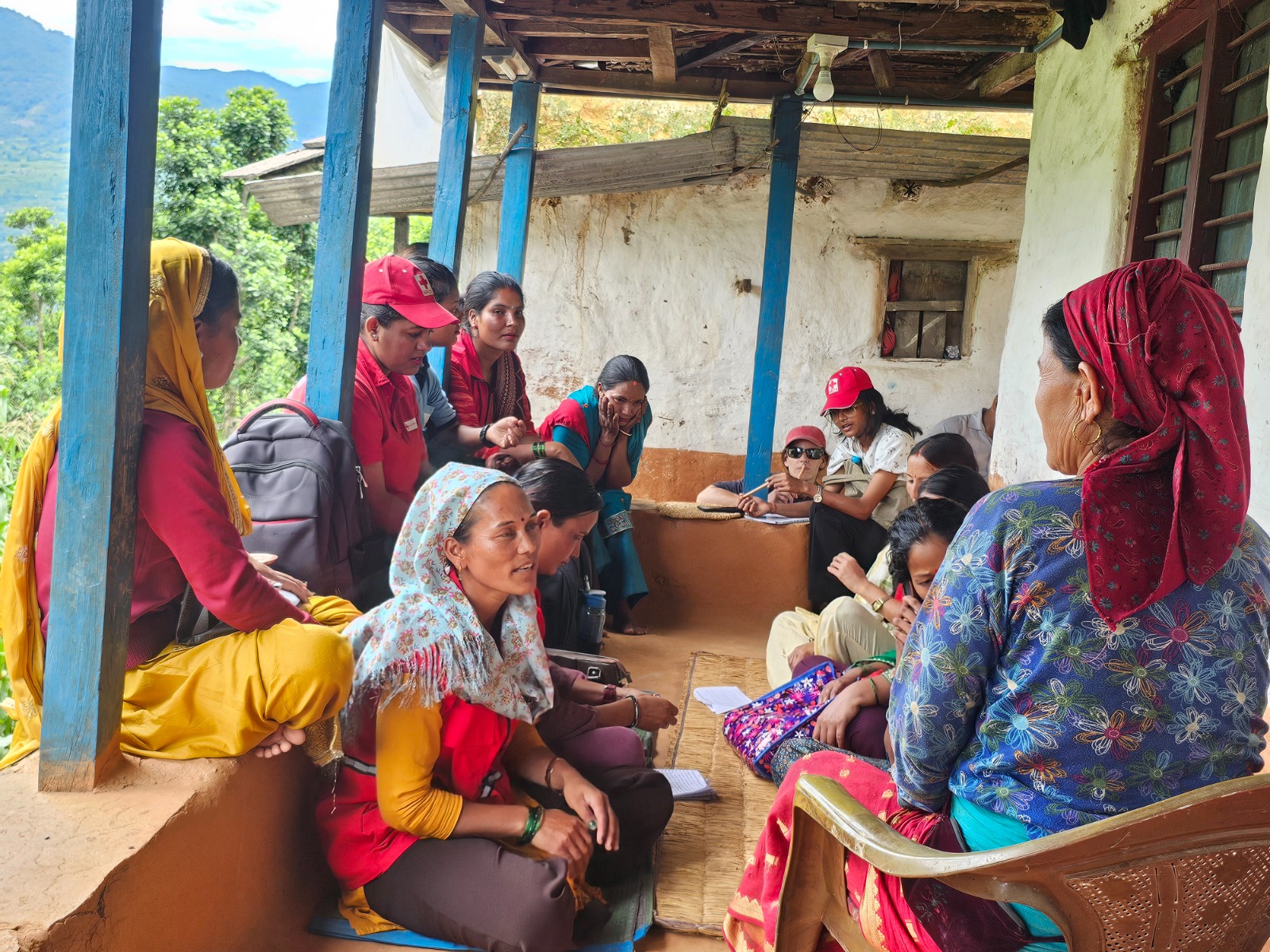
Staff turnover and volunteer replacement slowed the work at first, but the shift was real — disaster-preparedness behaviours climbed from just 1.8% to 10.6% between September and December 2025. The work has since resumed in Kalikot, Gulmi and Arghakhanchi, where the same volunteers are receiving refresher training alongside other health and WASH priorities such as birth preparedness, safe water use and sanitation.
Table 2. Behaviour-change intervention plan for household-level
The behaviour-change intervention plan, mapping the activities used to shift the priority behaviours to the people responsible for delivering them.
| Household |
• Inform households about safe places, routes and emergency-bag use; motivate preparedness by highlighting its benefits and success stories; and stress the risks of not preparing (loss of life, livelihood or property). • Facilitate family discussions so all members identify a safe place to gather and the safe routes to reach it. • Place symbolic markers at safe locations and along safe routes. • Demonstrate the emergency bag and motivate families to prepare one. • Agree on a fixed, easily accessible spot for the emergency bag (e.g. on a hook or nail near the door). • Practise with family members and neighbours how to reach the safe place carrying the emergency bag. |
Community volunteer |
| Household & community |
• Mobilise local leaders as role models to inspire families and community members to engage in household-level preparedness. • Mobilise community leaders and senior citizens to inform and show households the risks of not preparing. |
Palika (local government) coordinator |
| School | • Facilitate discussions on the importance of safe places and safe routes for reducing disaster risk. | Palika (local government) coordinator |
Outcomes
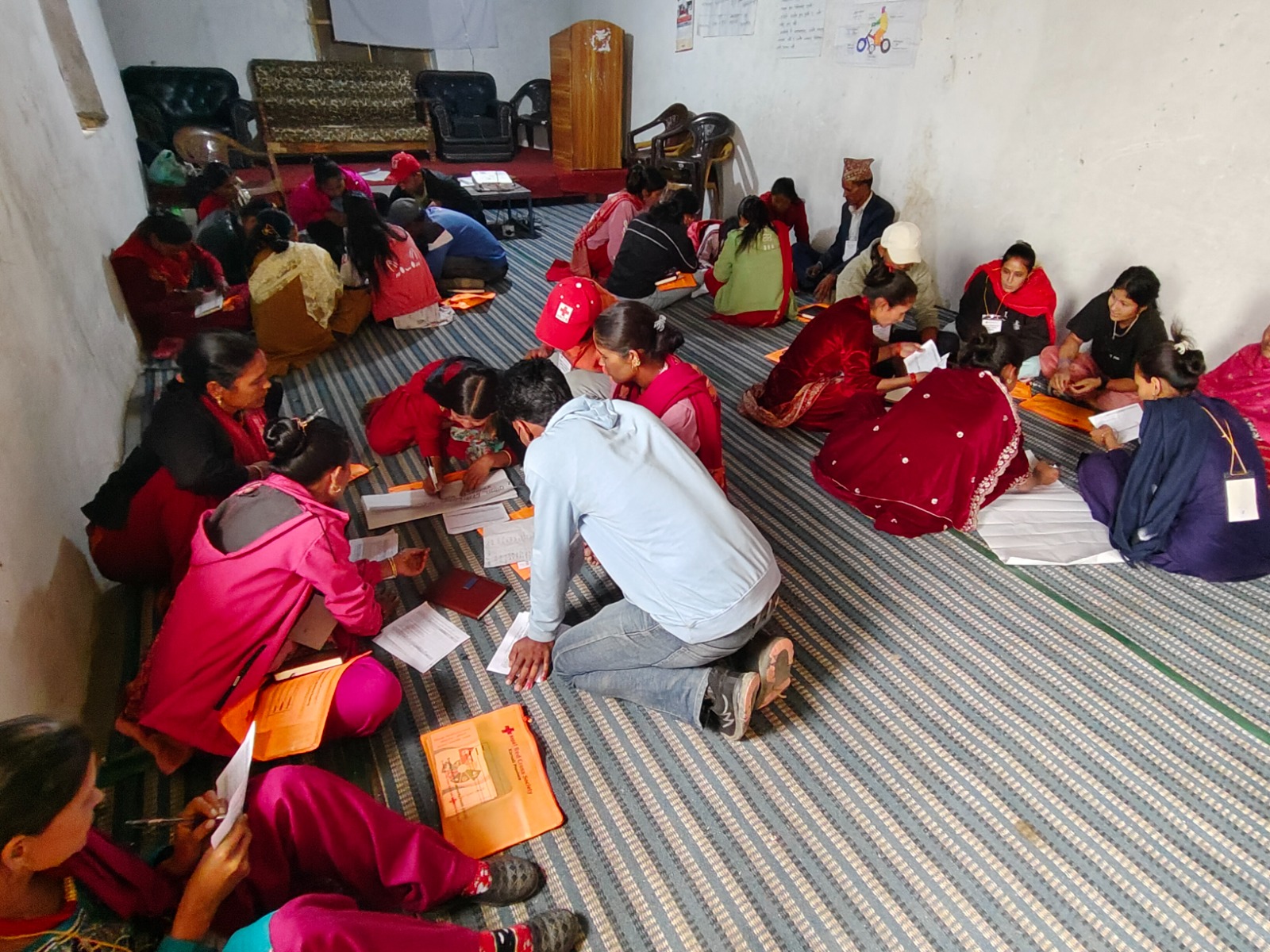
Households made measurable improvements in preparedness, especially when it comes to keeping emergency contacts, important documents and medicines on hand. Even though the progress was modest, the intervention laid the groundwork for scaling this disaster-focused behaviour change approach across more wards.
Lessons Learned
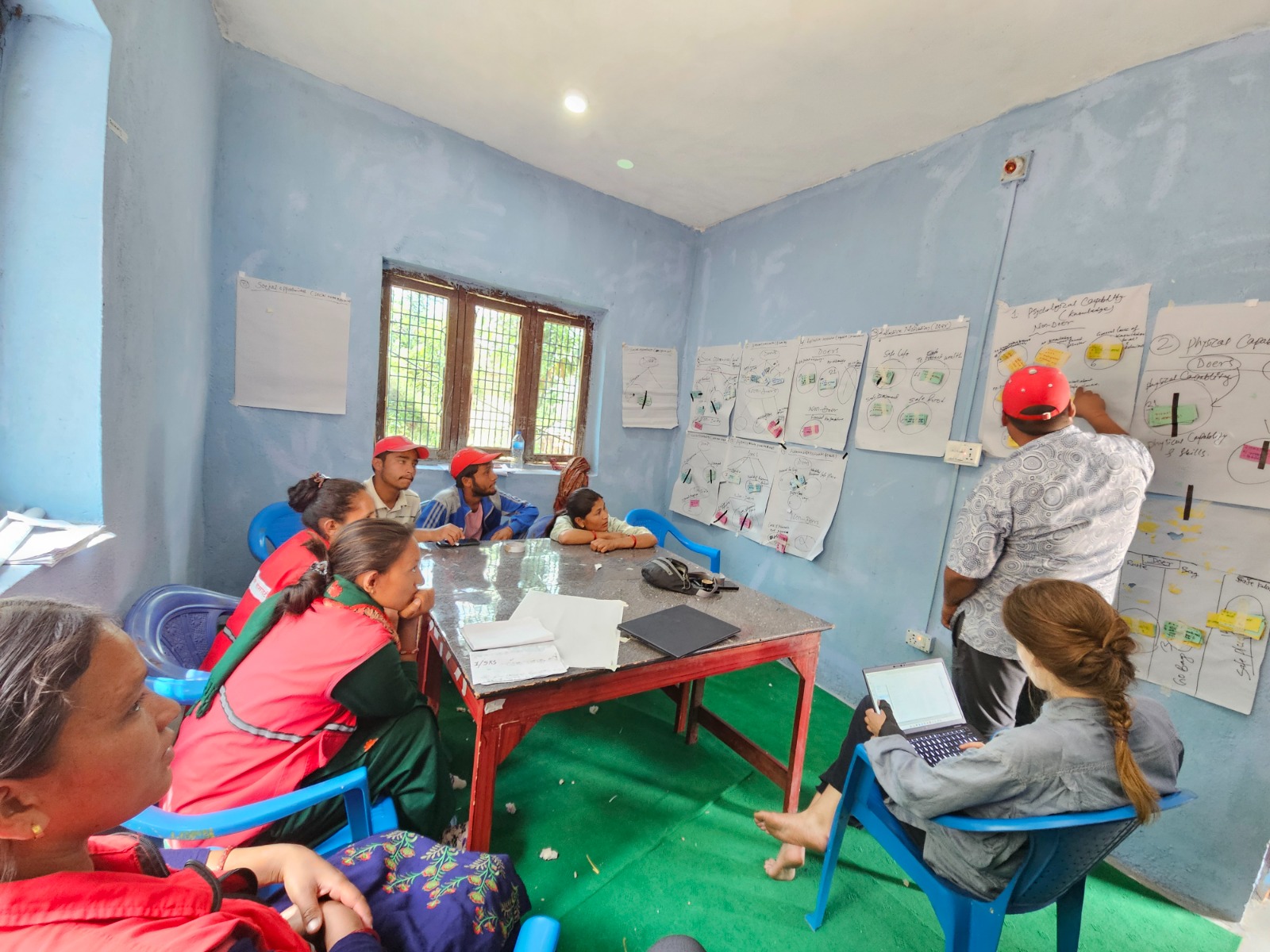
Early staff turnover slowed momentum, but participatory planning and volunteer-led coaching proved effective. Two lessons stand out in particular: sustained support from local government and continuity among trained volunteers are essential to accelerate the adoption of these behaviours and build lasting resilience at the household level.
Written by Resham Bahadur Khadka, Senior PMER Officer, NRCS. Edited by Vladislav Kavaleuski, GDPC