
planning

Unlocking the “triple dividend” of resilience – Why investing in disaster risk management pays off

The risk of a disaster can cause economic losses even before a disaster strikes. Investing in disaster resilience, therefore, can yield a ‘triple dividend’ by (1) avoiding losses when disasters strike; (2) unlocking development potential by stimulating innovation and bolstering economic activity in a context of reduced disaster-related background risk for investment; and (3) through […]
Unlocking the “triple dividend” of resilience – Why investing in disaster risk management pays off Read More »

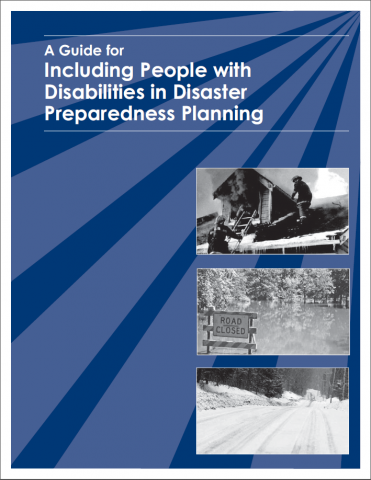
A Guide for Including People with Disabilities in Disaster Preparedness Planning

This guide, written for municipal and regional planners, reflects information,concerns and recommendations that emerged at the daylong forum on December 6, 2005, on “Lessons Learned” from recent large-scale disasters that affected states along the Gulf Coast. This guide is primarily intended to assist people involved in preparedness planning at the municipal and regional levels. It

A Guide for Including People with Disabilities in Disaster Preparedness Planning Read More »

Safer Homes, Stronger Communities: A Handbook for Reconstructing after Disasters

Safer Homes, Stronger Communities: A Handbook for Reconstructing after Natural Disasters, published by the World Bank in 2010, is a practical reference for governments, policy makers, NGOs, and project managers responsible for rebuilding housing and communities after earthquakes, floods, storms, and other natural disasters. Rather than prescribing a single approach, it equips decision-makers to design

Safer Homes, Stronger Communities: A Handbook for Reconstructing after Disasters Read More »

Guidance note on recovery: pre-disaster recovery planning

Pre-disaster recovery planning (PDRP) is the pro-active process of anticipating future recovery issues, developing a scenario-based recovery plan, and building the capacity to improve recovery outcomes – all before a disaster happens. Strong evidence, and common sense, indicates that much can be done before a disaster to alleviate recovery planning demands after the disaster. The purpose of this guidance

Guidance note on recovery: pre-disaster recovery planning Read More »

Disaster preparedness for natural hazards: current status in Nepal

This publication is one of a series produced under the project ‘Living with risk – sharing knowledge on disaster preparedness in the Himalayan region’, implemented by ICIMOD during a 15-month period in 2006 and 2007. Through this project, ICIMOD has endeavoured to encourage knowledge sharing and to strengthen capacity among key practitioners in the fi eld of disaster preparedness and

Disaster preparedness for natural hazards: current status in Nepal Read More »

Earthquake Preparedness Drill Manuals: Step-by-Step Guides for Schools, Businesses, Non-Profits, and Government Agencies (ShakeOut)

These four drill manuals, developed by the Earthquake Country Alliance as part of the Great California ShakeOut program, provide step-by-step guidance for planning and conducting earthquake preparedness drills across different organizational settings: K-12 schools, businesses, non-profit and other organizations, and government agencies and facilities. Each manual is structured around the core earthquake response action of

Earthquake Preparedness Drill Manuals: Step-by-Step Guides for Schools, Businesses, Non-Profits, and Government Agencies (ShakeOut) Read More »

Drought Preparedness Planning: Building Institutional Capacity

Past attempts to manage drought and its impacts through a reactive, crisis management approach have been ineffective, poorly coordinated, and untimely.  Because of the ineffectiveness of this approach, greater interest has evolved in recent years in the adoption of a more proactive risk-based management approach in some countries. The 10-step drought planning process developed by Wilhite (1991) was

Drought Preparedness Planning: Building Institutional Capacity Read More »

Drought-Ready Communities: A Guide to Community Drought Preparedness

The process outlined in the Guide is broad-based, recognizing that drought creates problems that go beyond the scope of what water suppliers alone can address. Worksheets and other exercises can help communities see how drought has affected water supplies and overall community well-being in the past. The Guide can also help communities identify their drought

Drought-Ready Communities: A Guide to Community Drought Preparedness Read More »

Scroll to Top