Policy and Strategy

The Last-Mile Challenge: Implementation Roadmap for Malawi (2026 -2030)

This Implementation Roadmap responds to the 2027 mandate of the United Nations Early Warnings for All (EW4All) initiative by designing a localized, multi-hazard early warning strategy for Malawi — a Least Developed Country (LDC) in sub-Saharan Africa that epitomizes the structural inequalities underpinning global disaster vulnerability. Drawing on the UNDRR January 2026 Update, the World […]

The Last-Mile Challenge: Implementation Roadmap for Malawi (2026 -2030) Read More »

Protecting jobs and employment during disasters: lessons from employment insurance system in Japan

This World Bank discussion paper examines how Japan uses its employment insurance system to protect jobs and support workers during disasters, offering a detailed case for designing adaptive social protection that goes beyond traditional emergency social assistance. Set against the backdrop of disasters becoming more frequent and severe — and disproportionately harming the poor and

Protecting jobs and employment during disasters: lessons from employment insurance system in Japan Read More »

Terms of Reference: International Services Strategy 2030 Consultant – American Red Cross

The American Red Cross International Services Division (ISD) is seeking an external consultant to lead the development of its ISD Strategy 2030 — a three-year strategic plan covering July 2027 through June 2030. The selected consultant will design and facilitate an inclusive, evidence-based process involving stakeholder interviews, surveys, and validation workshops, and will produce key

Terms of Reference: International Services Strategy 2030 Consultant – American Red Cross Read More »

Urban Heat Governance: Assessing Institutional Capacity to Manage Extreme Heat in Cities of the Global South

Extreme heat is the deadliest climate hazard — yet it remains the least governed. This policy brief, produced by the IFRC Climate Centre in partnership with University College London, presents findings from an analysis of heat-related urban governance across 83 coastal cities in the Global South. The central finding is stark: despite rapidly escalating heat

Urban Heat Governance: Assessing Institutional Capacity to Manage Extreme Heat in Cities of the Global South Read More »

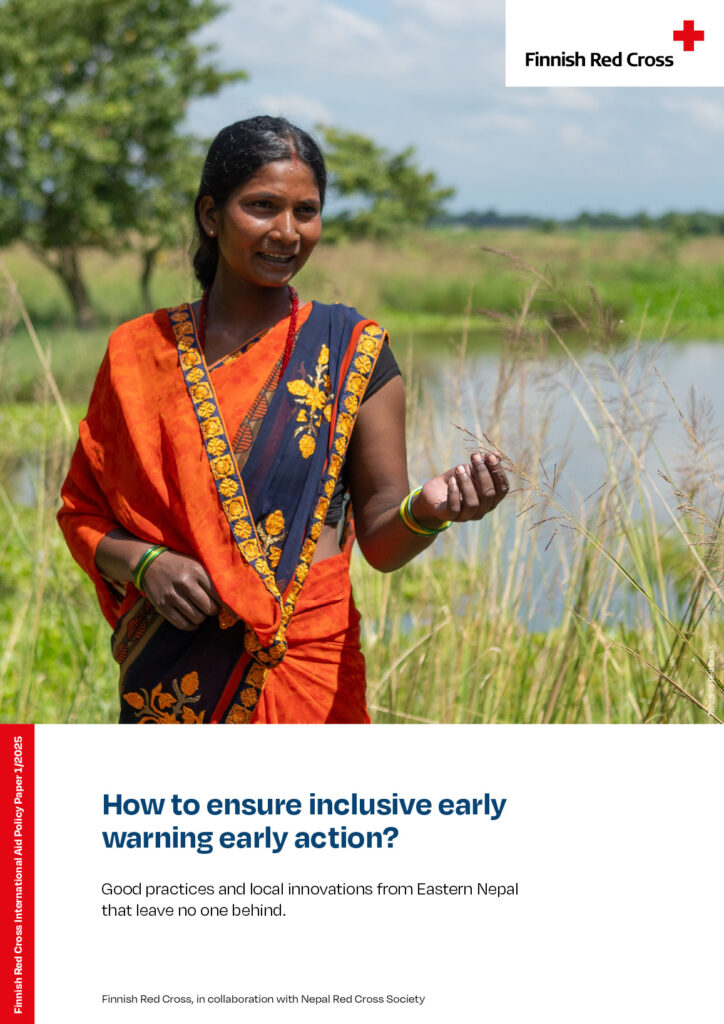
How to ensure inclusive early warning early action? Good practices and local innovations from Eastern Nepal that leave no one behind.

In this policy paper, published by the Finnish Red Cross in November 2025, the Nepal Red Cross Society shows how effectiveness in disaster preparedness depends on the meaningful participation of groups in the most vulnerable situations. It has a specific focus on persons with disabilities and women in Eastern Nepal. The policy paper aims to

How to ensure inclusive early warning early action? Good practices and local innovations from Eastern Nepal that leave no one behind. Read More »

Management of Earthquake Risk in the European Union

Several countries in the European Union (EU) face significant earthquake risk, primarily due to seismic hazard levels and aging infrastructure. Unlike many other natural hazards, earthquakes occur without warning, limiting the ability to evacuate people and protect lives. At the same time, decades can pass between large earthquakes, leading to a decline in public awareness and policy attention

Management of Earthquake Risk in the European Union Read More »

Catalysing Business Engagement in Early Warning Systems

Produced in partnership with the World Meteorological Organization and the Australian National University, this white paper calls for urgent action to strengthen collaboration, spark innovation and safeguard communities and economies from escalating climate risks. Extreme weather events are increasing in frequency and severity, posing growing threats to lives, infrastructure and economies worldwide. Early warning systems

Catalysing Business Engagement in Early Warning Systems Read More »

Scroll to Top