Scaling up Sanitation: Experiences and actions in Pakistan and Nepal
Impact on lack of sanitation in rural communities and the well-being of families.
Scaling up Sanitation: Experiences and actions in Pakistan and Nepal Read More »
DemographicsNepal Population Report 2011Past disaster eventsEM-DAT listing of disaster events in NepalDisaster statistics from UN-ISDR and CREDRisk country profile from Index for Risk Management Damage and losses statistics from Disaster Information Management SystemsDisaster response and management data from ReliefWebNepal’s risk rankingsWorld Risk Report 2012Risk profiles and dataClimate Change – Climate Change Vulnerability Mapping for NepalEarthquake hazard map of Nepal – National Seismological CentreUrban Risk – Urban risk profile for KathmanduUN-ISDR overview of disaster risk in NepalGovernment policiesHFA Progress Reports, government plans, and government statements and Poverty Reduction Strategy Paper – http://www.unisdr.org/partners/countries/nplNAPA site for NepalRed Cross + civil societyIFRC appeals and info bulletins for Nepal
Impact on lack of sanitation in rural communities and the well-being of families.
Scaling up Sanitation: Experiences and actions in Pakistan and Nepal Read More »
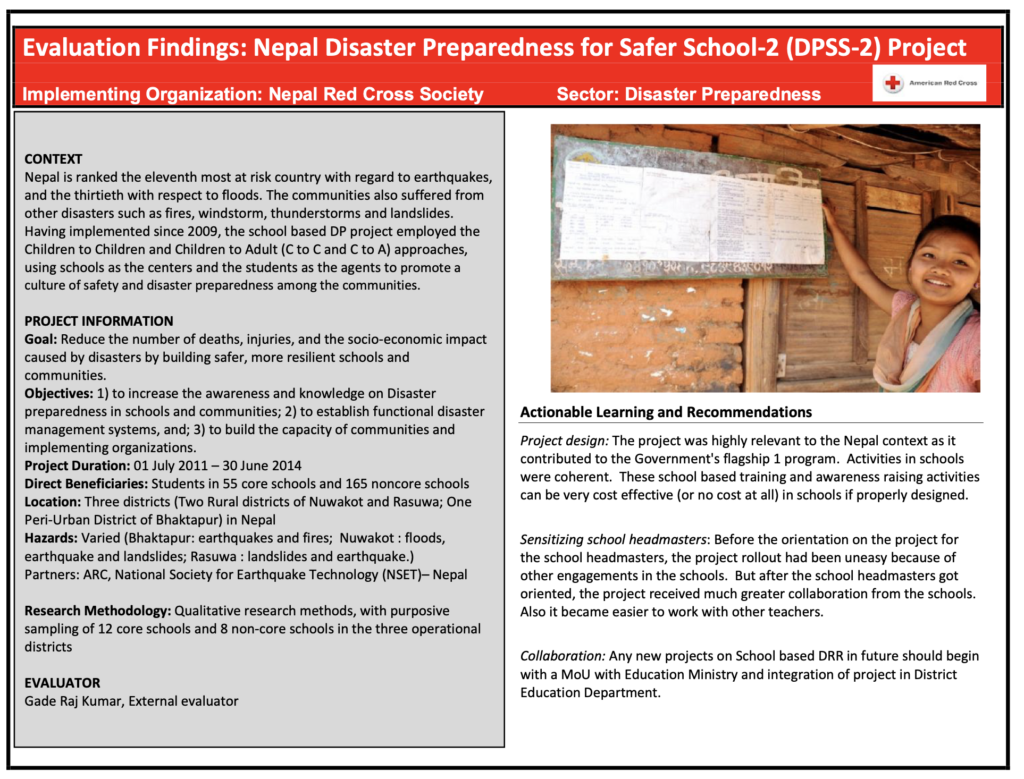
Nepal is ranked the eleventh most at risk country with regard to earthquakes, and the thirtieth with respect to floods. The communities also suffered from other disasters such as fires, windstorm, thunderstorms and landslides. Having implemented since 2009, the school based DP project employed the Children to Children and Children to Adult (C to C
Disaster Preparedness for Safer School Project, Nepal Read More »
Indo-Nepal Trans-Boundary Community Based Early Warning System is a cohesive attribute that empowers communities to move forward with communism and socialism favoring life and not borders. People who face the problem of flood every year can now cope up with their life and empower themselves with CBFEWS. These people are generally located at Terai region
Trans-Boundary Community Based Flood Early Warning System by PGVS Read More »
Building Capacities: Best Practices in Asia Pacific (4/5) Red Cross and Red Crescent societies mobilize people at community level to improve the lives of the vulnerable. They achieve this by involving them in planning services that meet their own identified needs and building their long-term strengths to manage themselves. This film contains many examples of
Building capacities: Community and branch development Read More »
Building Capacities: Best Practices in Asia Pacific (3/5) Red Cross and Red Crescent societies aim to mobilize as many diverse people at community level as possible to ensures equal voices and space for diverse groups in the community to share ideas and benefit from all services. Both women and men should enjoy equal representation and
Building capacities: Gender & diversity in Asia and Pacific Read More »
One of the main purposes of Red Cross and Red Crescent societies is to mobilize people and resources at community level to improve the lives of the vulnerable. In order to become locally sustainable, branches must expand the types of local resources and funds they get. This film describes successful activities to strengthen funds and
Building capacities: Resource mobilisation in Asia and Pacific Read More »
Building Capacities: Best Practices in Asia Pacific – Volunteers and Youth (1/5) The vast majority of human resources of the Red Cross and Red Crescent societies are volunteers. In all their diversity, both young and old, from all backgrounds, ethnicities and social groups, they are the lifeblood of the Red Cross and Red Crescent societies.
Building Capacities: Volunteers and Youth in Asia Pacific Read More »
One of the main purposes of the Red Cross and Red Crescent Movement is to ensure that its programmes and services should first be identified by vulnerable people themselves, based on their needs. These strong participatory planning activities at local level contribute to a strong national plan that responds to new trends and needs. This
Building capacities: Participatory planning Read More »
In Nepal, the implementation of the HOPE program has been pivotal in the development of emergency planning in hospitals. According to Dr. Pradeep, before HOPE implementation in 2004, only two hospitals − including Tribhuvan Teaching Hospital − had emergency plans. The disaster management plans were comparatively poor and not well developed. Since 2004, approximately two HOPE courses have been conducted each year and eleven hospitals now
Case study: HOPE, a pivotal program to Nepal’s future in emergency medicine Read More »
This report summarizes an 18-month, evidence-based study that sought to understand practitioner information needs by asking the question: What are successful Red Cross/Red Crescent (RCRC) preparedness practitioners already doing that works, and how can the organization better support their information needs in what they are already doing? A research team from the University of Washington conducted
Valuing what works – Success Factors in Disaster Preparedness Read More »