Asia Pacific

Illustration of a park scene with a red fountain, a tree, and landscaping.

Extreme Heat Risk in Australia: Insights from the PERC

Heat through a systems lens. Credit: Australian Red Cross. Extreme heat is Australia’s deadliest natural hazard — yet it remains largely invisible, normalised, and under-addressed. This Post-Event Review Capability (PERC) on extreme heat presents a comprehensive, systems-based analysis of how heat risk is shaped, experienced, and managed in Australia. Rather than treating extreme heat as […]

Extreme Heat Risk in Australia: Insights from the PERC Read More »

Illustration showing extreme heat as a systems issue, depicting people, infrastructure, natural environments, and urban elements interconnected under a large sun, representing how heat affects multiple components of urban life

Beyond Individual Risk: Why Extreme Heat Demands a Systems Response

At a Glance Extreme heat becomes a disaster when it overwhelms the systems people rely on — housing, health, infrastructure, ecosystems, and social services. Heat impacts do not occur in isolation but often cascade across sectors. Disruptions in one system (especially energy and critical infrastructure) can quickly trigger failures in others, amplifying harm and disruption.

Beyond Individual Risk: Why Extreme Heat Demands a Systems Response Read More »

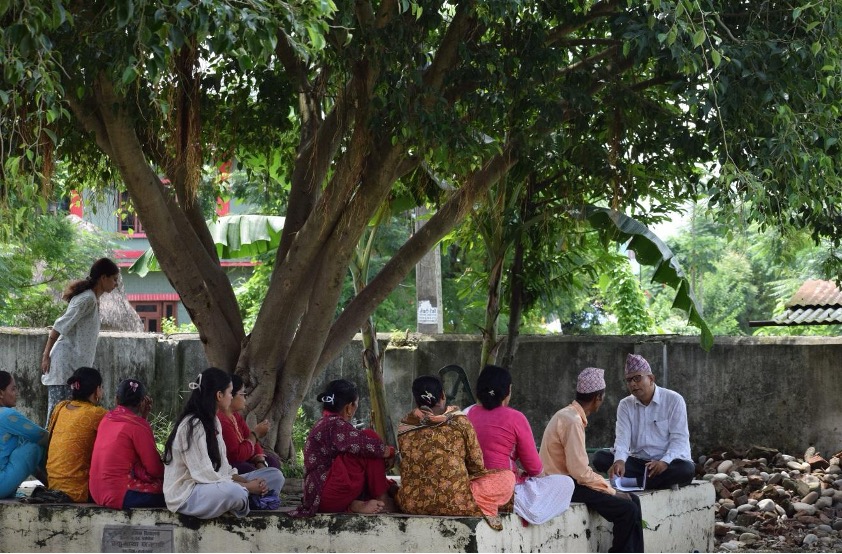
How to ensure inclusive early warning early action? Good practices and local innovations from Eastern Nepal that leave no one behind.

In this policy paper, published by the Finnish Red Cross in November 2025, the Nepal Red Cross Society shows how effectiveness in disaster preparedness depends on the meaningful participation of groups in the most vulnerable situations. It has a specific focus on persons with disabilities and women in Eastern Nepal. The policy paper aims to

How to ensure inclusive early warning early action? Good practices and local innovations from Eastern Nepal that leave no one behind. Read More »

Fortalecimiento de los Sistemas de Alerta Temprana para Todos: Evidencia y Lecciones de las Comunidades de Última Milla

Las alertas tempranas salvan vidas, pero solo cuando llegan a tiempo, son confiables y conducen a la acción. Este informe reúne evidencia de 15 estudios en 14 países para analizar por qué los sistemas de alerta temprana (SAT) a menudo no logran traducir las alertas en medidas de protección para las comunidades de última milla

Fortalecimiento de los Sistemas de Alerta Temprana para Todos: Evidencia y Lecciones de las Comunidades de Última Milla Read More »

Zurich Climate Resilience Alliance in the Philippines

As part of the Zurich Climate Resilience Alliance, the Philippine Red Cross, together with the International Federation of Red Cross and Red Crescent Societies, and Plan International are working with communities across the Philippines to improve community resilience, increase investment, and improve policies for climate resilience at all governance levels in the Philippines. The Philippines is

Zurich Climate Resilience Alliance in the Philippines Read More »

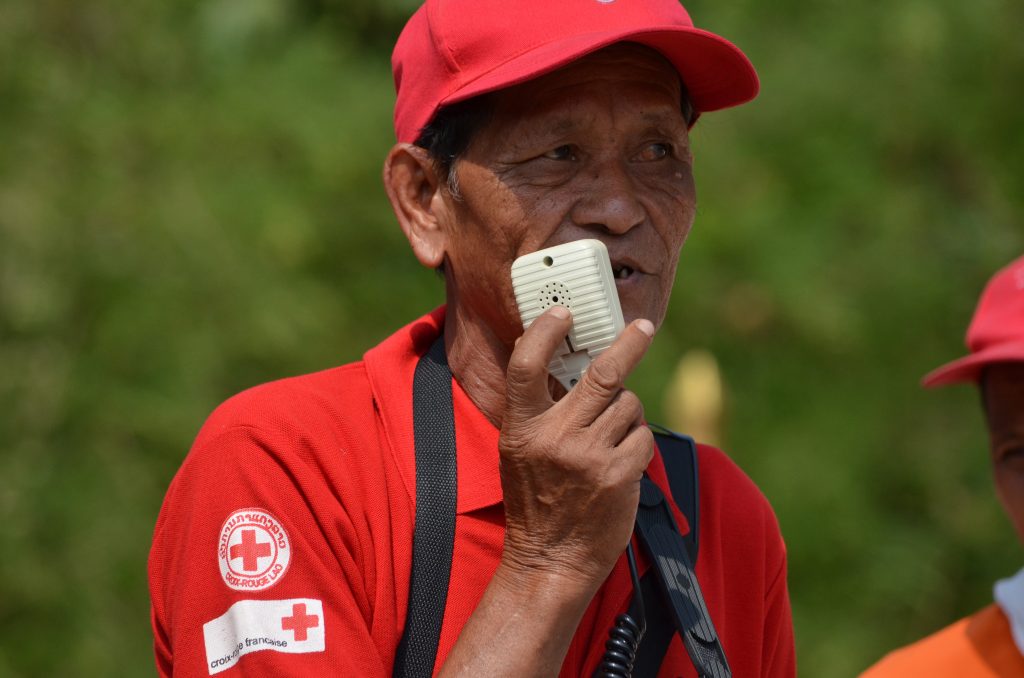
A silhouetted community volunteer uses a megaphone to deliver an early warning message outdoors, with sunlight behind them against a clear sky.

Strengthening Early Warning Systems for All: Evidence and Lessons from Last-Mile Communities

This report synthesizes findings from 15 GDPC-supported studies across 14 countries to examine why early warnings often fail to translate into timely, protective action — particularly for last-mile communities that are geographically isolated, socially marginalized, or economically vulnerable. Drawing on empirical research and complementary literature, the report highlights that early warning effectiveness is shaped not

Strengthening Early Warning Systems for All: Evidence and Lessons from Last-Mile Communities Read More »

When Form Follows Nature: Presence, Climate, and the Ethics of Space

Form follows nature. Not as slogan. As method. In an age of climate emergency, urban intensification, and sensory saturation, this principle becomes resistance. It invites us to pause—not to impose geometry, but to observe ecology. To trace the shifting patterns of light, wind, and memory. To let trees instruct. To let people inhabit. This is

When Form Follows Nature: Presence, Climate, and the Ethics of Space Read More »

Strengthening Climate Resilience in Vulnerable Communities in Western Sydney

Since 2023, Australian Red Cross has led the Urban Climate Resilience Program (UCRP) in Western Sydney, working with communities most affected by extreme heat. As extreme weather grows more frequent and severe, the program supports people and cities to prepare, adapt, and thrive. This infographic highlights key achievements to date, spanning both local action and

Strengthening Climate Resilience in Vulnerable Communities in Western Sydney Read More »

Forced to Flee in a Changing Climate: How IFRC is addressing climate and disaster displacement in Asia Pacific

This IFRC report highlights how climate change and disasters are driving displacement across Asia Pacific, the world’s most disaster-prone region. In 2024 alone, over 24 million people were displaced by disasters, accounting for more than half of the global total. Through 39 case studies from 21 National Societies, the report showcases locally led Red Cross

Forced to Flee in a Changing Climate: How IFRC is addressing climate and disaster displacement in Asia Pacific Read More »

Scroll to Top