Resilience and Disaster Risk Management

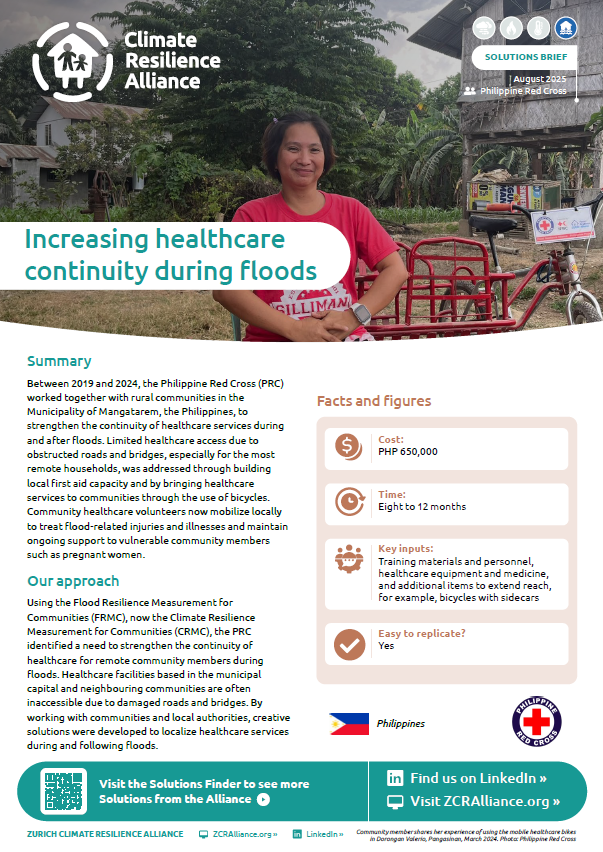
Increasing healthcare continuity during floods – Solutions Brief

This solution brief forms part of the Zurich Climate Resilience Alliance’s solutions series. The solution series aims to improve outreach and impact of such resilient practices at a global level. This brief explores how the Philippine Red Cross has worked to strengthen local capacity and increase healthcare continuity during floods. This resource presents the process

Increasing healthcare continuity during floods – Solutions Brief Read More »
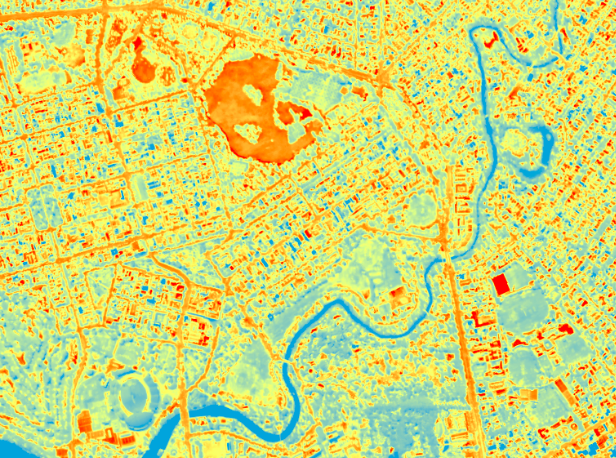
Metropolitan Adelaide urban heat mapping 2022

Unpacking the Summer: Learning About Heat in Adelaide

Listening Over Coffee: Stories Behind the Data  The Post-Event Review Capability (PERC), developed by the Zurich Climate Resilience Alliance, offers a structured approach to understanding how and why hazard events escalate into disasters. In South Australia, this framework is being put into action to unpack the complexities of heat in an urban context. The Adelaide

Unpacking the Summer: Learning About Heat in Adelaide Read More »

Community-First Approach: How the American Red Cross Helps Build Disaster Resilience Where It’s Needed Most

Across the United States, the American Red Cross is working to reduce disaster risks and strengthen the long-term resilience of the most vulnerable communities through its Community Adaptation Program (CAP). With teams embedded in communities across 19 locations, the program focuses on addressing the root causes of vulnerability — specifically in the areas of health,

Community-First Approach: How the American Red Cross Helps Build Disaster Resilience Where It’s Needed Most Read More »

Community-based resilience-building: A UNDP guidance note

Over the past several decades, UNDP and many other organizations have implemented many community-based initiatives to reduce people’s vulnerability to a range of shocks and hazards. Experiences and reviews of lessons learned, however, have pointed to mixed results regarding the impact and long-term sustainability of this support. This calls for revisiting UNDP’s current approaches, which

Community-based resilience-building: A UNDP guidance note Read More »

The hidden power of community: Unveiling social capital’s role in Australia’s disaster resilience

Social capital – the social ties and connections between people and communities – is a crucial component of disaster resilience. But evidence that demonstrates the economic benefit of investing in social capital has been anecdotal and primarily qualitative, with an absence of empirical and quantitative evidence. This has meant it can be difficult for governments

The hidden power of community: Unveiling social capital’s role in Australia’s disaster resilience Read More »

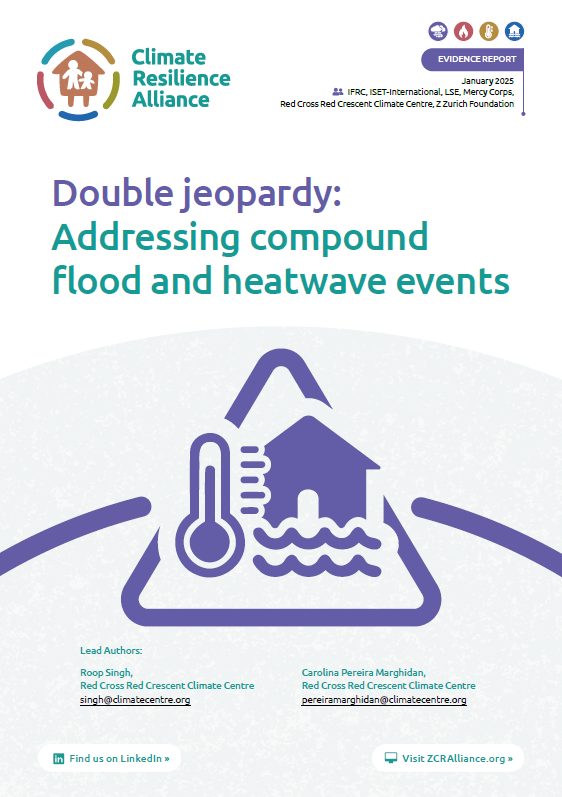
Double Jeopardy: Addressing compound flood and heatwave events

Compound events, such as floods and heatwaves occurring in close succession or simultaneously, can interact in a way that creates more severe outcomes than if they occurred both individually, as multiple stressors can exceed the coping capacity of a system more quickly than individual stressors occurring in isolation. Urbanization exacerbates these risks through the urban

Double Jeopardy: Addressing compound flood and heatwave events Read More »

Fact Sheet: Coastal City Resilience and Extreme Heat Action Project (CoCHAP)

The Coastal City Resilience and Extreme Heat Action Project (CoCHAP) Fact Sheet outlines the progress and objectives of this initiative led by the IFRC with funding from USAID/BHA and technical support from the American Red Cross and the RCRC Climate Centre. CoCHAP focuses on building climate resilience in urban communities in nine secondary cities across

Fact Sheet: Coastal City Resilience and Extreme Heat Action Project (CoCHAP) Read More »

Scroll to Top