Guidance material

Integrating Climate Change into City Development Strategies

The guide is intended to be of particular benefit for the following groups: • Planners working in local governments cities in lowand middle-income countries that are developing a City Development Strategy, have some knowledge of climate change and want to integrate this aspect. • City planners working in local governments who have developed a City Development Strategy and have integrated

Integrating Climate Change into City Development Strategies Read More »

Protected areas as tools for Disaster Risk Reduction. A handbook for practitioners

Disaster risk reduction (DRR) has therefore become a critical part of sustainable development strategies. The acronym DRR embraces a complex mixture of policies and actions, from education of civil society, through disaster preparedness strategies to engineering solutions ranging from construction of sea walls to building regulations that aim to protect cities against earthquakes. The following

Protected areas as tools for Disaster Risk Reduction. A handbook for practitioners Read More »

Multi-Agency Resource Center – MARC: Planning Resource

Multi-Agency Resource Center (MARC), can be an efficient way to deliver services to individuals and families affected by a disaster by bringing together multiple service providers in a single location and providing on-site assistance. This resource is intended to support MARC planning and implementation in situations where communities have identified a MARC model as the

Multi-Agency Resource Center – MARC: Planning Resource Read More »

Volunteering in Emergencies: Protect. Promote. Recognize.

To design and support policies that promote volunteering, governments need to measure and disseminate the economic value they bring to communities. Tools now exist to calculate this information. In March 2011, the International Labour Organization (ILO) issued the Manual on the Measurement of Volunteer Work. When the IFRC used the ILO’s methodology, it found that

Volunteering in Emergencies: Protect. Promote. Recognize. Read More »

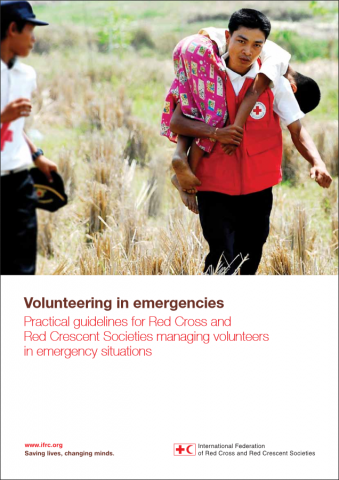
Volunteering in Emergencies: Practical guidelines for Red Cross and Red Crescent Societies managing volunteers in emergency situations

Volunteers are our most valued resource. They bring local knowledge and contacts, know the language, customs and operating environments, as well as bring a wide range of skills and capacities to rapidly scale up activities when needed, and sustain these services in the long-term. We must continue to do all that we can to promote

Volunteering in Emergencies: Practical guidelines for Red Cross and Red Crescent Societies managing volunteers in emergency situations Read More »

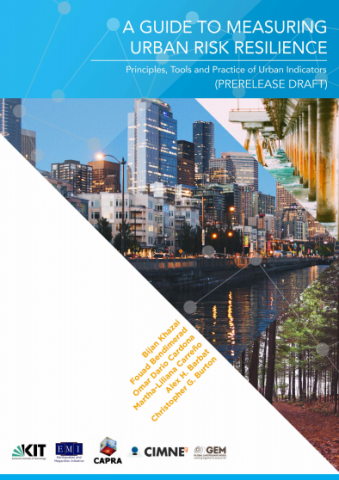
A guide to measuring urban risk resilience: principles, tools and practice of urban indicators

This Guidebook describes the principles, tools and practices of three (3) urban disaster risk and resilience indicator systems based on EMI’s collective experience in implementing them in various urban settings in the last decade with local authorities. The objective of the Guidebook and the case studies presented here is to describe the methodology and participatory

A guide to measuring urban risk resilience: principles, tools and practice of urban indicators Read More »

Scroll to Top