Indonesia

Past disaster eventsEM-DAT listing of disaster events in IndonesiaDisaster statistics from UN-ISDR and CREDRisk country profile from Index for Risk Management Damage and losses statistics from Disaster Information Management SystemsDisaster response and management data from ReliefWebGovernment policiesHFA Progress Reports, government plans, and government statements – http://www.unisdr.org/partners/countries/idnRed Cross + civil societyIFRC appeals and info bulletins for Indonesia

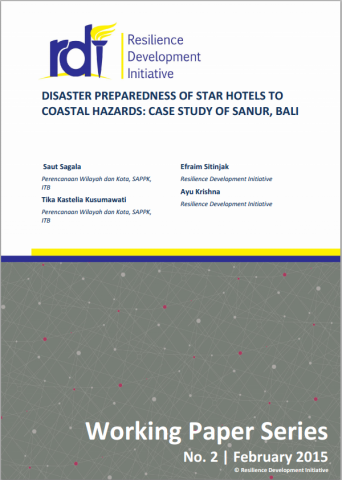
Disaster Preparedness of Star Hotels to all Hazards: Case Study of Sanur, Bali

This study aims to assess hotel preparedness to several coastal hazards that pose problems for tourism. It proposes a set of indicators of preparedness that includes: (i) hazard knowledge, (ii) management, direction and coordination, (iii) formal and informal response plans and agreements, (iv) supportive resources, (v) life safety protection, (vi) property protection, (vii) emergency coping […]

Disaster Preparedness of Star Hotels to all Hazards: Case Study of Sanur, Bali Read More »

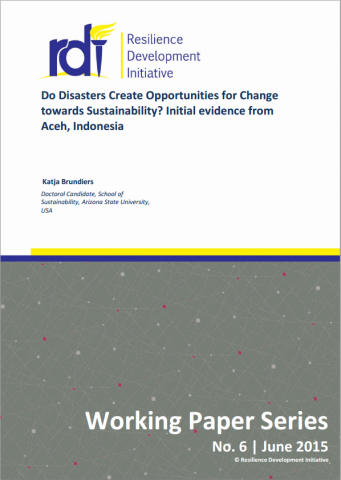
Do Disasters Create Opportunities for Change Towards Sustainability?

This study looks at how people and organizations – in the midst of post-disaster devastation and loss – are able to see and seize opportunities for change towards sustainability. The post-disaster recovery process from the 2004 Indian Ocean tsunami devastating Aceh, Indonesia is one of the cases with mixed accounts that framed their recovery around

Do Disasters Create Opportunities for Change Towards Sustainability? Read More »

Assessing household risk mitigation to flooding in lowland area of Palembang

This research aims to build a concept of disaster resilient communities in Palembang, Indonesia based on their current preparedness. In order to achieve this, the level of community structural and non-structural mitigation in Palembang needs to be assessed. The paper follows this assessment up by a discussion of literature review of how preparedness is related

Assessing household risk mitigation to flooding in lowland area of Palembang Read More »

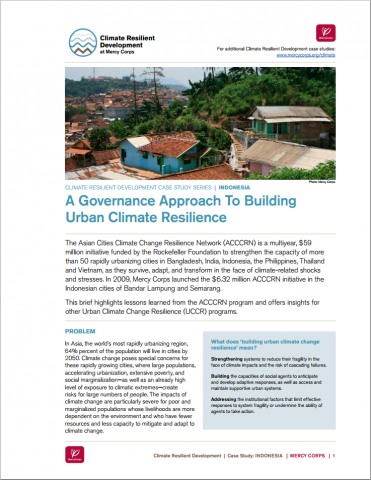
A governance Approach to Building Urban Climate Resilience

This brief highlights lessons learned from the Asian Cities Climate Change Resilience Network (ACCCRN) and offers insights for other Urban Climate Change Resilience (UCCR) programs. This series of case studies are aimed to discover the key lessons and best practices for integrating climate change into diverse programs and contexts. They are intended to inform how

A governance Approach to Building Urban Climate Resilience Read More »

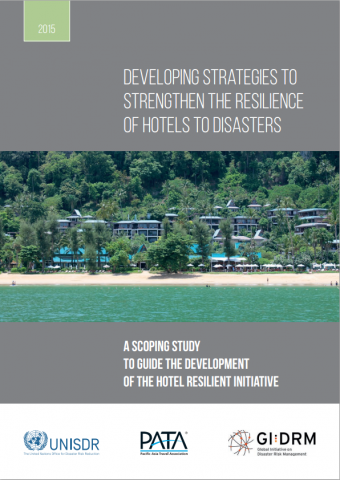
Developing strategies to strengthen the resilience of hotels to disasters

This scoping study analyzes the business context and needs for specific disaster risk management standards for small- and medium-sized hotels. as part of the the Hotel Resilient Initiative. The study is based on17 semi-structured interviews with representatives from hotels, government, insurance companies and hotel associations in Bohol and Cebu in the Philippines; Lombok in Indonesia; Phuket in Thailand; and

Developing strategies to strengthen the resilience of hotels to disasters Read More »

Key Considerations in Post-Disaster Reconstruction Lessons from Aceh

In October 2007, almost three years after the tsunami, the DEC commissioned experts from Arup to carry out a short mission to Aceh to review the post-tsunami reconstruction programme undertaken by DEC Member Agencies. The aim of the mission was to provide assurance on the quality of construction and that the programmes would be completed

Key Considerations in Post-Disaster Reconstruction Lessons from Aceh Read More »

Building Back Better: Case studies in Resilience Building

The publication showcases community initiatives from China (Sichuan), Indonesia, Thailand and Singapore to provide valuable lessons for the future. Section 1 of this publication provides an overview of the “Disaster Mental Health Programme for Communities in Asia” programme’s aims and planned outcomes, and the context in which it has progressed. It also highlights the importance

Building Back Better: Case studies in Resilience Building Read More »

Developing strategies to strengthen the resilience of hotels to disasters: A scoping study to guide the development of the Hotel Resilient Initiative

Exerpt from Executive Summary:   Tourism is one of the most economically important sets of industries worldwide, yet the industry is also one of the most highly exposed to disasters due to its reliance on interrelated industries and location in many hazard prone regions.   The Hotel Resilient Initiative aims to develop internationally recognized standards for hotels and

Developing strategies to strengthen the resilience of hotels to disasters: A scoping study to guide the development of the Hotel Resilient Initiative Read More »

Epidemic Preparedness in Indonesia

Indonesia is one of the world’s most natural disaster- prone countries. Earthquakes, tsunamis, flooding, landslides and volcanic activity pose a constant threat to the safety and wellbeing of millions of people living across the 13,700 islands of the archipelago As well as vulnerability to natural disasters, Indonesia continues to face outbreaks of endemic infectious diseases

Epidemic Preparedness in Indonesia Read More »

Scroll to Top