
Renata Barradas Gutierrez
renatabarradas88@gmail.com
Washington D.C, United States
Renata earned a Bachelor’s Degree in International Relations from Tecnologico de Monterrey and two Certificates in Woman, Gender and Development and International Relations from The University of British Columbia. While working as Communications Coordinator in Cinco Panes y Dos Peces A.C., a Mexican nonprofit organization, she helped indigenous communities in isolated regions in Mexico to apply a Risk Prevention, Control and Management Plan. Simultaneously, Renata taught a certificate in Financing Strategies and Fundraising for nonprofits. Previously, she coordinated two international volunteer projects in Belgium at the Red Cross Center for Asylum Seekers and at the Asylum Seekers and at the Arthur Regniers Center for motor and brain handicapped people. Renata has volunteered in ten projects nationally and internationally concerning a wide range of topics such as: orphan children, Down's syndrome children, reforestation, Elkhorn Coral Planting, fundraising, and reconstruction. Through these experiences, she developed project coordination and implementation, fundraising, web development and research skills. Renata enjoys topics related to philanthropy and has a strong passion for poverty relief and refugees. As a result, from her passion in the nonprofit sector, she has cofounded Amarte A.C., and Hoor A.C., two Mexican nonprofit organizations.
Renata currently helps to support the information and knowledge management needs of the Global Disaster Preparedness Center (GDPC). This includes providing immediate support for data collection and analysis, maintaining and refining an effective knowledge management system for a state-of-the-art resource center, and piloting of complementary knowledge management initiatives.

Guidance material

Participatory Approach for Safe Shelter Awareness (PASSA) is a participatory method of disaster risk reduction (DRR) related to shelter safety. It is a variation of Participatory Hygiene and Sanitation Transformation (PHAST), which has been used by m...
Guidance material
This handbook presents some basic information on safe construction practices. Its purpose is to provide guidance on choices regarding settlement planning in risky environments, as well as on the building techniques to improve individual shelters. The...
Guidance material, Training material
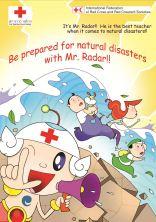
The RAMP survey toolkit is specifically designed to be a management tool for Red Cross Red Crescent National Society health programme managers to achieve their management priorities. It is meant to be a comprehensive resource to empower National Soci...
Case Study
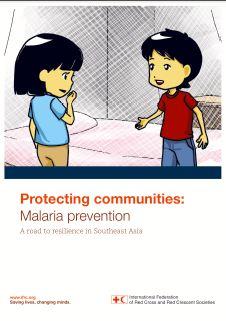
The Maldives is prone to a number of hazards including tsunamis, earthquakes, flash floods, tidal waves, thunderstorms, tornadoes and waterspouts, strong winds, and drought. Therefore, early warning is essential in timely notification of alerts so...
Guidance material
This guide aims to assist National Society staff and volunteers throughout the world in undertaking food security assessments. It does not require prior knowledge or experience of food security. The guide is a practical tool related to the Food s...
Other type of resource
In the context of urbanisation, disaster risk increases as a result of badly planned and managed urban development, degraded ecosystems and poverty. The Disaster Risk Reduction (DRR) processes developed in several Latin American cities show the be...
Report
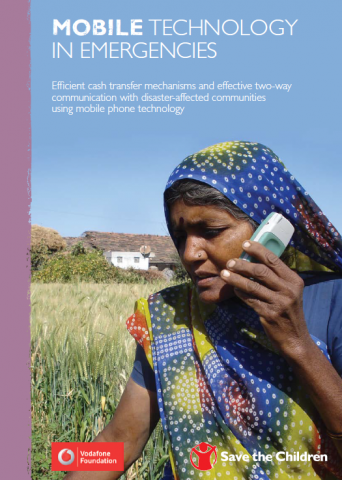
Technological hazards are an increasing source of risk to people and their environment. This is an effect of the globalization of production, an increase of industrialization and a certain level of risk of accidents connected with production, proce...
Other type of resource
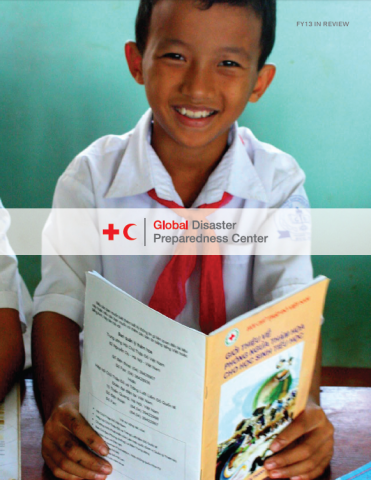
In collaboration with other partners, the GDPC seeks to build out the current knowledge and awareness within the global Red Cross network on how the information exchange and communication on social media platforms can be better integrated into the wo...
Video
La Cruz Roja capacita constructores en el uso de técnicas de resistencia a huracanes para la construcción de casas de madera más seguras para una vida mejor.