
Edible Rooftop Gardens: A Community and Nature-based Climate Resilience Building Strategy

Authors and Collaborators:
- Chandan Sarangi
- Parama Roy
- Gourav Suthar
- Akshaya Ayyangar
- Ramachandran A.
Summary:
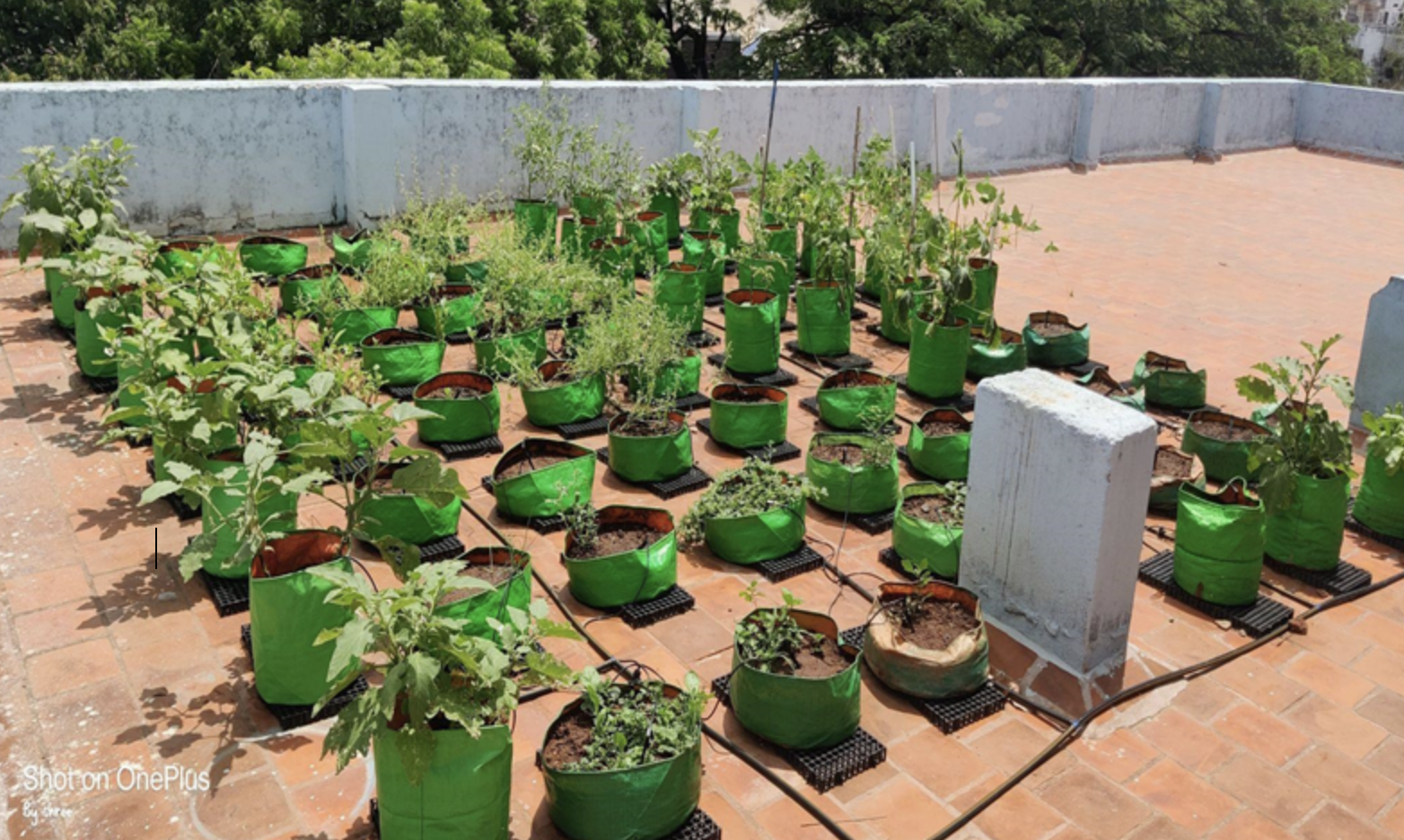
Extreme heat is an escalating climate risk in Indian cities, disproportionately affecting socio-economically vulnerable populations, especially children who spend long hours in public schools and Anganwadi’s. Nature-based solutions such as edible rooftop gardens offer a promising, low-cost strategy for localised cooling while generating multiple co-benefits. This study investigates the heat adaptation potential of edible rooftop gardens in Chennai through a mixed-methods approach combining quantitative monitoring and qualitative analysis. Temperature, humidity, and radiation sensors were deployed across three schools with differing roof types to compare thermal performance between garden and non-garden roof sections. Parallelly, interviews, focus group discussions and a policy review examined community experiences, structural and regulatory barriers, and opportunities for mainstreaming such solutions.
The results indicate that rooms beneath rooftop gardens maintained indoor temperatures 0.3-1.8oC lower than non-garden rooms, accompanied by roof surface temperature reductions of 8-12oC and ceiling surface temperature reductions of 2-4oC. These findings confirm the cooling effect of rooftop gardens, effectively reducing heat transfer into indoor spaces and moderating diurnal temperature fluctuations. The gardens reduced heat gain even under changing atmospheric conditions, with the most pronounced benefits observed during the afternoon, evening, and early-morning hours. Policy analysis reveals that heat-related strategies in India including Chennai, acknowledge the growing risk of extreme heat. However, the rooftop gardens are recognized as an adaptation measure only to a limited extent. At the same time, existing food-nutrition programmes and urban greening initiatives present clear entry points for integrating edible rooftop gardens in public institutions.
Overall, the study concludes that edible rooftop gardens are a viable community-driven and nature-based heat adaptation strategy with strong co-benefits for nutrition, education, and wellbeing. Strengthening structural assessments, technical guidance, and programmatic support can enable wider adoption and help mainstream rooftop gardening into climate resilience planning for vulnerable urban communities.
Note:
GDPC encourages our partner researchers to submit their finished work to academic journals. To facilitate this process, some reports may not be made available in their entirety until after journal acceptance and publication. However, we make available the Executive Summary of the research and will update this resource page with the full report when it becomes available.

This research was part of a multi-country research initiative led by the Global Disaster Preparedness Center of the American Red Cross. Access all final publications here.