floods

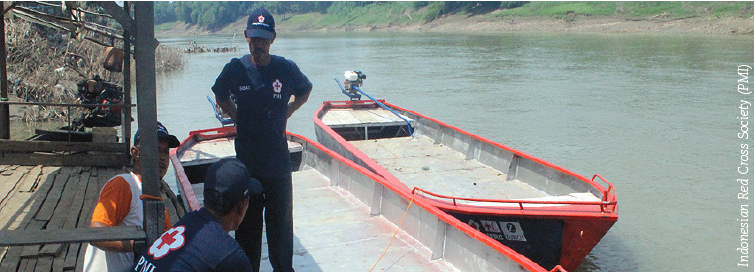
Infiltration wells for flood mitigation in Sewu Village – Flood Resilience

Sewu is among the most flood -prone villages in the Surakarta District, Indonesia. Hundreds of houses are located close to the riverbank; many are unauthorized settlements that have substandard facilities and infrastructure. The residents of Sewu Village have built infiltration wells to reduce the risk of flooding. Infiltration wells enable water to seep into the […]

Infiltration wells for flood mitigation in Sewu Village – Flood Resilience Read More »
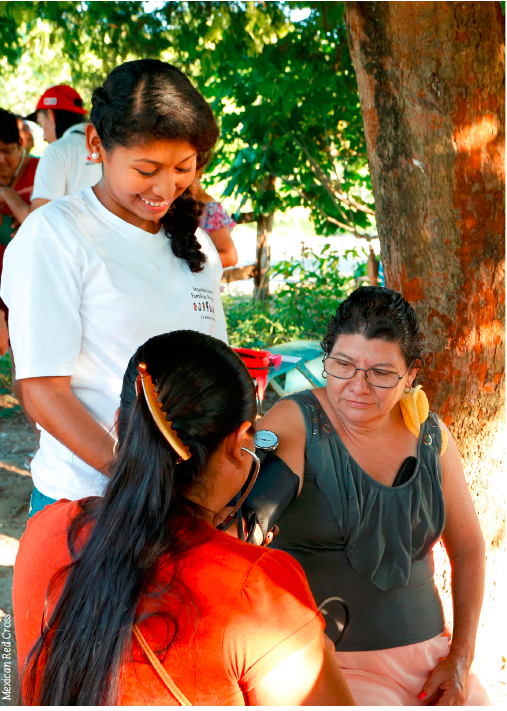
The Flood Resilience Alliance – Community Testimonials from Nepal, Mexico and Indonesia

The Flood Resilience Alliance (2013 -2017) is a five-year partnership that set out to develop a model that would deliver effective community flood resilience programmes at scale and contribute to shaping the flood resilience agenda of policy-makers and donors. For the IFRC and National Societies the Flood Resilience Alliance, advocacy and influencing strategies were designed to improve conditions for vulnerable

The Flood Resilience Alliance – Community Testimonials from Nepal, Mexico and Indonesia Read More »

Climate Change’s Impact On World’s Future Food Supply

An infographic released by the United Nation’s Food and Agriculture Organization details the impact climate change will have global food production in the decades to come. The Inforgraphichttp://image.guardian.co.uk/sys-image… Subscribe to The Daily Conversationhttp://bit.ly/WZnLndJoin the conversation on Facebookhttp://www.facebook.com/thedailyconve…Add TDC to your circles on Google+https://plus.google.com/1001349258045…Follow The Daily Conversation on Twitterhttp://www.twitter.com/thedailyconvo

Climate Change’s Impact On World’s Future Food Supply Read More »

Community Based Disaster Risk Reduction in Sri Lanka: A Compendium of Good Practices

The compendium presents good practices of the community based disaster risk reduction (CBDRR) approach implemented under a Disaster Preparedness project in the North and East of Sri Lanka, supported by the Disaster Preparedness ECHO (DIPECHO). Learning drawn from the project can be replicated and built into future interventions. The compendium also highlights the post-conflict scenario, and how CBDRR approach can

Community Based Disaster Risk Reduction in Sri Lanka: A Compendium of Good Practices Read More »

Lernen aus der Katastrophe 2002 im Elbegebiet: Hochwasservorsorge in Deutschland (Learning from the 2002 Elbe Flood Disaster: Flood Risk Management in Germany)

Diese interdisziplinäre Lessons-Learned-Studie des Deutschen Komitees für Katastrophenvorsorge (DKKV) aus dem Jahr 2003 analysiert umfassend das Augusthochwasser 2002 im Elbeeinzugsgebiet – eines der schwersten Hochwasserereignisse in der jüngeren Geschichte Mitteleuropas mit Schäden von rund 9,1 Milliarden Euro und über 337.000 Betroffenen in Deutschland. Auf Basis von Literaturauswertungen, Experteninterviews, Haushaltsbefragungen und Netzwerkanalysen untersucht die Studie sechs

Lernen aus der Katastrophe 2002 im Elbegebiet: Hochwasservorsorge in Deutschland (Learning from the 2002 Elbe Flood Disaster: Flood Risk Management in Germany) Read More »

Community-Based Urban Flood and Erosion Management in Can Tho, Vietnam: Co-Management Approaches for Climate Resilience

This climate resilience case study, produced by the Institute for Social and Environmental Transition (ISET), documents a community-based urban flood and erosion management project implemented in An Binh ward, Ninh Kieu district, Can Tho City, Vietnam between 2012 and 2015. An Binh is a densely populated, lower- and middle-income residential area traversed by the Cai

Community-Based Urban Flood and Erosion Management in Can Tho, Vietnam: Co-Management Approaches for Climate Resilience Read More »

Scroll to Top