Report

GPDRR 2019 – Red Cross Red Crescent Actions Report

The Global Platform for Disaster Risk Reduction (GPDRR) is a biennial multi-stakeholder forum established by the UN General Assembly to review progress, share knowledge and discuss the latest developments and trends in reducing disaster risk. This document is a brief report on the Red Cross Red Crescent actions implemented on this international event to advocate […]

GPDRR 2019 – Red Cross Red Crescent Actions Report Read More »

Definition of Urban

National definitions of urban and rural areas differ significantly from one country to another. To facilitate international comparisons, a coalition of six international organizations developed a new global definition of cities, towns and semi-dense areas, and rural areas.  On March 5th, the UN Statistical Commission endorsed the Degree of Urbanization as a recommended method for

Definition of Urban Read More »

Flood Resilience Alliance: Philippines Country Briefing

The Philippines is the twelfth most populated country in the world and is ranked third globally in terms of its vulnerability to natural hazards. The Philippines is especially prone to hydrometeorological events with floods accounting for over 80 per cent of natural hazard events in the country during the last 50 years, with devastating economic and social impacts. The Zurich Flood

Flood Resilience Alliance: Philippines Country Briefing Read More »

2020 Common Alerting Protocol (CAP) Implementation Workshop Report

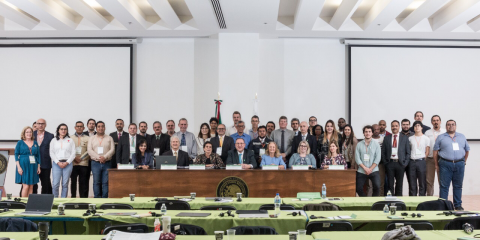
This page compiles the Report of the 2020 CAP Implementation Workshop together with the full set of presentations delivered during the event. The workshop took place 29–30 September 2020 (preceded by a CAP Training session on 28 September) and was hosted by the International Telecommunication Union (ITU) as a virtual workshop delivered via Zoom Webinars.

2020 Common Alerting Protocol (CAP) Implementation Workshop Report Read More »

IFRC Multi-Hazard App, WhatNow Service, & CAP Dissemination

This presentation was given by Jessica Robbins on 18 October, 2019, at the CAP Implementation Workshop in Mexico City, Mexico. This presentation introduces how the International Federation of Red Cross and Red Crescent Societies (IFRC) and the Global Disaster Preparedness Center (GDPC) support multi-hazard early warning and public preparedness through digital tools and services that

IFRC Multi-Hazard App, WhatNow Service, & CAP Dissemination Read More »

The Cost of Doing Nothing

The International Federation of the Red Cross Red Crescent Societies presents the report: The Cost of Doing Nothing, an analysis showing that if no urgent action is taken now, the number of people in need of humanitarian assistance annually due to the climate crisis could double by 2050. Similarly, financial costs could balloon to 20 billion

The Cost of Doing Nothing Read More »

Resilient Cities, Resilient Lives Learning from the 100RC Network

In the six years since the creation of 100 Resilient Cities, more than 70 cities have published Resilience Strategies containing over 3,000 initiatives. To date, more than US$25 billion has been catalyzed by 100RC member cities toward the resilience agenda, and the world’s leading development financial institutions are building resilience criteria into how large-scale infrastructure projects

Resilient Cities, Resilient Lives Learning from the 100RC Network Read More »

RCRC Urban Collaboration Workshop, Beirut Lebanon

Since 2015, the Federation Secretariat and American Red Cross (ARC) have been co-leading the Urban Collaboration Platform (UCP), with strong support from several National Societies (NSs), International Committee of Red Cross (ICRC), Global Disaster Preparedness Center (GDPC) and the RCRC Climate Center. UCP aims to help the RCRC National Societies be better informed, better connected

RCRC Urban Collaboration Workshop, Beirut Lebanon Read More »

Humanitarian response in urban contexts

Published by ODI/ALNAP, this Good Practice Review is structured into four chapters. Chapter 1, on context, sets the scene. It describes ways of seeing the city (there are many; this section presents three). The chapter then discusses four particular threats: naturally-triggered disasters, climate change, conflict and violence. The next sections look at urban displacement and vulnerability

Humanitarian response in urban contexts Read More »

Scroll to Top