Report

The Humanitarian as Negotiator

This paper examines the dynamics at play in ongoing efforts to cultivate negotiation capacity among professionals working in the humanitarian sector. Based on extensive interviews conducted with humanitarian practitioners, this paper addresses three overarching issues. The first is humanitarian professionals’ current understanding of humanitarian negotiation as a concept. On this issue, the paper examines the […]

The Humanitarian as Negotiator Read More »

How to Use Social Media to Better Engage People Affected by Crises

Online communication platforms have become a lifeline for millions of people affected by natural disasters and armed conflicts: social media and messaging apps help maintain contact with family and friends, and provide access to information, such as where to find food, shelter or medical assistance. This information can directly influence how people prepare for, respond

How to Use Social Media to Better Engage People Affected by Crises Read More »

Learning From Disaster Simulation Drills in Japan

This report was developed to introduce Japanese disaster simulation drills as a model to help other countries plan and implement disaster simulation drill exercises. The main objectives of this guideline are to: 1. Provide an overview of the institutional and legislative frameworks for Disaster Management which underpin the organization of disaster simulation drills in Japan;

Learning From Disaster Simulation Drills in Japan Read More »

Cities Safer by Design: Guidance and Examples to Promote Traffic Safety through Urban and Street Design

Published by the World Resources Institute (WRI), This report provides Guidance and Examples to Promote Traffic Safety through Urban and Street Design. Globally, 1.24 million people are killed in traffic crashes every year. This number is expected to keep rising as vehicle fleets grow, to become the 5th largest cause of death by 2030. The majority

Cities Safer by Design: Guidance and Examples to Promote Traffic Safety through Urban and Street Design Read More »

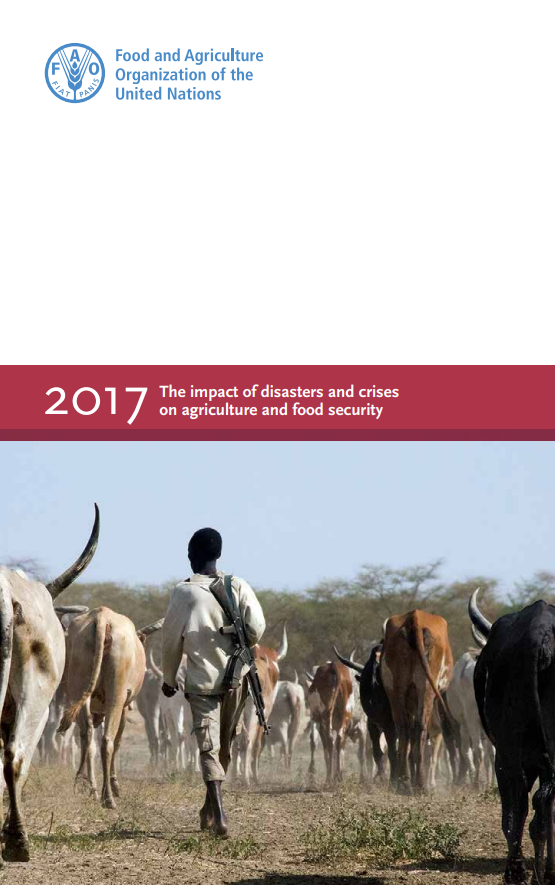
The impact of disasters on agriculture: Addressing the information gap

  In developing countries the agriculture sector absorbs 23 percent of the total damage and losses. Between 2005 and 2014, approximately USD 93 billion was lost in crop and livestock production due to natural hazards and disasters in developing countries.  The number and frequency of recorded natural disasters, along with the associated impact and damage

The impact of disasters on agriculture: Addressing the information gap Read More »

GLOBAL MIGRATION Resilient Cities at the Forefront

Like other urban pressures, migration also presents a powerful opportunity for building resilience. In September of 2016, eight 100RC Member Cities, with a broad range of experience absorbing migrants, convened in Athens to collaborate on migration as a key component of urban planning. Chief Resilience Officers (CROs) from Athens, Thessaloniki, Amman, Paris, Montreal, Los Angeles,

GLOBAL MIGRATION Resilient Cities at the Forefront Read More »

Summary – Effective law and regulation for disaster risk reduction: a multi-country report

The International Federation of Red Cross and Red Crescent Societies (IFRC) and the United Nations Development Programme (UNDP) have collaborated on a multi-country report to assess legal frameworks for DRR in 31 countries. The purpose of this report is to support legislators, public administrators, and DRR and development practitioners and advocates to prepare and implement effective legal frameworks for disaster risk management (DRM) that

Summary – Effective law and regulation for disaster risk reduction: a multi-country report Read More »

Resumen – Leyes y reglamentos eficaces para la reducción del riesgo de desastres: informe multinacional

la Federación Internacional de  Sociedades de la Cruz Roja y la Media Luna Roja (FICR) y el Programa de las Naciones Unidas para el Desarrollo (PNUD) han trabajado conjuntamente en un informe multinacional orientado a evaluar los marcos jurídicos de la RRD en 31 países. El informe apunta a ayudar a los legisladores, administradores públicos, defensores y profesionales de la

Resumen – Leyes y reglamentos eficaces para la reducción del riesgo de desastres: informe multinacional Read More »

¿Mejores leyes, comunidades más seguras? Temas emergentes sobre cómo la legislación puede apoyar la reducción de riesgo de desastre (mayo 2013)

El informe presenta los temas emergentes sobre legislacion y RRD. Es un analisis preliminar con base en 26 encuestas documentales de leyes nacionales que se planificaron, que permitieron trazar un mapa de las áreas de cobertura existentes en la legislación nacional; y 9 casos de estudios-país exhaustivos que se planificaron, que examinan la percepción de los interesados con respecto

¿Mejores leyes, comunidades más seguras? Temas emergentes sobre cómo la legislación puede apoyar la reducción de riesgo de desastre (mayo 2013) Read More »

Better laws, safer communities? Emerging themes on how legislation can support disaster risk reduction (May 2013)

The report presents the emerging themes on legislation and DRR based on (i) 24 desk surveys of national laws that map existing areas of coverage in national legislation; and (ii) 9 country in-depth case studies that examine stakeholder perceptions of domestic legislative systems and their implementation. The studies take as a point of departure that regulatory frameworks for DRR

Better laws, safer communities? Emerging themes on how legislation can support disaster risk reduction (May 2013) Read More »

Scroll to Top