Heat Wave

Frequently Asked Questions (FAQ) Heat Adaptive Architecture Design Competition

Who can participate in this competition? Any student at the time of the submission enrolled in an undergraduate (3rd year or higher) or graduate program (Master or PhD) in architecture or urban planning/design. Interdisciplinary teams (e.g. with engineering or environmental studies students) are welcome, but the team lead must be from architecture or urban planning/design. […]

Frequently Asked Questions (FAQ) Heat Adaptive Architecture Design Competition Read More »

Metropolitan Adelaide urban heat mapping 2022

Unpacking the Summer: Learning About Heat in Adelaide

Listening Over Coffee: Stories Behind the Data  The Post-Event Review Capability (PERC), developed by the Zurich Climate Resilience Alliance, offers a structured approach to understanding how and why hazard events escalate into disasters. In South Australia, this framework is being put into action to unpack the complexities of heat in an urban context. The Adelaide

Unpacking the Summer: Learning About Heat in Adelaide Read More »

Scorched Future: The Rising Toll of Extreme Heat in the Philippines

  Authors: Mia Grace Ligutan, Seth Sarmiento, Steven Villena, Cale Johnstone Rising temperatures in the Philippines, particularly in urban areas like Metro Manila, present growing health and economic risks. Many remain unaware of extreme heat as a serious threat. The Philippine Red Cross is actively enhancing resilience through education, early warning systems and community engagement.

Scorched Future: The Rising Toll of Extreme Heat in the Philippines Read More »

Heat Action Day 2025 – Activities to #BeatTheHeat all around the World

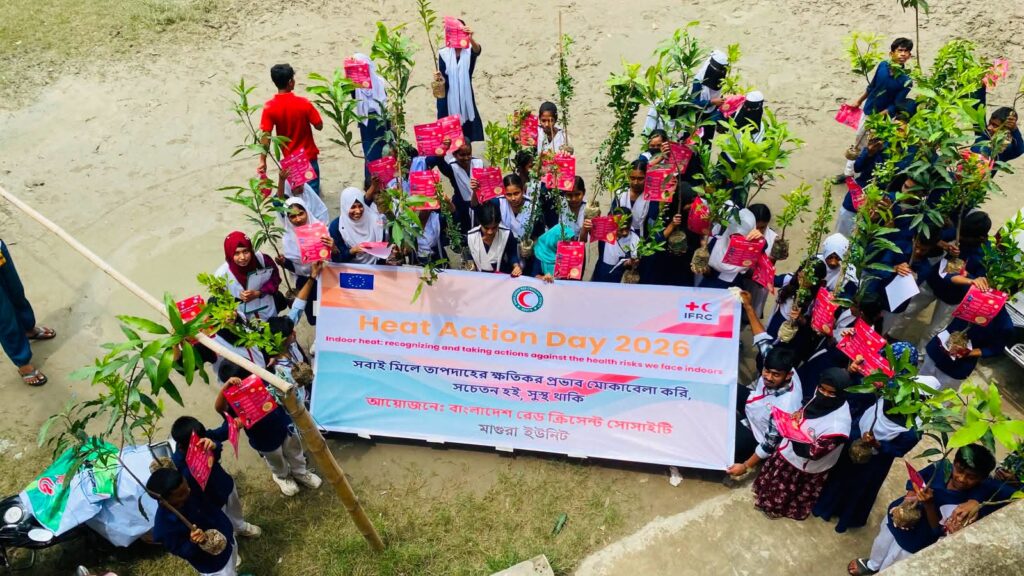
On Monday, June 2, 2025, we celebrated the 4th edition of Heat Action Day (HAD). As the impact of Heat Action Day spreads, our influence is a joy to quantify, with over 250 partner organizations and Red Cross Red Crescent National Societies taking part by organizing a multitude of activities in over 300 locations on

Heat Action Day 2025 – Activities to #BeatTheHeat all around the World Read More »

Double Jeopardy: Addressing compound flood and heatwave events

Compound events, such as floods and heatwaves occurring in close succession or simultaneously, can interact in a way that creates more severe outcomes than if they occurred both individually, as multiple stressors can exceed the coping capacity of a system more quickly than individual stressors occurring in isolation. Urbanization exacerbates these risks through the urban

Double Jeopardy: Addressing compound flood and heatwave events Read More »

Fact Sheet: Coastal City Resilience and Extreme Heat Action Project (CoCHAP)

The Coastal City Resilience and Extreme Heat Action Project (CoCHAP) Fact Sheet outlines the progress and objectives of this initiative led by the IFRC with funding from USAID/BHA and technical support from the American Red Cross and the RCRC Climate Centre. CoCHAP focuses on building climate resilience in urban communities in nine secondary cities across

Fact Sheet: Coastal City Resilience and Extreme Heat Action Project (CoCHAP) Read More »

Effective emergency preparedness for flooding and drought: A guide for cities

Effective emergency preparedness for flooding and drought: A guide for cities Implementation Guides – October 2024 DARAJA Case Study, pp. 25-26 Climate-related hazards are growing in intensity and frequency, causing significant loss and damage in cities around the world. Successful emergency preparedness, including the use of early warning systems, is critical to enabling cities and

Effective emergency preparedness for flooding and drought: A guide for cities Read More »

Utilization of Heat Early Warning Resources Within Slum Communities in Nigeria

Authors: Olumuyiwa Bayode Adegun (Federal University of Technology Akure), Tobi Eniolu Morakinyo (University College Dublin), Peter Elias (University of Lagos) This research investigates the use of early warning resources for extreme heat in slum communities in Akure and Lagos in Nigeria. The study was driven by the increasing vulnerability of slum residents to heatwaves exacerbated

Utilization of Heat Early Warning Resources Within Slum Communities in Nigeria Read More »

Preparing for the Disasters in Harsh Weather Conditions: Positioning Disaster Management within the Climate Framework

Picture this: A powerful earthquake strikes, and thousands flee to a gymnasium-turned-shelter. Instead of finding safety, evacuees face a new threat: a heat wave pushes indoor temperatures to a stifling 36°C (97°F), with no air conditioning due to widespread power outages. This scenario, increasingly likely due to climate change, is what the Japanese Red Cross

Preparing for the Disasters in Harsh Weather Conditions: Positioning Disaster Management within the Climate Framework Read More »

Scroll to Top