Nueva directiva en gestion de riesgos de desastres: Peru
Entrevista con la Dra. Blanca Arostegui sobre la nueva directiva en gestion de riesgos de desastres en Peru
Nueva directiva en gestion de riesgos de desastres: Peru Read More »

Entrevista con la Dra. Blanca Arostegui sobre la nueva directiva en gestion de riesgos de desastres en Peru
Nueva directiva en gestion de riesgos de desastres: Peru Read More »
Ireland is the first country in the world to introduce Community Based Health and First Aid (CBHFA) in Action through groups of special status Irish Red Cross Volunteer Inmates in a prison setting. The programme operates under a partnership between the Irish Red Cross, Irish Prison Service and Education Training Boards (formally known as the
Volunteers in health – Prisons in Ireland and a village in Timor Leste | Irish Red Cross Read More »
This year, UNICEFs flagship report, The State of the Worlds Children to be launched on 15 January addresses the need to close one of the greatest health divides between industrialized and developing countries: maternal mortality. Here is one in a series of related stories. By Thomas Nybo KOLDA, Senegal, 13 January 2009 Daddo Sabaly’s first
UNICEF: Community-based health centers in Senegal Read More »
Panel on Ifrc’s and Undp’s “Effective law and regulation for disaster risk reduction: a multi-country report” Geneva, 8 July 2014
Better laws, safer communities Read More »
Ireland is the first country in the world to introduce Community Based Health and First Aid (CBHFA) in Action through groups of special status Irish Red Cross Volunteer Inmates in a prison setting. The programme operates under a partnership between the Irish Red Cross, Irish Prison Service and Education Training Boards (formally known as the
Over the last ten years natural disasters have affected more than 2.4 billion people — the equivalent of one-third of the earth`s population — and they have cost over USD 910 billion in damages. Legislation is an important tool to address the threats posed by natural disasters. Laws can help ensure that the international response to
Strengthening disaster laws to save more lives and restore livelihoods more quickly Read More »
Building Capacities: Best Practices in Asia Pacific (4/5) Red Cross and Red Crescent societies mobilize people at community level to improve the lives of the vulnerable. They achieve this by involving them in planning services that meet their own identified needs and building their long-term strengths to manage themselves. This film contains many examples of
Building capacities: Community and branch development Read More »
Over the past 20 years, disasters due to natural hazards have affected 4.4 billion people, claimed 1.3 million lives and caused 2 trillion US dollars in economic losses. These disasters not only brought death and destruction, they did so disproportionately to the poor and marginalised. They have become one of the main threats to sustainable
Do laws make a difference in a disaster? Read More »
Ireland is the first country in the world to introduce Community Based Health and First Aid (CBHFA) in Action through groups of special status Irish Red Cross Volunteer Inmates in a prison setting. The programme operates under a partnership between the Irish Red Cross, Irish Prison Service and Education Training Boards (formally known as the
Irish Red Cross CBHFA Prison project | Three prison inmates share their stories Read More »
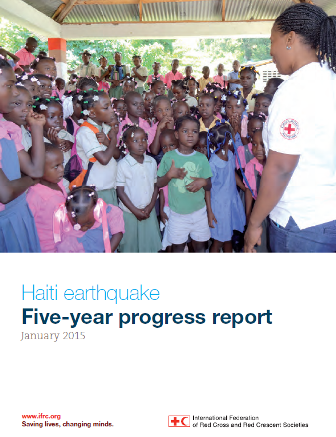
The event draws upon the online Policy Debate on the failure of the aid system in Haiti http://poldev.revues.org/1606 published by the journal International Development Policy http://devpol.org/ (DevPol). Each speaker briefly presents their reflections before inviting the audience to participate. Speakers:Jean-Marc Biquet, (MSF | CERAH)Andrea Binder (GPPi)Elyse Mosquini (Disaster Law Programme, IFRC) Moderator:Prof Gilles Carbonnier (Graduate Institute) You can join
Aid Failure – Lessons Learned From Haiti? Read More »