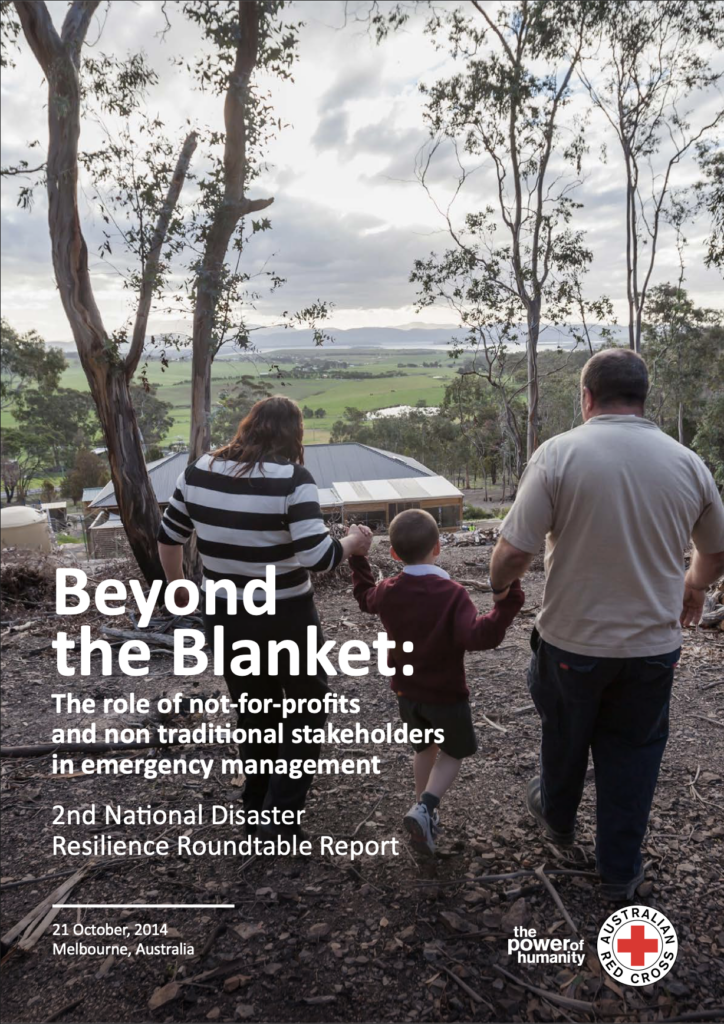
Beyond the Blanket: The role of not for profits and non traditional stakeholders in emergency management
The report of the Second REd Cross National Disaster Resilience Roundtable, focusing on the role of not for profits in emergency management.

The report of the Second REd Cross National Disaster Resilience Roundtable, focusing on the role of not for profits in emergency management.
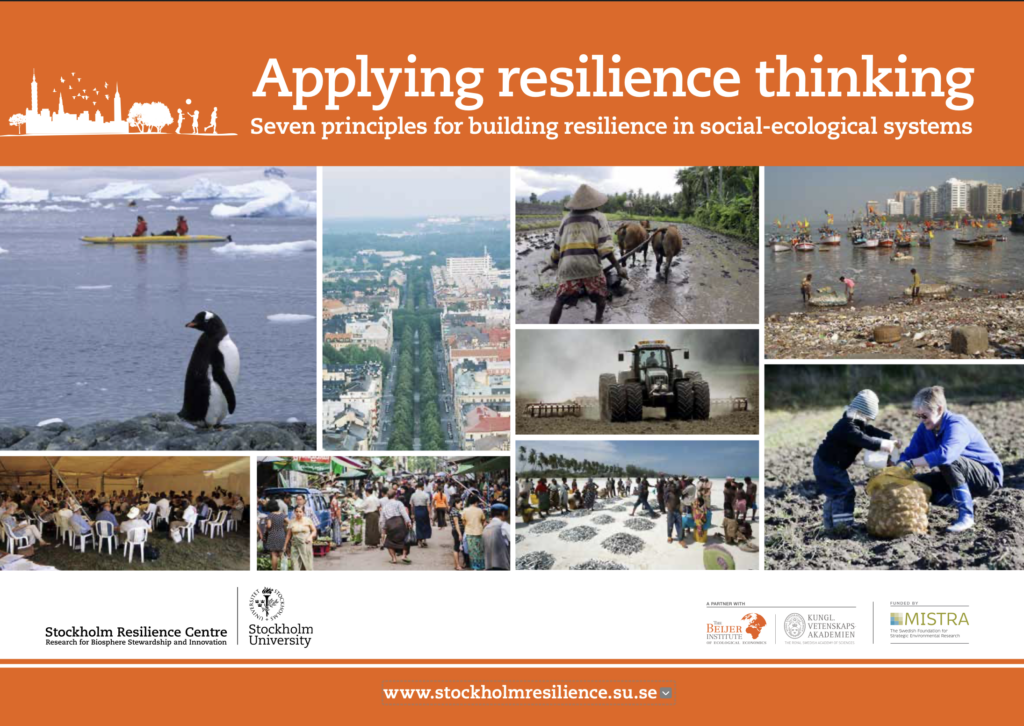
Seven principles for building resilience in social-ecological systems. See the links below to see an extended summary of the book and to visit the Stockholm Resilience Center’s website. Stockholm Resilience Center, Applying resilience thinking Seven principles for building resilience in social-ecological systems
How to apply resilience thinking Read More »
In recent years, the European higher education community has played an increasingly important role in moving disaster science from a responsive, primarily technical discipline, to a broad, multi-disciplinary movement that seeks to build societal resilience to disaster. This movement coincides with the increasing global emphasis on the need to tackle the inter-related challenges of disaster
Disaster Resilience Education & Research: Roadmap for Europe 2030 Read More »
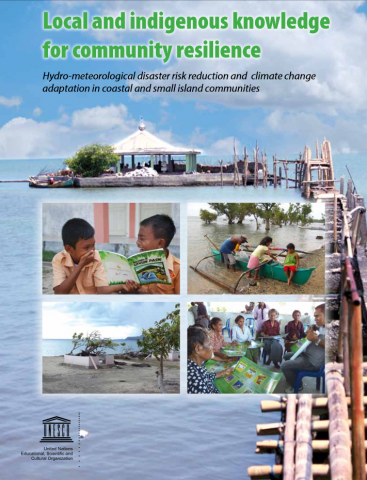
Coastal communities living in archipelago countries and small island states in Asia are particularly vulnerable to the impacts of hydro-meteorological hazards such as storms, droughts, landslides, and floods. Environmental degradation such as deforestation, desertification, biodiversity loss, soil erosion, and climate change, as well as social factors such as poverty and inequality, further compound their exposure
Local and Indigenous Knowledge for Community Resilience Read More »
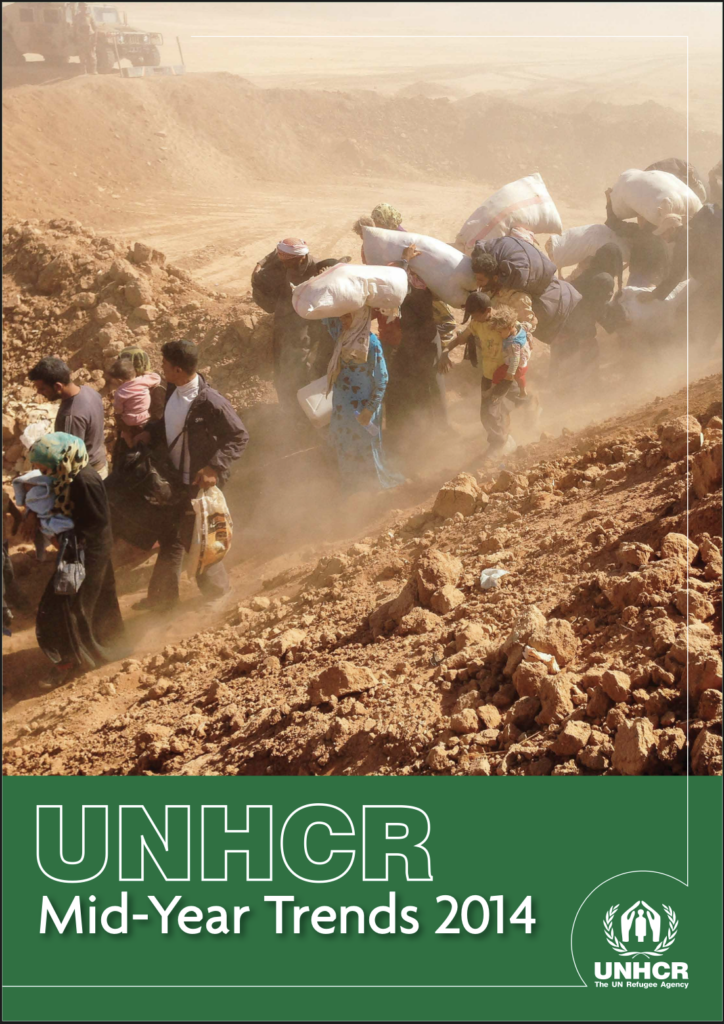
This report is the second of its kind, analyzing displacement trends within the first half of 2014. The figures in this report were collected from governments and UNHCR offices around the world. UNHCR introduced a new online data collection tool to enhance the organization’s capacity to collect and analyse mid-year statistical data. In addition to
UNHCR Mid Year Trends 2014 Read More »
Turkish Red Crescent Society partnered with the United Nations World Food Programme (WFP) to launch the e-voucher food card programme to assist thousands of Syrians who were under international protection in Turkey. The e-voucher Food Card works like a credit card, and is pre-loaded with a specific amount of money per family member twice a
E-Voucher Food Card Program by WFP/Turkish Red Crescent Read More »
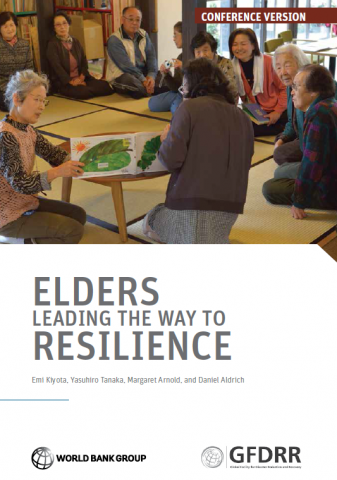
This report describes and assesses the experience of Ofunato, Japan, which was devastated by the 2011 Great Eastern Japan Earthquake. After the GEJE, older people wanted to do something useful to help Ofunato recover. With facilitation by the NGO Ibasho, elders and other community members planned and built the Ibasho Café, which now acts as
Elders leading the way to resilience Read More »
This document presents a clear overview of the IFRC’s Framework for Community Resilience (FCR), which builds upon the original Framework for Community Safety and Resilience published in 2008. This framework has the objective to: ‘Establish a foundation on which all IFRC programmes, projects, interventions and actions, across the contexts, which contribute to the strengthening of resilient
IFRC Framework for Community Resilience Read More »
The 2014 Report by National Society for Earthquake Technology -Nepal (NSET) presents an account of NSET’s endeavors and activities towards the enhancement of disaster resilience of communities in Nepal during the past year. The report includes NSET’s initiatives towards i) reducing earthquake risk and building resilience of communities, ii) assisting municipalities in building code implementation in
NSET Report 2014: Safer Society Read More »
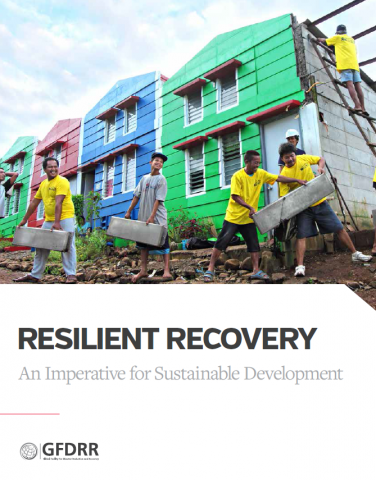
This report was produced as an input to 2015 Global Assessment Report. The report documents the challenges in planning and implementing post-disaster recovery; examines good practice in building disaster resilience; and shares lessons learned in strengthening disaster recovery systems. – GFDRR 2015
Resilient Recovery: An Imperative for Sustainable Development Read More »