Post-Disaster Recovery

What Practices Are Used to Identify and Prioritize Vulnerable Populations Affected by Urban Humanitarian Emergencies?

Individuals and organizations responding to humanitarian crises recognize the need to improve urban emergency response and preparedness – including the need to devise better methods for assessing vulnerability within urban populations. This systematic review represents the first ever attempt to systematically search, sort and synthesize the existing evidence in order to consolidate findings on the tools, […]
What Practices Are Used to Identify and Prioritize Vulnerable Populations Affected by Urban Humanitarian Emergencies? Read More »

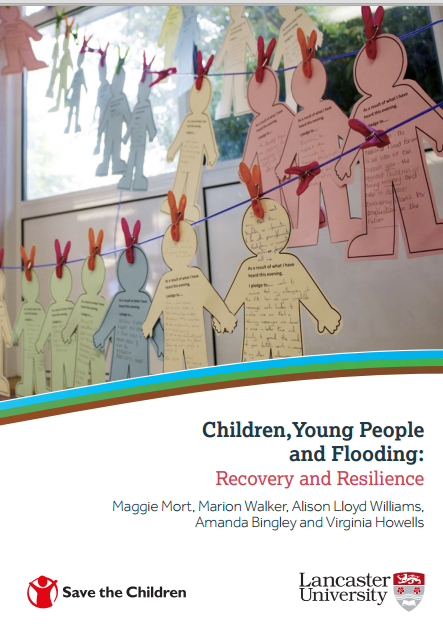
Children, young people and flooding: Recovery and resilience

Children, young people and flooding: Recovery and resilience Research with flood-affected children reveals serious impacts on well-being but also a desire to take on a role in flood risk management. Lancaster University researchers found that factors impacting on children’s well-being include: loss of valued personal and family possessions, friendship networks, familiar spaces, education; experience of

Children, young people and flooding: Recovery and resilience Read More »

What Role does the Private Sector have in supporting Disaster Recovery, and what Challenges does it face in doing so?

This publication examines key issues confronting the private sector in: disaster recovery financing; what roles private-sector entities have played; and where there has been successful integration or leadership of these organizations. The study also briefly explores challenges that the private sector faces, with particular attention to issues of information use and application, coordination in response

What Role does the Private Sector have in supporting Disaster Recovery, and what Challenges does it face in doing so? Read More »

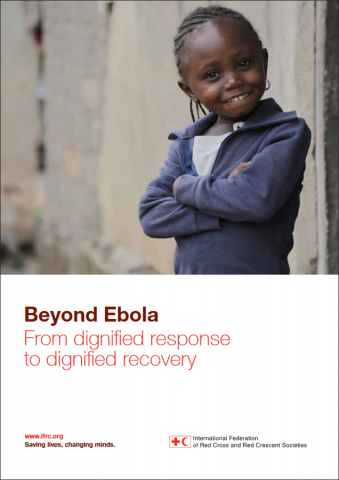
Beyond Ebola: From Dignified Response to Dignified Recovery

The geographical spread in Guinea, Liberia and Sierra Leone has brought enormous challenges.  Urban  and  rural,  from  hotspots  in  the  slums  of  capital  cities  to  others  in  remote  country sides,  it  has  even  caused  concern  that  sudden  surges  might  be  missed or rapid response capacity might simply be insufficient. The  numbers  are  truly  horrific:  over 

Beyond Ebola: From Dignified Response to Dignified Recovery Read More »

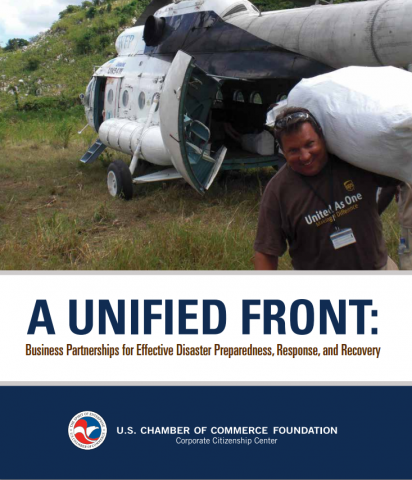
A unified front: Business Partnerships for Effective Disaster Preparedness, Response, and Recovery

This report makes the case that a unified effort of business partnership is needed to effectively manage the unexpected difficulties that arise as a result of disasters. It presents some strategies and best practices companies have implemented for dealing with disasters and reducing their impact. It also discusses a number of trends that are critical

A unified front: Business Partnerships for Effective Disaster Preparedness, Response, and Recovery Read More »

Do Disasters Create Opportunities for Change Towards Sustainability?

This study looks at how people and organizations – in the midst of post-disaster devastation and loss – are able to see and seize opportunities for change towards sustainability. The post-disaster recovery process from the 2004 Indian Ocean tsunami devastating Aceh, Indonesia is one of the cases with mixed accounts that framed their recovery around

Do Disasters Create Opportunities for Change Towards Sustainability? Read More »

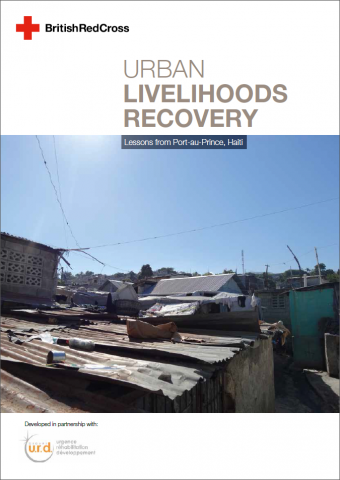
Urban Livelihoods Recovery, Lessons from Port-au-Prince, Haiti

The earthquake that struck Port-au-Prince, Haiti, on 12 January 2010 led to the loss of more than 220,000 lives, over 310,000 injuries and extensive damage to buildings and infrastructure. Taking the British Red Cross recovery programme as a case study, this report presents a series of lessons on good practice in urban livelihoods recovery. The report,

Urban Livelihoods Recovery, Lessons from Port-au-Prince, Haiti Read More »

A Networked Approach to Strengthening Emergency Response Capacity

Over the past decade, the global humanitarian agenda has moved from saving lives and providing basic services in emergencies toward building resilience to crises. However, the recent Ebola outbreaks in West Africa and ongoing crises in countries such as Syria, Somalia, and the Central African Republic have exposed weaknesses in humanitarian emergency response (ER). This

A Networked Approach to Strengthening Emergency Response Capacity Read More »

Scroll to Top