
Climate Change Adaptation

Climate Change Awareness, Adaptation and Disaster Risk Reduction, A Bangladesh Case Study

Bangladesh is not only vulnerable to rising sea levels, but is also one of the most flood  and cyclone prone countries in the world with 25 percent of its geographical area vulnerable. The floods and cyclones not only disrupt and take lives, but also isolate communities, severely affecting the livelihoods and education of the people […]
Climate Change Awareness, Adaptation and Disaster Risk Reduction, A Bangladesh Case Study Read More »

Making climate information user friendly for humanitarian organizations

The Asia Pacific zone covers 45 countries and 57% of all the disasters in the Asia Pacific are hydro-metrological in nature. Increasing climate risk threatens hard-earned development gains. A strategy for dealing with this is to better understand and pre-empt climate related hazards through systematic use of climate information  at different time scales. This can

Making climate information user friendly for humanitarian organizations Read More »

How to engage with National Adaptation Plans: Guidance for National Societies

This guide aims to support National Red Cross and Red Crescent Societies’ engagement on national level policy discussions re­garding climate change adaptation, particularly through the de­velopment of National Adaptation Plans (NAPs) by their respective governments. While it will be increasingly important for National Societies to engage in the NAP process, this is a new area

How to engage with National Adaptation Plans: Guidance for National Societies Read More »

Cultivating hope in Syria

Since 2006, local communities in the northeast of Syria have been facing severe drought, due  to high temperatures and low rainfall. The drought has led to desertification, as the dry conditions and sandstorms have swallowed up arable land and vegetation. This has had a particular effect on Bedouin communities, who live outside the cities in

Cultivating hope in Syria Read More »

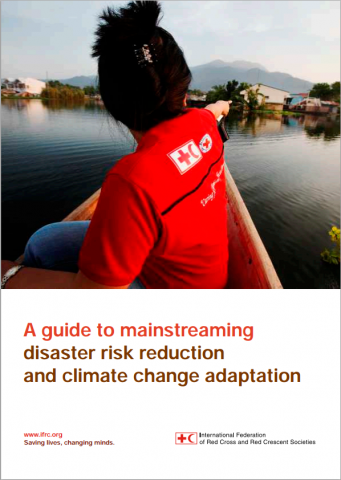
A guide to mainstreaming disaster risk reduction and climate change adaptation

This guide has been developed to specifically support Red Cross and Red Crescent Societies and IFRC staff to more systematically integrate risk reduction measures into their planning. By describing in detail what key issues need to be considered and when, this guidance aims at ensuring that risk reduction measures are taken into account in different

A guide to mainstreaming disaster risk reduction and climate change adaptation Read More »

Managing the Risk of Humanitarian Crises

The number of people affected by humanitarian crises has almost doubled over the past decade and is expected to keep rising. In early 2014, international aid organizations aimed to assist 52 million people in crisis, and millions more people sought help from their communities, local organizations and Governments.   The report published by OCHA emphasizes a shift towards a more anticipatory and preventative approach

Managing the Risk of Humanitarian Crises Read More »

Pathways to a climate resilient future: a community-based cost benefit analysis of a food security project in Ethiopia

In recent years, climate change impacts have created grave new threats to rural livelihoods. Community-based cost-benefit analysis (CBA) is an evidence-based tool which can effectively be used to ascertain the value and impact of integrating resilience-building interventions in food security programming. The following case study provides an overview of a community-based CBA that was conducted

Pathways to a climate resilient future: a community-based cost benefit analysis of a food security project in Ethiopia Read More »

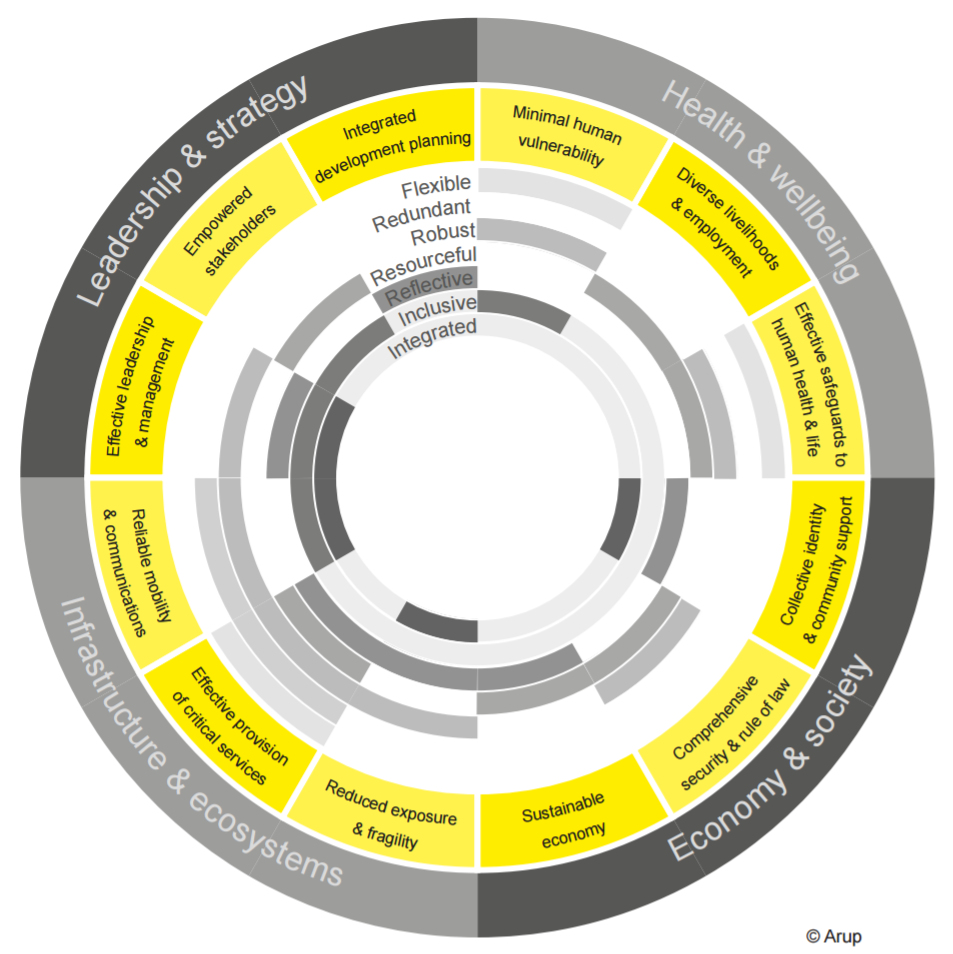
City Resilience Framework – City Resilience Index

This framework published by the Rockefeller Foundation as part of their 100 Resilient Cities Campaign is intended to form the basis of a tool that should enable all of us interested in city resilience to convene around a common understanding of that idea, and begin to ‘baseline’ what matters most for making cities more resilient. Both the framework and the index

City Resilience Framework – City Resilience Index Read More »

Scroll to Top