Guidance material

Urban Resilience for Red Cross Red Crescent

You can find more detailed information about the Red Cross Red Crescent Urban Collaboration Platform here:  The Red Cross Red Crescent  Movement is at the forefront of assisting communities facing the growing risk of disasters, protracted crises and day to day stresses in cities. RCRC national societies are increasingly diversifying their programs and partnerships and innovating to […]

Urban Resilience for Red Cross Red Crescent Read More »

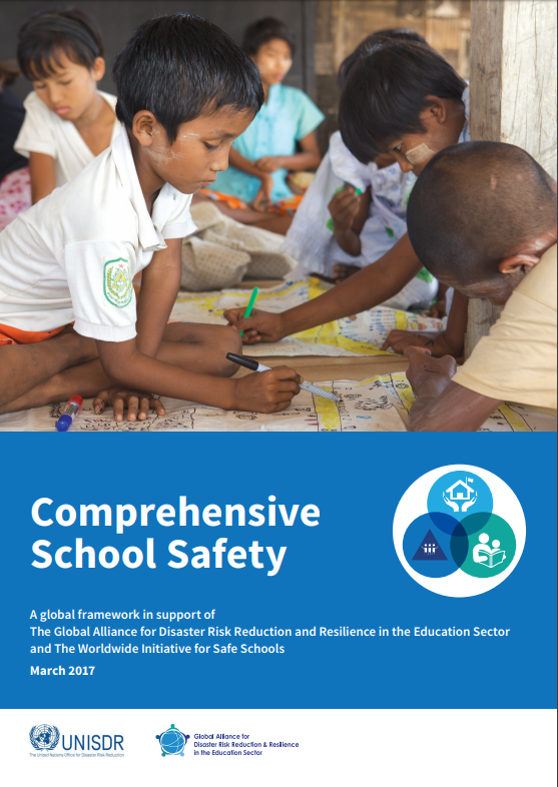
Comprehensive School Safety

The Comprehensive School Safety Framework (CSSF) provides a comprehensive approach to reducing risks from all hazards to the education sector by addressing three pillars of school safety: Safe Learning Facilities School Disaster Management Risk Reduction and Resilience Education Published by: The Global Alliance for Disaster Risk Reduction and Resilience in the Education Sector and The

Comprehensive School Safety Read More »

Principles and Rules for Red Cross and Red Crescent Humanitarian Assistance

These Principles and Rules recognize the importance of strengthening organizational, coordination and delivery capacities of National Societies, to respond to the increasing number and complexity of disasters and the growing number of vulnerable people. They call for greater collective learning, adaptation, innovation and leadership to ensure that the Movement achieves greater humanitarian impact.

Principles and Rules for Red Cross and Red Crescent Humanitarian Assistance Read More »

Voice Biometrics & Blockchain: Identity Management in Humanitarian Aid Distribution

Massachusetts Institute of Technology (MIT) in collaboration with Members of the Global Disaster Preparedness Center, International Federation of Red Cross and Red Crescent Societies (IFRC), and Red Cross Climate Center (RCCC) presented the MIT-Humanitarian-Hack in April 19 to 22 in Boston. Selbst was the winner project related to Voice Biometrics & Blockchain: Identity Management in

Voice Biometrics & Blockchain: Identity Management in Humanitarian Aid Distribution Read More »

Community Based DRR Household Survey Guide 2013

This guide has been developed to help national Red Cross Societies implement baseline and final assessments for community based disaster risk reductions projects. It includes instructions for how to prepare and conduct hosehold surveys as well as standardized questionnaires and reporting forms that will be used by countries participating in risk reduction projects.  Monitoring Guide

Community Based DRR Household Survey Guide 2013 Read More »

How to Use Social Media to Better Engage People Affected by Crises

Online communication platforms have become a lifeline for millions of people affected by natural disasters and armed conflicts: social media and messaging apps help maintain contact with family and friends, and provide access to information, such as where to find food, shelter or medical assistance. This information can directly influence how people prepare for, respond

How to Use Social Media to Better Engage People Affected by Crises Read More »

Scroll to Top