Voices of Preparedness: Khaled Rabeh, IFRC MENA region
 June 23, 2026
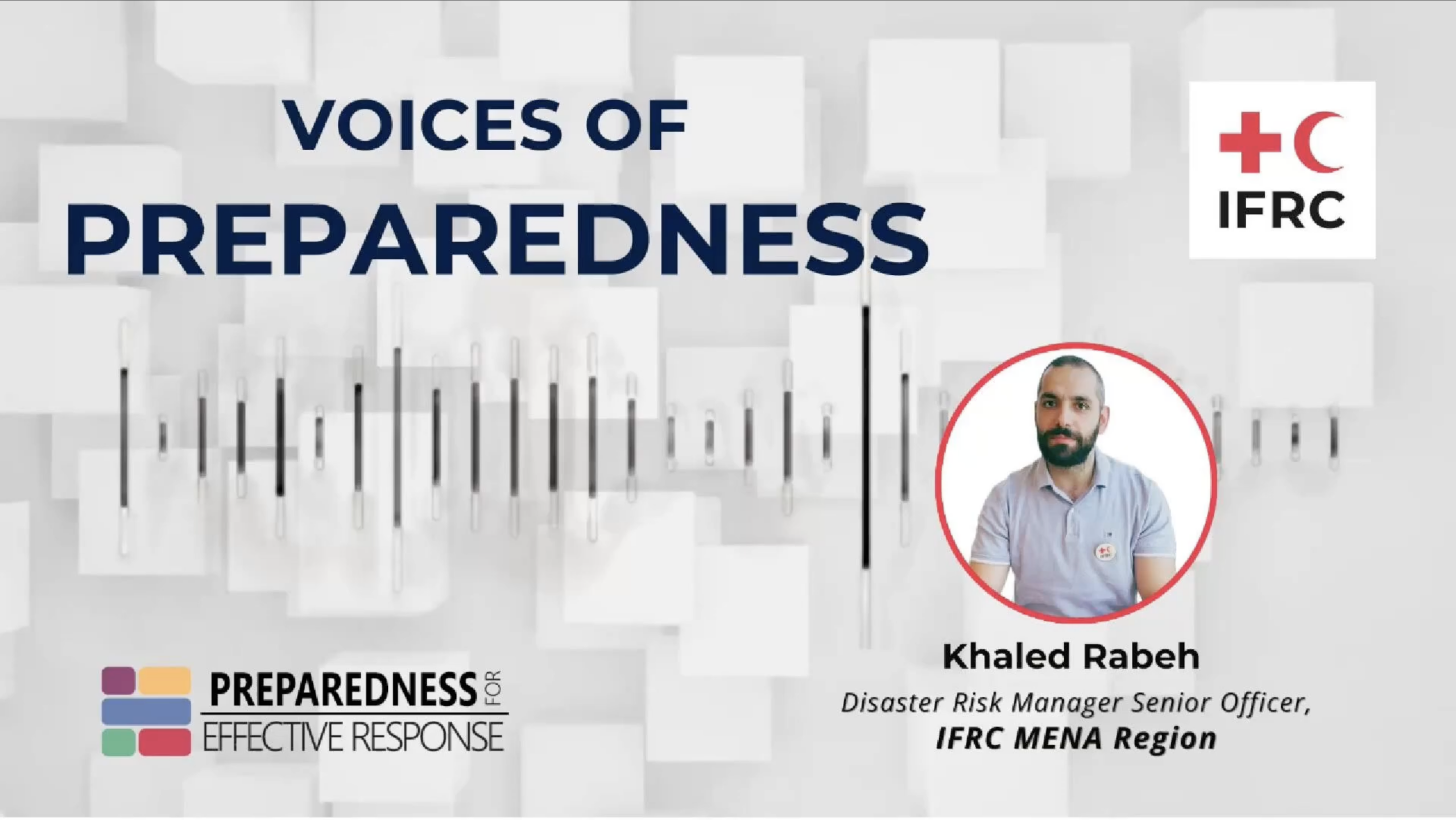
In this interview, Khaled Rabeh, Disaster Risk Manager Senior Officer at IFRC MENA, discusses the preparedness priorities, challenges, and actions shaping the region — from strengthening institutional capacity and scaling up anticipatory action to lessons learned from the Preparedness for Effective Response (PER) approach in Yemen.
What are the main preparedness priorities in the MENA region?
Main preparedness priorities in the MENA region: Strengthening institutional capacity of National Society; Emergency Operation Center; National Response Team and Contingency planning; scaling up the Anticipatory Action; integrating early action protocols and early warning system into National Disaster Risk Management framework; enhancing community resilience; embedding climate-smart Disaster Risk Reduction and livelihood recovery into preparedness plan; digital transformation and also the localized capacity building; updating disaster laws and policies.
Could you share an example of how preparedness actions have proven effective?
An example related to Preparedness for Effective Response (PER) Preparedness for Effective Response process in Yemen. As you know, Yemen Red Crescent conducted the first round of the PER in 2019 and the second round of the PER conducted after 2020; that's meaning Preparedness for Effective responsive process led to concrete improvement plans of action to enabling faster and more coordinated response to disaster.
How can a National Society from the MENA region be better prepared for the disasters and crises?
For MENA National Society to be better prepared for any disaster or crisis, they need to do: Adapting and institutionalize the Preparedness for Effective Response approach, invest in Anticipatory Action, develop multi-hazard Contingency planning, link to Emergency Operation Center, integrate recovery thinking into preparedness. We have a lot of challenges related to the context, for example, we have complex emergencies, climate related hazards and population movement. We should be better prepared for any disaster or a crisis now or in the future.