Women and Gender in Disaster Management

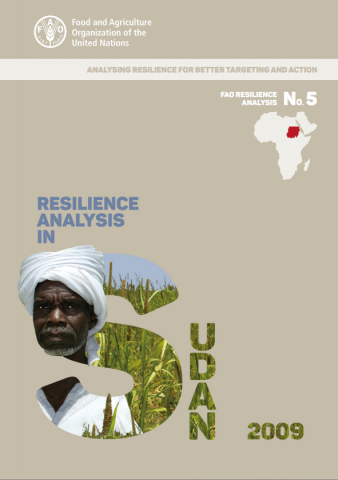
Resilience Analysis in Sudan 2009

This household resilience analysis examines differences in resilience capacity and resilience structure between female- and male-headed households, and between regions. This analysis aims at providing programming and policy guidance to policy makers, practitioners, UN agencies, NGO and other stakeholders by identifying the key factors that contribute to the resilience of households. It is largely based […]

Resilience Analysis in Sudan 2009 Read More »

Guidelines for Integrating Gender-Based Violence Interventions in Humanitarian Action

The Guidelines for Integrating Gender-Based Violence (GBV) Interventions in Humanitarian Action  Guidelines have been revised from the 2005 version by an inter-agency Task Team led by UNICEF and UNFPA, and endorsed by the IASC in 2015. The purpose of the Guidelines is to assist humanitarian actors and communities affected by armed conflict, natural disasters and other humanitarian emergencies to coordinate, plan,

Guidelines for Integrating Gender-Based Violence Interventions in Humanitarian Action Read More »

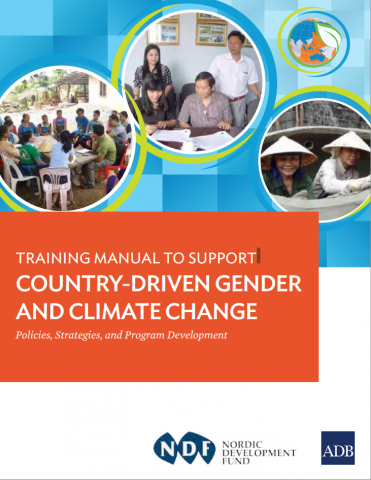
Training Manual To Support Country-driven Gender and Climate Change

Training Manual To Support Country-driven Gender and Climate Change, in policies, strategies, and program development.  The manual provides trainers, policy makers, and practitioners with background information to inform the development of gender-sensitive mitigation measures and includes material to conduct training on gender and climate change. It starts by introducing the nexus of gender and climate

Training Manual To Support Country-driven Gender and Climate Change Read More »

Gender and Diversity Strategy, American Red Cross International Services

    Among its core functions, the American Red Cross International Services Department (ARC-ISD) strives to support Host National Societies (HNS) to assist the most vulnerable people in preparing for, responding to, and recovering from man-made and natural disasters, and other challenges identified by key stakeholders including the affected communities. Neutral and impartial programs that

Gender and Diversity Strategy, American Red Cross International Services Read More »

Climate and Disaster Resilience: The Role of Community Driven Development

Community-driven development is an approach “… that gives control over planning decisions and investment resources to community groups and local governments.” Historically, programs using a CDD approach grew out of situations of crisis (financial shock, conflict, and even natural disasters) and were meant as transitional instruments for service delivery where governments (particularly newly installed administrations)

Climate and Disaster Resilience: The Role of Community Driven Development Read More »

Good practices on economic empowerment of women in post-disaster reconstruction in Tohoku and the Asia-Pacific

This report presents good practices in the promotion of economic empowerment of women in the post-disaster situations through entrepreneurship development in Japan and the Asia Pacific region. It discusses what contributed to the successful achievements of the projects from a gender perspective, drawing lessons for collective learning. APEC Policy Partnership on Women and the Economy

Good practices on economic empowerment of women in post-disaster reconstruction in Tohoku and the Asia-Pacific Read More »

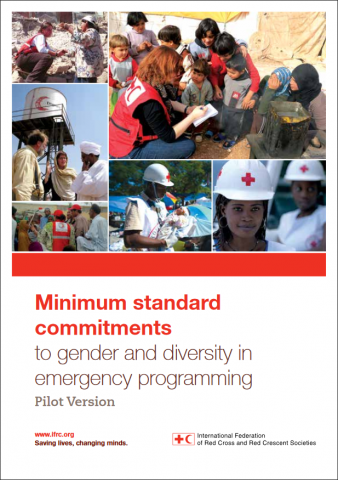
Gender and diversity in food security and livelihoods programming

Gender and diversity-sensitive food security and livelihoods programming lead to a more equitable, effective and efficient outcomes for all members of affected communities. This guidance note provides an overview of gender and diversity issue and practical   measures that  Red Cross and Red Crescent staff and volunteers should bear in mind when designing ,implementing and evaluating

Gender and diversity in food security and livelihoods programming Read More »

Scroll to Top